

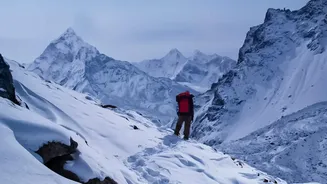

Why Distance Alone Is Deceiving
When you first look at a trail description, the round-trip distance is often the first number you see. It's an easy metric to grasp, but on its own, it’s a poor indicator of a hike's true challenge in the mountains. A 10-kilometre walk along a flat, paved
path is a completely different experience from a 10-kilometre trek that climbs a mountain. In the Rockies, a trail's length must always be considered alongside its elevation profile. While the average person walks a flat kilometre in about 12-15 minutes, a mountain kilometre with steep sections could take 30 minutes or more. Don't let a 'short' distance fool you into thinking it will be an easy day out.
Understanding Elevation Gain
Elevation gain is the single most important factor in determining a mountain hike's difficulty. It measures the total amount of vertical distance you will climb throughout the entire trail. Imagine you start a hike, climb 500 metres, descend 100 metres into a small valley, and then climb another 200 metres to a viewpoint. Your total elevation gain for the trip to the viewpoint is 700 metres, not the 600-metre difference from your starting point. This cumulative 'uphill' is what tests your legs and your lungs. Parks Canada often classifies trails with 'major change in elevation' and 'long steep sections' as difficult, regardless of their total distance.
The Crucial Combination: Grade
The real story of a trail's difficulty is told by how distance and elevation gain interact. This relationship is often expressed as 'grade' or steepness. A trail that gains 500 metres over 10 kilometres is a gentle, steady climb. A trail that gains 500 metres in just two kilometres is an intense, heart-pounding ascent. Most hikers would consider a gain of over 150 metres per kilometre (roughly 800 feet per mile) to be steep. A short but steep trail can be far more demanding than a long, gradual one. For example, a 4-kilometre round-trip hike with 800 metres of gain will likely feel much harder than a 15-kilometre hike with the same 800-metre gain, as the effort is much more concentrated.
Factors Beyond the Numbers
Even with a clear understanding of distance and elevation, other factors unique to the Canadian Rockies can dramatically alter a trail's difficulty. Unpredictable weather can turn an easy walk into a dangerous situation, so always carry extra layers. The trail surface itself is a major variable; navigating loose rock (scree), slippery roots, or muddy sections requires more energy and focus than a hard-packed dirt path. Finally, there's altitude. At higher elevations, the air is thinner, meaning your body has to work harder to get the same amount of oxygen. A moderate climb at 2,500 metres can feel much more strenuous than a similar one at 1,500 metres.
How to Choose the Right Trail for You
Before heading out, use resources like the Parks Canada website, hiking guidebooks, and apps to check the trail stats. Pay close attention to both the total distance and the total elevation gain. Read recent trip reports from other hikers to get a sense of current trail conditions, which numbers alone can't tell you. Be honest about your own fitness level and experience. If you are new to hiking in the Rockies, start with trails rated as 'Easy' or 'Moderate' by official sources like Parks Canada. These typically have limited elevation gain and well-maintained paths, allowing you to build confidence and acclimatize to the mountain environment safely.