




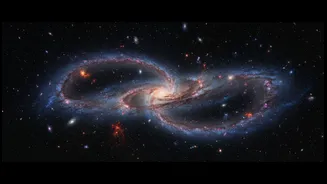


Meet the Stellar Sparkler
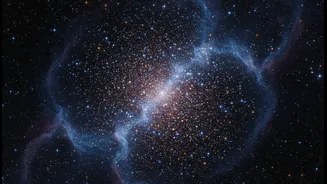
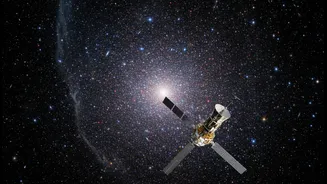
The object with the dazzling nickname 'Stellar Sparkler' is formally known as NGC 6752. It’s a globular cluster, a dense, spherical collection of ancient stars. Located about 13,000 light-years from Earth in the constellation Pavo, it is one of the closest
and brightest globular clusters visible from our planet. It contains hundreds of thousands of stars, all gravitationally bound together and orbiting in the halo of our own Milky Way galaxy. These stars are incredibly old, estimated to be around 12 to 13 billion years old, making them some of the most ancient objects in the universe. They are like cosmic fossils, offering a glimpse into the early conditions of our galaxy and the universe itself.
A Cosmic Laboratory
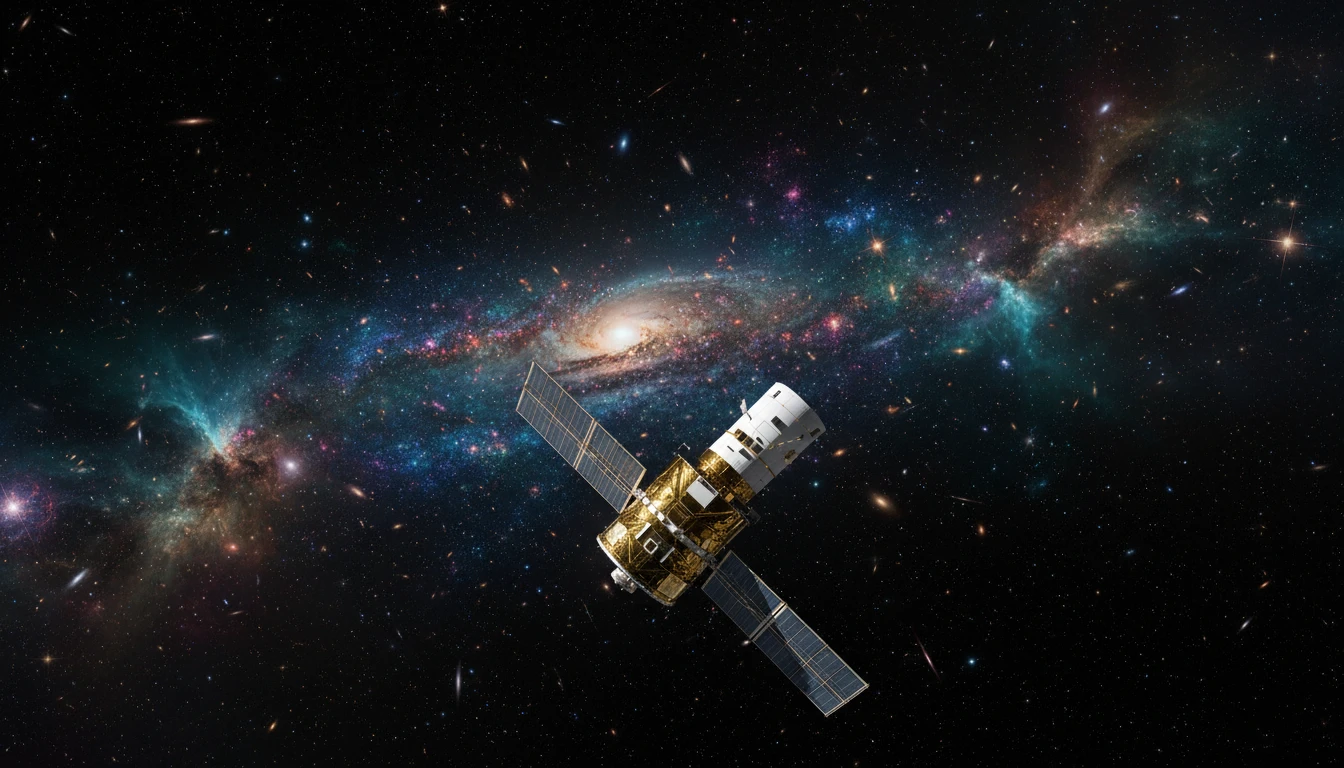
Globular clusters like NGC 6752 are invaluable to astronomers. Because all the stars within them formed from the same cloud of gas at roughly the same time, they provide a perfect natural laboratory for studying stellar evolution. By observing stars of different masses within the same cluster, scientists can piece together a timeline of how stars live and die. They are crucial for testing and refining models of stellar physics, from the fusion processes that power them to their final, dramatic end states. The Hubble Space Telescope, with its sharp vision high above Earth's blurring atmosphere, is uniquely equipped to resolve the individual stars even in the dense core of these clusters, a task nearly impossible for ground-based telescopes.
The Hunt for White Dwarfs
A primary focus of Hubble's investigation into NGC 6752 is the study of white dwarfs. These are the hot, dense remnants of stars like our Sun after they have exhausted their nuclear fuel. They are incredibly faint, making them difficult to detect, especially in a crowded field of brighter stars. The goal of this extensive observation program was to study these faint stellar embers to accurately measure the cluster's age. By observing how these white dwarfs have cooled over billions of years, astronomers can calculate a very precise age for the cluster, which in turn helps to constrain the age of the universe itself.
An Unexpected Discovery
While meticulously searching for white dwarfs, astronomers made a serendipitous discovery. Hiding in the background, behind the bright stars of NGC 6752, was a faint, compact collection of stars that didn't belong. Analysis revealed this to be a previously unknown dwarf galaxy, now nicknamed Bedin 1. This tiny galaxy is about 30 million light-years away, far beyond the cluster itself. It's an isolated 'living fossil' from the early universe, nearly 13 billion years old itself. This chance discovery highlights the power of deep Hubble observations; while searching for clues to our galaxy's past, it found a relic of the wider universe hiding in plain sight.
Slowly Cooling Stars and Cosmic Clocks
More recent analyses of the white dwarfs in NGC 6752 have revealed further complexities. Research has uncovered evidence for 'slowly cooling white dwarfs'. These are stars that appear to be cooling down at a much slower rate than standard models predict, possibly due to a thin shell of residual hydrogen continuing to burn on their surface. This phenomenon was also observed in another globular cluster, M13, suggesting a new, common pathway in stellar evolution for certain stars. Understanding this process is vital. If some white dwarfs cool more slowly, it affects how they are used as 'cosmic clocks'. Refining these models ensures that our age estimates for these ancient clusters—and by extension, the universe—are as accurate as possible.