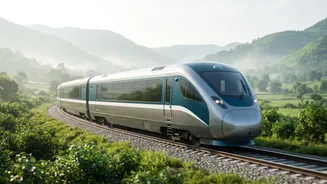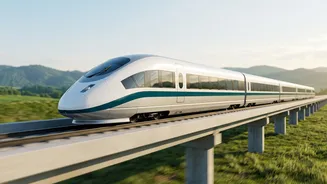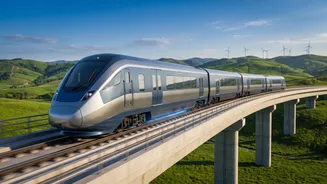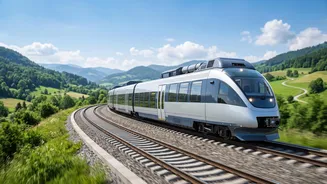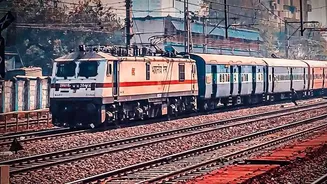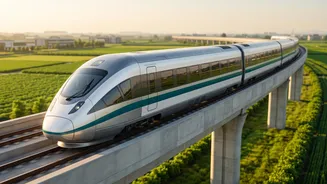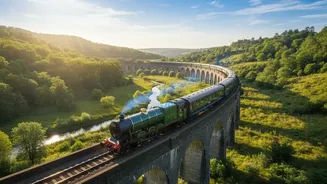







Imagine the familiar rumble of a train, but without the diesel smoke. Indian Railways is making this a reality, embarking on a revolutionary journey to power its trains with hydrogen, heralding a new era of clean, green public transport.
What are Hydrogen Trains?
At its heart,
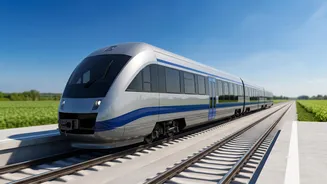
a hydrogen train is an electric train that generates its own power. Instead of drawing electricity from overhead wires, it uses a fuel cell. Inside this cell, hydrogen stored in tanks on the train combines with oxygen from the air. This electrochemical reaction produces three things: electricity to power the motors, heat, and pure water as the only emission. This process avoids combustion, making the trains remarkably quiet and entirely free of the carbon dioxide, nitrogen oxides, and particulate matter that conventional diesel engines produce. For a country like India, which is pushing for ambitious climate goals, this technology offers a powerful tool to decarbonize a vital part of its transport sector.
India's First Hydrogen Train Hits the Tracks
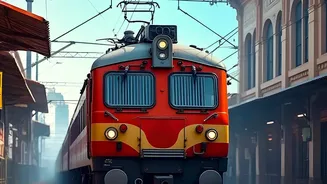
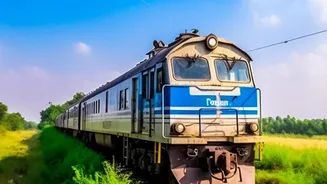
The revolution is no longer just a blueprint. In July 2026, India's first hydrogen-powered train was launched, marking a significant milestone. Developed indigenously, this pilot project was deployed on the 89-km Jind-Sonipat section in Haryana. The train, a retrofitted Diesel Electric Multiple Unit (DEMU) rake, demonstrates the feasibility of converting existing stock to run on clean energy. This initial service is more than a simple train route; it's a real-world testbed. Indian Railways is using this pilot to gather invaluable operational data, refine safety protocols, and understand the practical challenges of running a hydrogen-based service, from refuelling infrastructure at Jind to daily maintenance.
The 'Hydrogen for Heritage' Vision
Beyond the initial pilot, Indian Railways has a broader, more picturesque vision called 'Hydrogen for Heritage'. The plan involves running 35 specially designed hydrogen trains on its iconic narrow and meter-gauge heritage routes. Think of the scenic Kalka-Shimla Railway or the Darjeeling Himalayan Railway running on clean, silent power, preserving their old-world charm without the environmental cost of old engines. These routes are often in ecologically sensitive hilly areas where installing electric lines is difficult and undesirable. Hydrogen provides a perfect solution, offering a green upgrade that respects the unique character and environment of these beloved tourist circuits.
Navigating the Challenges
The journey towards a hydrogen-powered railway network is not without its challenges. The initial rollout on the Jind-Sonipat route has seen very low passenger numbers, prompting officials to consider extending the service to Delhi to improve ridership. However, such an extension presents its own hurdles, including the fact that the 10-coach hydrogen train may not have the capacity for high-density commuter routes to the capital, which typically require 18-20 coaches. Furthermore, the high initial cost of both the trains and the green hydrogen fuel itself remains a significant barrier to wider adoption. The cost-competitiveness of green hydrogen is crucial for the long-term success of the program.
A Complement to Electrification
It's important to see hydrogen trains not as a replacement for electrification, but as a complementary technology. Indian Railways has already achieved near-total electrification of its broad-gauge network, a massive achievement in itself. This makes it one of the world's largest green railway systems. Hydrogen trains are being strategically deployed on routes where electrification is not feasible or economical—such as heritage lines, remote sections, or for shunting applications. This dual approach allows the Railways to tackle emissions across its entire network, using the best-suited technology for each specific context, all in service of its ambitious goal to become a 'Net Zero Carbon Emitter' by 2030.