



Defining 'A Day' in Space
Before we dive into Mercury’s strangeness, we need to agree on what ‘a day’ means. On Earth, the two definitions are so close we barely notice them. First, there’s the ‘sidereal day’, which is the time it takes for a planet to complete one full 360-degree
rotation on its axis. On Earth, that’s 23 hours and 56 minutes. The second is the ‘solar day’, the time it takes for the Sun to appear in the same spot in the sky—what we call 24 hours. The headline refers to Mercury’s sidereal day. At 58.6 Earth days, it is indeed an incredibly slow spinner. But if you were standing on its surface waiting for the next sunrise, the reality is even more mind-bending.
The Unique 3:2 Orbital Dance
So why is Mercury so slow? The answer lies in its relationship with the Sun. Most moons, including our own, are ‘tidally locked’, meaning they rotate exactly once for each orbit, always showing the same face to their parent body. Scientists once thought Mercury was tidally locked to the Sun. However, in 1965, radar observations revealed something far weirder. Mercury is in a 3:2 spin-orbit resonance. This means that for every two orbits it completes around the Sun (a Mercurian ‘year’), it rotates on its axis exactly three times. Think of it as a cosmic dance where the planet takes three spins for every two laps around the dance floor. This unique rhythm is the result of the Sun's immense gravitational pull tugging on the planet's slightly elongated shape.
A Solar Day Longer Than a Year
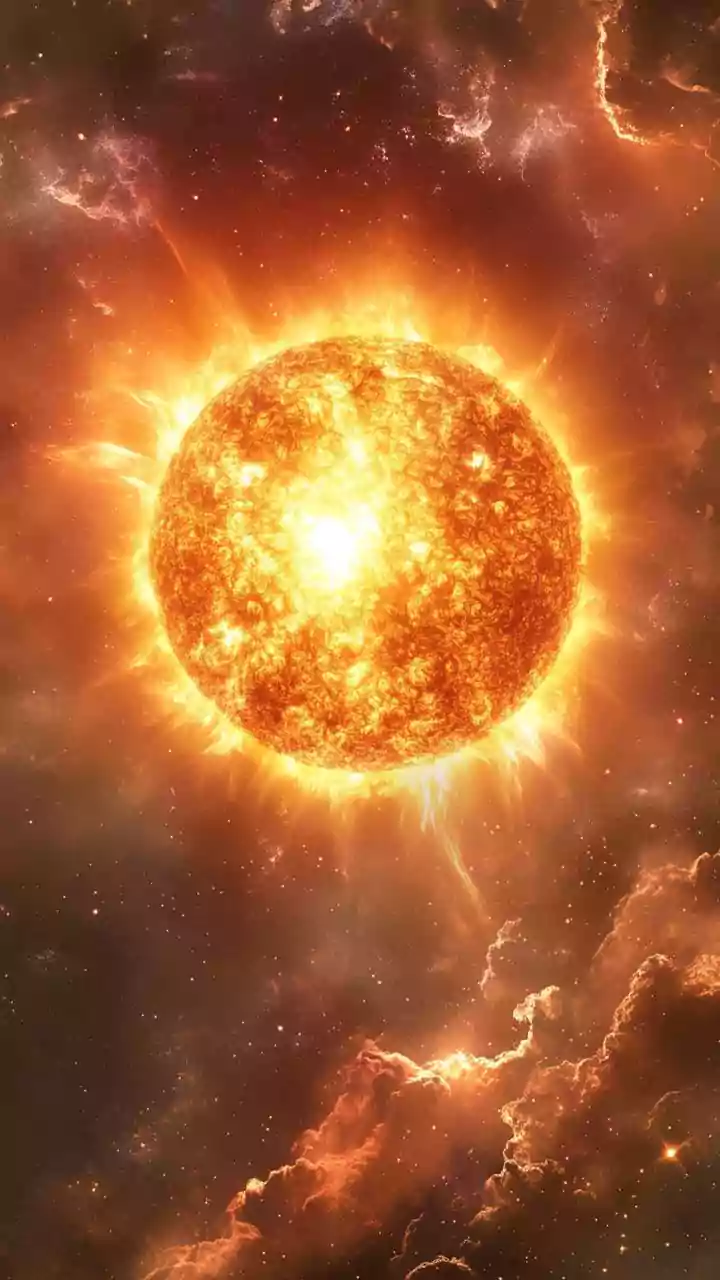
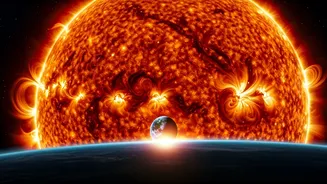
Here is where things get truly strange. This 3:2 dance has a dramatic effect on Mercury's solar day—the time from one sunrise to the next. Because the planet is rotating so slowly while also moving so quickly in its orbit (a year on Mercury is just 88 Earth days), the Sun appears to move across the sky at a glacial pace. In fact, a single solar day on Mercury lasts for about 176 Earth days. That’s right: a day on Mercury is two of its years long! You could be born, live through two New Year's celebrations, and still not have seen your second sunrise. This makes Mercury the only planet in our solar system with a day that is significantly longer than its year.
Watching the Sun Go Backwards
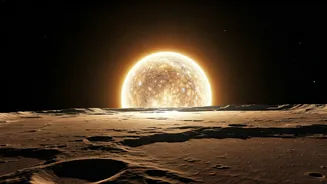
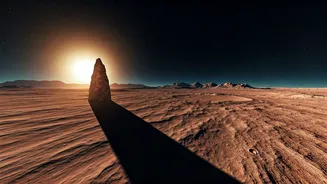
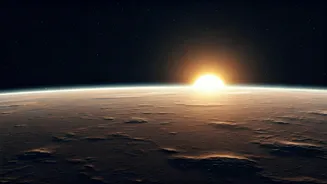
The experience of watching the sun from Mercury’s surface would be unlike anything else. Due to its highly elliptical (oval-shaped) orbit, Mercury’s orbital speed changes. When it is closest to the Sun (at perihelion), its orbital speed is so fast that it actually outpaces its rotational speed. For an observer on the ground, this would create a truly surreal spectacle. The Sun would rise in the east and begin its slow journey across the sky. Then, it would appear to slow down, stop, move backwards for a short period (a phenomenon known as retrograde motion), stop again, and then resume its slow crawl towards the west. In some parts of the planet, you could watch the Sun rise, dip slightly below the horizon, and then rise again before setting many Earth weeks later.