





Breaking Down the New FDI Rules
In a significant departure from its previous, more restrictive stance, the Indian government has unbundled the space sector into three distinct categories for Foreign Direct Investment (FDI). Previously, any foreign investment required government approval.
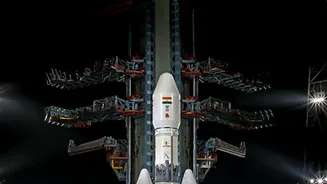
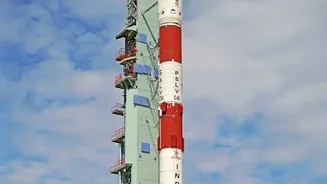
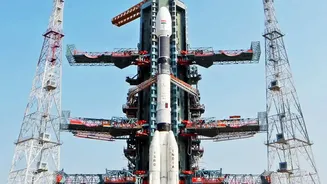
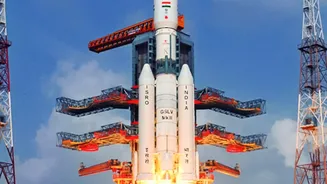
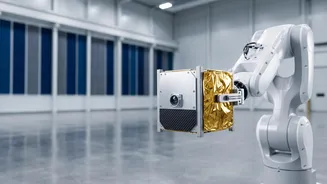
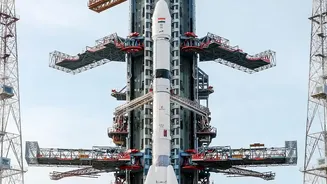
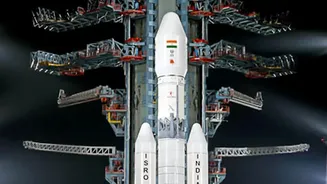
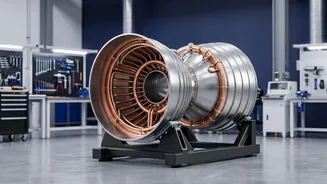
The new policy, effective April 2024, creates a tiered system designed to attract capital and technology with unprecedented ease. The most liberalised segment is the manufacturing of components and sub-systems for satellites and ground infrastructure, which is now open to 100% FDI through the automatic route, meaning no prior government approval is needed. For more complex activities like satellite manufacturing and operations, the automatic route is capped at 74% FDI, with larger stakes requiring government clearance. The most sensitive category, which includes launch vehicles and the creation of spaceports, allows up to 49% FDI via the automatic route, with any investment beyond that needing government approval.
Why This Change, and Why Now?
This policy liberalisation is a strategic move to turbocharge India's position in the global space economy. With the global market valued in the hundreds of billions of dollars and growing, India aims to increase its current market share significantly from its modest single-digit percentage. The reforms, which began gaining momentum in 2020 with the creation of the regulatory body IN-SPACe, are designed to transition the space sector from a government-led monopoly to a dynamic public-private ecosystem. By lowering entry barriers, India hopes to attract not just foreign capital but also cutting-edge technology and collaborations. This will help domestic firms scale up, innovate faster, and integrate into the global supply chain, shifting from being mere component suppliers for ISRO to becoming independent, globally competitive entities.
A Major Boost for Startups and 'Make in India'
The primary beneficiaries of this policy shift are India’s more than 400 space-tech startups. For years, these promising companies have faced challenges in securing the large-scale, patient capital required for space ventures. The liberalised FDI rules provide a direct pipeline to global venture capital and strategic investors, which is crucial for funding research, development, and infrastructure. This influx of investment is expected to create a vibrant domestic manufacturing base, directly fuelling the 'Make in India' initiative. As foreign companies are incentivised to set up production facilities in the country—especially for components where 100% FDI is allowed automatically—a robust ecosystem of high-tech manufacturing and skilled employment is expected to develop.
The Evolving Role of ISRO
This new policy does not sideline the Indian Space Research Organisation (ISRO); rather, it strategically redefines its role. For decades, ISRO has been the architect of India's space ambitions, achieving incredible milestones on a tight budget. The new framework allows ISRO to transition from being an operator of all space activities to focusing on what it does best: pioneering research, deep-space exploration missions like Gaganyaan, and developing next-generation technologies. Routine and commercial activities, such as building satellites and launch vehicles, can now be increasingly handled by the private sector, which can leverage ISRO's expertise and facilities. This allows the national agency to conserve its resources for strategic and scientific pursuits, while the commercial arm, NewSpace India Limited (NSIL), can focus on marketing these private capabilities to the world.