




Cosmic Nurseries in High Definition
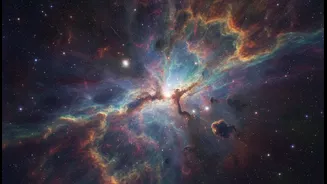
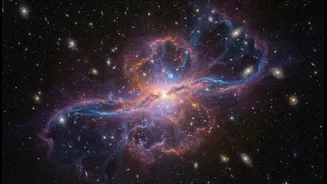
Before Webb, our views of star-forming regions were often obscured by thick clouds of dust. But the telescope's powerful infrared vision pierces through these veils, giving us a front-row seat to stellar birth. In images of regions like the Serpens Nebula
and FS Tau, Webb reveals baby stars, or protostars, as they gather mass from surrounding gas and dust. We can now see the dramatic outflows and jets of material they eject, which in turn sculpt the environment around them. Recent images even show gaps in these outflows, suggesting that stars grow in bursts and starts, like a project with interruptions, rather than in one continuous process. It’s the first time we’ve seen the raw mechanics of star-building in such incredible detail.
Assembling the First Galaxies
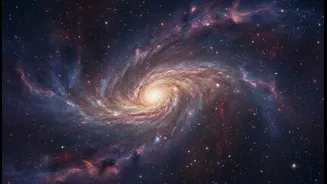
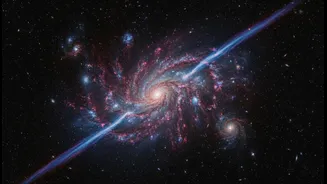
One of Webb’s most profound revelations is how quickly the early universe got to work. Astronomers are finding galaxies that are far larger, brighter, and more complex than theories predicted were possible so soon after the Big Bang. For instance, a galaxy confirmed as JADES-GS-z14-0 existed just 290 million years after the universe began, yet it was already surprisingly mature. Webb is also showing us what appear to be cosmic construction sites, where multiple early galaxies are found packed closely together, potentially in the process of merging into a single, giant galaxy over billions of years. This challenges the old idea of slow, gradual evolution, suggesting the universe was assembling its largest structures with unexpected speed.
Blueprints for New Worlds
Webb isn't just watching stars and galaxies; it's also observing the creation of future planets. The telescope provides unprecedented views of protoplanetary disks—swirling pancakes of gas and dust around young stars from which planets form. By studying the chemical makeup of these disks, scientists can inventory the raw materials available for planet formation, including water, carbon dioxide, methane, and other organic molecules. In some cases, Webb has found surprising chemical compositions, like a disk rich in carbon dioxide but low in water, challenging our assumptions about how Earth-like planets might form elsewhere. These observations are akin to analysing the foundation and materials of a house before it's even built, offering clues to the diversity of worlds the universe is capable of creating.
A Universe of Constant Change
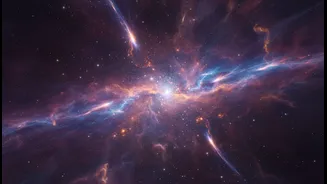
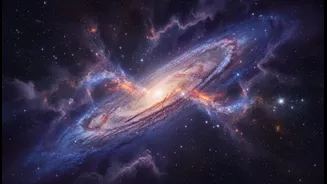
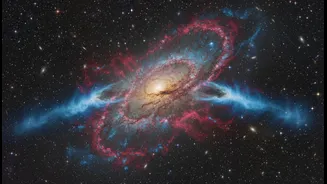
The feeling of a universe 'under construction' is perhaps most vivid in Webb's images of galactic collisions. In systems like IC 1623 and Centaurus A, we see galaxies actively merging, their structures distorted as they plunge into one another. These cosmic crashes are not just destructive; they trigger furious bursts of new star formation, creating new generations of stars at rates far exceeding that of our own Milky Way. The aftermath of a collision 2 billion years ago is still visible in Centaurus A, where Webb has performed 'galactic archaeology' by resolving individual stars that trace the galaxy's turbulent history. These images show that galaxies are not isolated islands but are constantly interacting, evolving, and rebuilding themselves over cosmic time.