



The Limits of Traditional Forecasting
For decades, weather and climate prediction has been the domain of massive supercomputers running what are known as numerical weather prediction (NWP) models. These systems operate by solving complex physics equations that govern the Earth's atmosphere
and oceans. Think of it as creating a digital twin of the planet and running it forward in time. While incredibly powerful and based on decades of research, this method has its limits. These simulations are computationally intensive, requiring immense processing power and hours to generate a single forecast. This time lag can be critical, especially when trying to predict fast-moving, high-impact weather events.
A New Approach with Artificial Intelligence
AI models are flipping the script. Instead of solving physics equations from scratch, these systems—often built on deep learning and neural networks—are trained on vast amounts of historical weather data. By analyzing decades of past atmospheric conditions and outcomes, the AI learns the complex patterns and cause-and-effect relationships that drive the weather. This data-driven approach allows AI to generate forecasts by recognizing which current conditions are likely to lead to specific future outcomes, a fundamentally different and more efficient method.
Breakthroughs in Speed and Accuracy
The results of this new approach have been stunning. Models like Google DeepMind's GraphCast can produce a highly accurate 10-day global forecast in under a minute on a single machine. In comparison, the industry's gold-standard traditional models can take hours on a supercomputer to achieve a similar result. In benchmark tests, GraphCast outperformed the leading conventional forecasting system on 90% of verification targets. Similarly, NVIDIA's FourCastNet model has demonstrated the ability to match or exceed the accuracy of top numerical models but at a fraction of the time and energy cost. This leap in efficiency doesn't just make things faster; it opens up entirely new possibilities for forecasting.
Earlier Warnings for Extreme Events
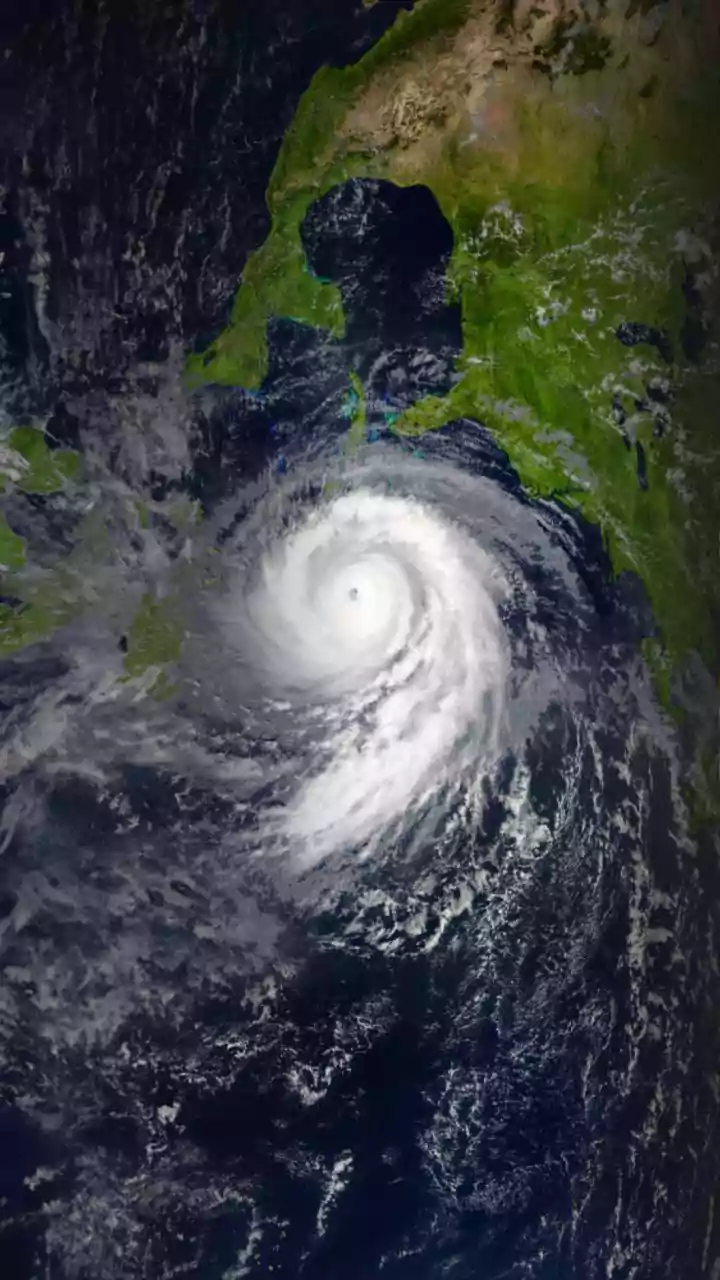
One of the most significant benefits of AI-powered forecasting is the ability to provide earlier and more reliable warnings for extreme weather events. With the ability to run thousands of potential scenarios, or ensembles, very quickly, forecasters can better predict low-probability but high-impact events like hurricanes, atmospheric rivers, and heatwaves. For example, Google's GraphCast demonstrated its power by accurately predicting the path of Hurricane Lee days before it made landfall. This extra lead time is invaluable for communities and emergency response teams, allowing for better preparation that can help mitigate damage and save lives.
A Human and AI Partnership
Despite the remarkable advances, AI is not poised to replace human meteorologists. Instead, it's becoming an incredibly powerful tool that augments their expertise. Experts emphasize that human oversight is crucial for interpreting AI-driven forecasts, catching potential biases, and contextualizing the data. The new paradigm is a human-in-the-loop approach, where AI handles the heavy computational lifting, and human forecasters use their scientific knowledge to refine, validate, and communicate the predictions. This allows scientists to spend less time waiting for models to run and more time on analysis, research, and understanding the complex dynamics of our changing climate.