







The Sticky Problem of Humidity
The arrival of the monsoon is a joy, but the high humidity it brings can be a nightmare for your pantry. Sugar, being hygroscopic, naturally attracts and absorbs moisture from the air. When this happens, the individual crystals dissolve slightly on the surface,
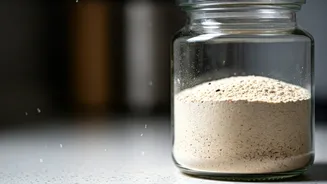
stick together, and then solidify into a single, un-scoopable lump as the moisture level fluctuates. This doesn't just affect sugar; salt, coffee powder, and even biscuits fall victim to the dampness, losing their texture and freshness. The battle against clumping is a common one in Indian households during the rainy season, often leading to frustration and waste. The key is to control the environment inside your storage containers. [3, 23]
An Aromatic Kitchen Hero
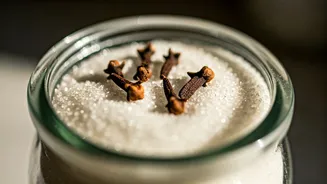
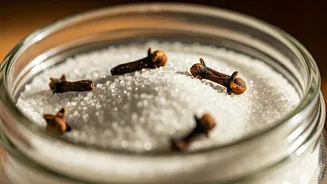
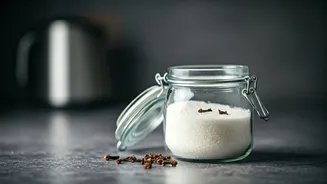
Enter cloves, the small, nail-shaped flower buds that are a staple in Indian spice boxes. This humble spice is often lauded as a traditional solution to the problem of clumpy sugar. It’s a simple, natural, and inexpensive kitchen hack passed down through generations. The idea is that adding a few cloves to your sugar jar can help maintain its powdery, free-flowing consistency, even when the air outside is thick with moisture. But it's not just about moisture; the strong, distinct aroma of cloves also serves another important purpose: it acts as a natural deterrent for ants and other tiny pests that might be attracted to your sugar. [6]
How This Simple Hack Works
The effectiveness of cloves is believed to be twofold. First, the essential oils in cloves, particularly eugenol, have properties that can help manage moisture. [2] While they don't absorb large amounts of water like a desiccant, they can help in regulating the micro-environment within the jar. Secondly, and perhaps more effectively, the potent aroma of cloves creates a barrier that ants find unpleasant, preventing them from marching into your sugar supply. [6] This combination makes it a popular choice. For this trick to be effective, it’s crucial to start with the right foundation: a clean, completely dry, and airtight container, preferably made of glass, which is less porous than plastic. [4, 8]
Your Simple Step-by-Step Guide
Using cloves to protect your sugar is incredibly easy. First, choose your container. A glass jar with a tight-fitting lid is the ideal choice. [6] Ensure it is washed and, most importantly, completely dry before you begin. Any residual water will defeat the purpose. Fill the jar with your sugar, but don't pack it down too tightly. Then, simply add four to five whole cloves and drop them into the sugar. [6] Give the jar a gentle shake to distribute them. That’s it. The cloves will slowly release their aroma and get to work. Remember to always use a dry spoon when taking sugar out of the jar to avoid introducing new moisture. [3]
Other Natural Desiccants to Try
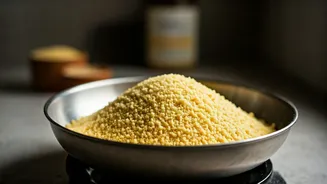
While cloves are a great dual-purpose tool, other natural items are famously effective at absorbing moisture. A few uncooked rice grains are a classic example. You can either place them at the bottom of the jar before adding sugar or tie them in a small piece of muslin cloth and tuck it inside. [2, 6] The rice acts as a powerful desiccant, pulling moisture from the air before the sugar can. A single saltine cracker or a small piece of bread can also work, as they readily absorb moisture. [16, 23] These may need to be replaced every few weeks as they become saturated. Another traditional method involves using a small piece of a cinnamon stick, which offers both moisture protection and a pleasant aroma. [2]
Expanding the Principle to Your Pantry
The principles of keeping sugar dry apply to many other pantry staples that suffer during the monsoon. For your salt shaker, a few grains of rice work wonders to prevent clogging. [7] For spice powders, which can lose their potency and form clumps, ensure they are stored in small, airtight containers away from the stove's steam and heat. [8] Biscuits and other dry snacks should be transferred from their original packaging into airtight jars to keep them crisp. For an extra layer of protection in cabinets, you can place food-safe silica gel packets or even small, open bowls of baking soda to help absorb ambient humidity in the enclosed space. [5, 9, 10]