


A Mission of Many Firsts
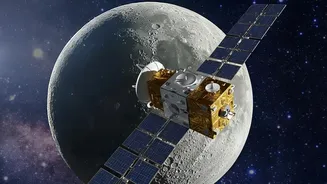
Chandrayaan-4 represents a monumental leap for India's space program. Scheduled for a 2028 launch, its primary goal is to perform a lunar sample return, a feat only accomplished by the United States, the former Soviet Union, and China. Unlike previous
missions that conducted analysis on-site, Chandrayaan-4 aims to bring up to 3 kilograms of lunar material back to Earth for in-depth study in advanced labs. This mission is incredibly complex, requiring two separate launches, docking manoeuvres in both Earth and lunar orbit, and launching a vehicle off the Moon's surface—all firsts for ISRO. The Union Cabinet approved the mission in September 2024, signaling a major commitment to advancing India's space exploration capabilities.
The Two-Launch Strategy
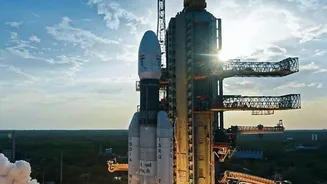
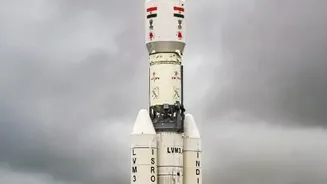
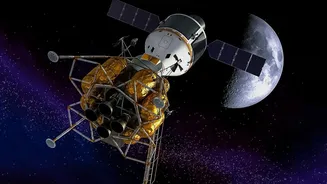
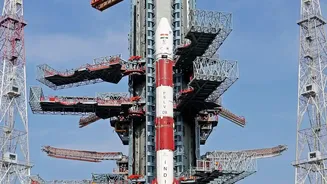
The sheer weight and complexity of the mission mean a single rocket won't suffice. ISRO plans to use two of its heaviest launch vehicles, the LVM3, to send the mission's five distinct modules into space. The first rocket will carry the Descender Module (the lander) and the Ascender Module. The second launch will carry the Propulsion Module, the Transfer Module, and the Re-entry Module. These two stacks will then perform a delicate docking manoeuvre while orbiting Earth to form the single, integrated spacecraft that will journey to the Moon. This ambitious strategy is crucial for getting all the necessary hardware to its destination.
Landing and Scooping Up Soil
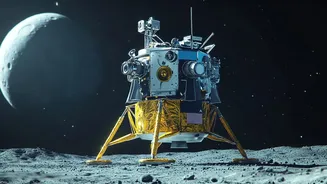
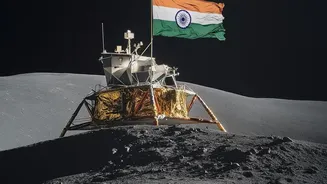
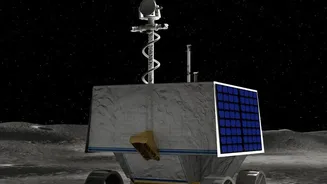
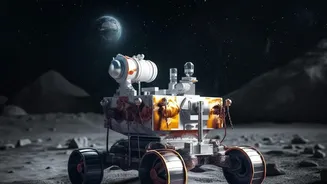
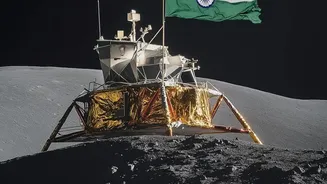
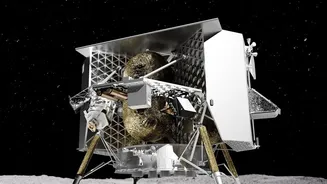
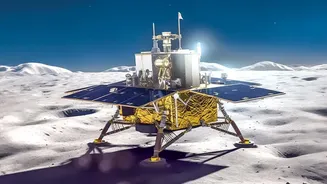
After reaching lunar orbit, the Descender and Ascender modules will separate and perform a soft landing near the Moon's south pole, a region of immense scientific interest. Once safely on the surface, the collection process begins. The lander will be equipped with a robotic arm, also known as the Surface Sampling Robot, which will scoop up soil and rocks from the area around the lander. This surface material, called regolith, will be transferred into a special container aboard the Ascender Module. The entire operation will be monitored using video cameras to ensure a successful collection.
Drilling for Buried Treasure: Water Ice
Beyond just surface soil, Chandrayaan-4 has a more challenging target: subsurface water ice. The mission will land near a Permanently Shadowed Region (PSR), an area that never sees sunlight and is therefore cold enough to have preserved ice for billions of years. To reach it, the lander will use a dedicated drilling mechanism to collect samples from beneath the surface. These subsurface samples will be placed in a separate, sealed container to prevent the delicate ice from vaporizing or getting contaminated. Data from the Chandrayaan-2 orbiter has already identified promising locations with signs of subsurface ice, giving the mission a clear target.
The Complex Return Journey
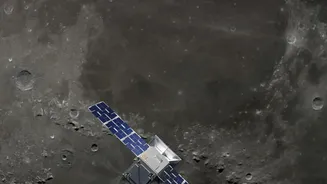
Once the samples are secured, the most nail-biting part of the mission begins. The Ascender Module will use the lander as a launchpad, firing its engines to lift off from the lunar surface and return to orbit. There, it must perform another automated docking with the Transfer and Re-entry modules that have been waiting. The sample containers will be robotically transferred to the Re-entry Module, which is essentially a heat-shielded capsule designed to survive a fiery plunge through Earth's atmosphere. After the transfer, the Transfer Module will fire its engines to send the Re-entry Module on its way back to Earth for a safe landing.
Why Bring Moon Rocks to Earth?
While rovers can perform amazing science on the Moon, they are limited by the instruments they can carry. Bringing samples back allows scientists to use the full power of Earth-based laboratories. These pristine samples from a geologically diverse and unexplored region can be analyzed with massive, highly sensitive equipment to unlock secrets about the Moon's origin, the history of our solar system, and the potential for future resource utilization. The ability to study these samples for decades to come, using ever-improving technology, is why sample-return missions are considered a crown jewel of planetary exploration.