



Understanding the Starting Point
Instant noodles are a go-to for a reason, but nutritionally, they are often a blank slate. A typical single serving is high in refined carbohydrates, sodium, and saturated fat, while being notably low in protein, fibre, and essential vitamins. The included
flavour sachet is the primary source of the staggering sodium content, which can sometimes approach an entire day's recommended intake in one packet. While convenient, relying on them as a complete meal without any additions can lead to a diet lacking in crucial nutrients. The goal isn't to demonise them, but to see them as a base—a canvas ready for a nutritional masterpiece.
Rethink the Flavour Packet
The easiest and most impactful change you can make is to use only a portion of the seasoning packet, or better yet, ditch it entirely. That little sachet is loaded with sodium and often contains monosodium glutamate (MSG), which can cause discomfort for sensitive individuals. Instead, create your own flavour base. A low-sodium broth, a spoonful of miso paste, or a dash of soy sauce and sesame oil can provide that savoury depth you crave without the salt overload. For an Indian twist, try a simple tadka of mustard seeds and curry leaves in a little oil, or add a pinch of turmeric, coriander powder, and a squeeze of lime to the water.
Power Up with Protein
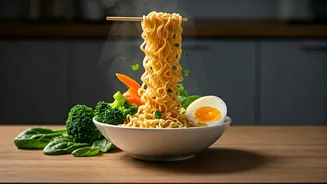
One of the biggest nutritional gaps in a bowl of instant noodles is the lack of protein, which is essential for keeping you feeling full and satisfied. Fortunately, adding a protein source is easy. A soft-boiled or fried egg is a classic and simple addition. Cubed paneer or tofu can be pan-fried and tossed in, absorbing the flavours of your broth beautifully. Leftover cooked chicken, shredded, is another quick option. For a vegetarian protein boost, consider adding a handful of edamame, chickpeas, or even lentils to the mix.
Load Up on Vegetables
Transform your noodle bowl into a more balanced meal by loading it with vegetables. This will boost your intake of fibre, vitamins, and minerals. Quick-cooking vegetables are your best friends here. Think leafy greens like spinach or bok choy that wilt in seconds. Shredded carrots, sliced mushrooms, bell peppers, and frozen peas or corn can be thrown into the pot while the noodles cook. For extra crunch and flavour, top your finished bowl with fresh spring onions, coriander, or bean sprouts. Adding a variety of colourful vegetables not only enhances the nutritional profile but also makes the meal more visually appealing.
Choose Your Noodle Wisely
The noodle block itself is typically made from refined wheat flour and is often fried, which contributes to the high fat content. As the market evolves, healthier options are becoming more available. Look for instant noodles that are baked instead of fried to reduce fat. Whole-wheat, millet, or multigrain noodles are also excellent alternatives, offering more fibre and nutrients than their refined flour counterparts. Some brands even offer noodles made from brown rice or quinoa. Reading the packaging can help you make a more informed and healthier choice from the start.