



The Box Office Doesn't Lie
A quick glance at recent box office charts tells a compelling story. The first quarter of 2026 saw domestic box office revenue surge, marking the strongest start to a year since the pandemic. This robust recovery isn't being driven by quiet dramas or subtle
comedies. Instead, the heavy lifters are franchise blockbusters and visually ambitious epics. Films like 'Spider-Man: Brand New Day,' 'The Odyssey,' and 'Avatar: Fire and Ash' have dominated ticket sales, often breaking records. In fact, the summer of 2026 was a blockbuster season, with overall revenue surpassing pre-pandemic levels from 2019. The common thread? They are all massive visual and auditory experiences designed to be overwhelming in the best way possible. These aren't just movies; they are theatrical events.
An Experience You Can't Replicate at Home
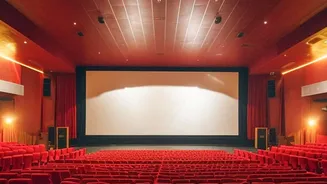
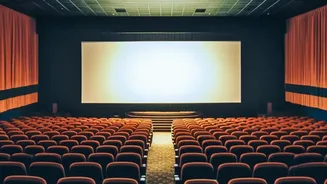
The rise of high-quality home entertainment systems was once seen as the death knell for cinemas. Instead, it has clarified their purpose. While smaller, character-driven stories often translate well to the small screen, spectacle films thrive on a scale that home setups cannot match. This is where premium large formats (PLFs) like IMAX have become critical. IMAX screens, which make up only about 1% of the global total, captured nearly 6% of the summer box office revenue. For a film like Christopher Nolan's 'The Odyssey,' enhanced formats accounted for a staggering 41% of its worldwide box office haul. Audiences are not just paying for a movie; they are paying for bigger screens, superior sound systems, and a focused environment with minimal distractions—an immersion that makes the film feel important.
The Sofa Factor and Streaming's New Role
The convenience and cost-effectiveness of streaming are undeniable. This has fundamentally changed the types of films that get a wide theatrical release. Mid-budget dramas, romantic comedies, and other genres that don't depend on epic scale are now more likely to go directly to a streaming platform. This shift has created a clear dividing line in the industry: if a film can be just as enjoyable on a laptop, its chances of commanding a major theatrical run are diminished. Consequently, studios are pouring their theatrical marketing budgets into films that offer a clear, undeniable reason to leave the house. You don't see merchandise flying off the shelves for a straight-to-streaming movie, because the cultural footprint of a theatrical blockbuster is simply deeper and more resonant.
It's a Communal Happening
Beyond the technical specifications, the theatrical experience offers something fundamentally human: community. Watching a jaw-dropping action sequence or gasping at a plot twist alongside hundreds of other people creates a collective energy that streaming cannot replicate. This social aspect turns a movie outing into a memorable event, whether it's a date night or a hangout with friends. For many younger moviegoers, seeing a major film on its opening weekend is a preferred social activity, driven by a desire to be part of a cultural conversation and avoid spoilers. The shared laughter, applause, and silence are part of the magic, reminding us that for all our technological isolation, we still crave shared experiences.
The Symbiotic Future of Screens and Spectacles
The trend is clear: multiplexes are becoming the domain of the spectacular. This has created a symbiotic relationship. Theaters need event films to justify their existence and premium ticket prices, and studios need the massive scale and cultural impact of theatrical releases to launch billion-dollar franchises. While some may mourn the decline of mid-budget films in theaters, the evolution is a direct response to audience behavior. People haven't stopped loving movies, but they have become more selective about which ones are worth leaving the house for. As long as filmmakers continue to push the boundaries of visual storytelling, audiences will show up to witness the spectacle in the one place that can truly do it justice.