








The Legend of the Seven Pagodas
The story of Mahabalipuram, or Mamallapuram, is steeped in myth. For centuries, European mariners referred to this Pallava dynasty port city as the 'Land of the Seven Pagodas'. Local folklore tells of a city so beautiful and prosperous that it invoked
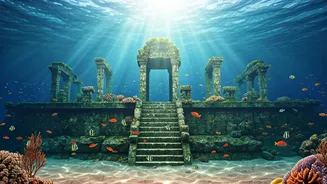
the jealousy of the gods. Lord Indra, the god of rain and storms, is said to have unleashed a cataclysmic tempest, swallowing six of the seven magnificent shore-side temples. Only one, the iconic Shore Temple, was left standing as a solitary testament to a grand, submerged past. For generations, fishermen have passed down stories of glimpsing the glittering tops of these sunken structures beneath the waves, keeping the legend alive.
A Modern-Day Quest Begins
What was once dismissed as mere folklore began to attract serious scientific attention. In the early 2000s, India's National Institute of Oceanography (NIO), in collaboration with the UK-based Scientific Exploration Society, decided to investigate these persistent claims. The first underwater explorations began in 2001, led by the Archaeological Survey of India (ASI). Armed with side-scan sonar and a desire to sift fact from fiction, teams set out to map the seabed off the coast of the Shore Temple, venturing into the very waters that supposedly held the keys to the ancient riddle.
The Tsunami's Tragic Revelation
The devastating Indian Ocean tsunami on December 26, 2004, brought unimaginable tragedy to the coastline, but it also offered a fleeting, stunning glimpse into the past. As the sea pulled back an estimated 500 metres from the shore just before the wave struck, eyewitnesses reported seeing a long row of large, dark rocks and structures emerge from the seabed. When the waters returned, they did so with furious force, but in the process, they scoured away centuries of sand. This catastrophic event uncovered previously hidden statues on the beach, including a large granite lion, and gave dramatic, tangible credence to the fishermen's tales. The revelations spurred the ASI and the Indian Navy to intensify their underwater search.
What Lies Beneath?
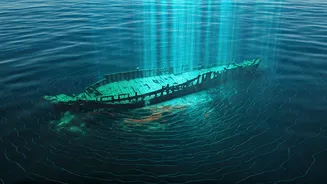
The subsequent expeditions have transformed the legend. While a grand city of six intact temples has not been found, the discoveries are no less remarkable. Sonar surveys and diving explorations have confirmed the existence of significant man-made structures submerged 5 to 8 metres deep, up to 800 metres from the current shoreline. Archaeologists have documented extensive walls, some stretching over 10 metres, scattered dressed stone blocks, flights of steps leading to platforms, and other architectural elements. These are not natural rock formations; their shapes and alignments point clearly to human activity, confirming that the ancient city of Mahabalipuram was far more extensive than the monuments visible on land. The findings suggest a large complex was submerged over time, likely due to a combination of coastal erosion and possibly past tsunami events.
The Search Continues
The quest is far from over. After a hiatus of nearly two decades, the ASI's Underwater Archaeology Wing resumed explorations in recent years, now equipped with advanced technology like Remotely Operated Vehicles (ROVs). This new phase of fieldwork aims to create high-resolution documentation of the submerged remains without disturbing them, allowing for safer and more precise research in deeper waters. Some recent findings even suggest that some ruins could date back to a pre-Pallava period, potentially as far back as the first century, adding even more depth to the history of this ancient port. The mission continues to solve the riddle of the Pallava dynasty's maritime capital, which once served as a landmark for sailors for hundreds of years.