


The Building Blocks of Life
Let’s start with the basics. Proteins are essential macronutrients that function as the building blocks for our bodies, crucial for everything from muscle repair to immune function. These proteins are made up of smaller units called amino acids. There
are 20 different amino acids, but nine of them are called 'essential amino acids'. Our bodies can't produce these nine on their own, so we must get them from the food we eat. Think of them as the essential letters of the alphabet that you can't create yourself; you need to find them in your food 'dictionary' to spell the words your body needs to function.
What Makes a Protein 'Complete'?
A food source is called a 'complete protein' when it contains all nine essential amino acids in adequate amounts. Animal-based products like meat, fish, eggs, and dairy are classic examples of complete proteins. This is where a common concern arises for those following vegetarian or vegan diets. Most individual plant-based foods, such as grains, nuts, and legumes, are considered 'incomplete' proteins because they are low in one or more of these essential amino acids. However, 'incomplete' doesn't mean 'inferior'—it just means we need to be a little smarter about how we combine them.
A Quick Look at Protein Scores
Scientists use scoring systems to measure a protein's quality, which refers to its amino acid content and how digestible it is. You might hear terms like PDCAAS (Protein Digestibility-Corrected Amino Acid Score) or the newer DIAAS (Digestible Indispensable Amino Acid Score). These methods were developed by organizations like the FAO/WHO to evaluate how well a protein source can meet human nutritional needs. In essence, these scores tell us how efficiently our bodies can absorb and use the amino acids from a particular food. While animal proteins generally score higher, this system also reveals the key to unlocking the power of plant proteins.
The Plant-Based Puzzle Pieces
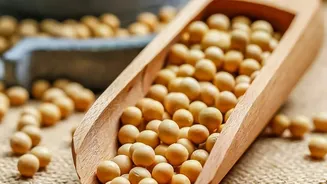
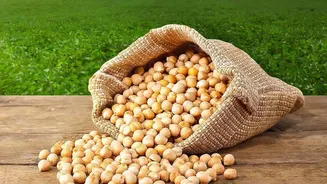
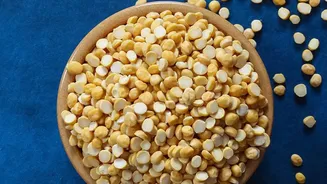
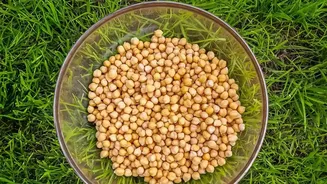
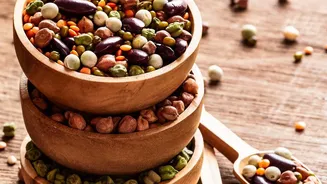
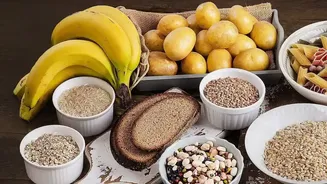
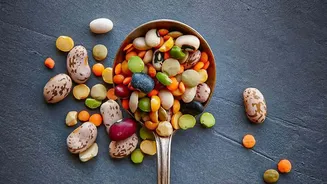
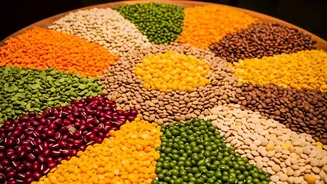
Here's the puzzle: different plant foods have different amino acid profiles. They have what are called 'limiting amino acids', which are the essential amino acids they are lowest in. Grains like rice and wheat are typically low in the essential amino acid lysine but contain sufficient amounts of methionine. On the other hand, legumes—a food group that includes dals, beans, chickpeas, and lentils—are the mirror opposite. They are rich in lysine but low in methionine. This complementary deficiency is the secret to solving the plant-protein puzzle.
The Perfect Partnership: Grains and Legumes
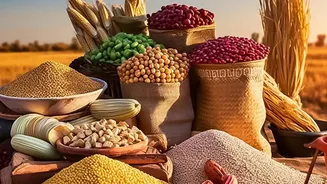
When you combine a grain with a legume, their strengths and weaknesses balance each other out perfectly. The abundant lysine in the legumes makes up for the lack of it in the grain, while the methionine from the grain fills the gap in the legume. Together, they create a meal with a 'complete' amino acid profile, providing all nine essential building blocks your body needs, just as an animal-based protein source would. This powerful synergy is why so many traditional cuisines around the world have instinctively paired these two food groups.
Do I Need to Eat Them Together?
This is a key question, and the answer is a relieving 'no'. An old myth suggested that you had to eat complementary proteins in the exact same meal for your body to use them. Modern nutritional science has debunked this. Research shows that the body maintains a pool of amino acids it can draw from. As long as you consume a variety of plant protein sources throughout the day, your body can combine them as needed to synthesize complete proteins. So, if you have dal for lunch and a roti for dinner, your body knows what to do.
Delicious Duos in Your Kitchen
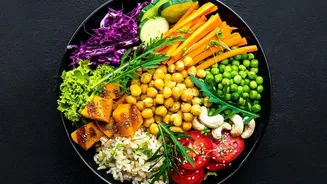
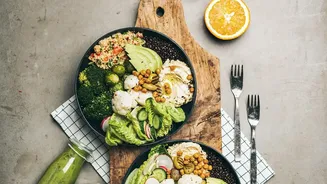
This nutritional wisdom is deeply embedded in Indian cuisine. The classic combination of dal and rice is a perfect example of a complete protein meal. Other examples are abundant: rajma with rice, chana masala with roti or naan, and the humble yet perfectly balanced khichdi. These pairings aren't just delicious and comforting; they are nutritionally brilliant. Other global examples include Mexican rice and beans, Middle Eastern hummus and pita bread, and a simple peanut butter sandwich on whole wheat bread.