


Long before 'upcycling' became a global trend, communities across India were mastering the art of turning old textiles into new treasures. This philosophy of resourcefulness is beautifully embodied in crafts like Sujini, Kantha, and Chindi.
Kantha: The Running Stitch of Bengal
Perhaps the
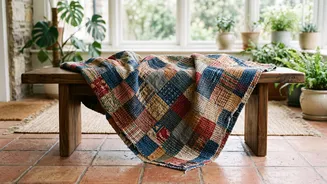
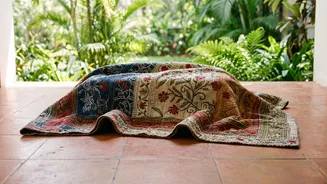
most widely recognized of these traditions, Kantha comes from the Bengal region, spanning West Bengal and Bangladesh. The word itself is thought to derive from the Sanskrit 'kontha', meaning rags. At its core, Kantha was born from necessity and affection. Women would layer several old, worn-out saris or dhotis, often five to six deep, and bind them together with a simple running stitch. The thread used for this stitching was often pulled from the colourful borders of the same old saris, ensuring nothing went to waste. This process transformed soft, delicate, and used cloth into durable, multi-layered quilts (known as lep) for warmth, blankets for babies, or simple covers. The beauty of Kantha lies in its simplicity and the texture created by the dense, rippling lines of stitches. While the basic stitch is simple, master artisans create intricate 'nakshi kantha' featuring elaborate motifs of flowers, animals, and scenes from folklore and daily life.
Sujini: The Story-Telling Quilts of Bihar
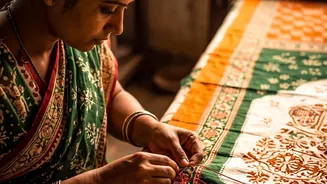
Originating in the villages of Bihar, particularly the Bhusara area in Muzaffarpur, Sujini (or Sujani) is an expressive embroidery craft with a powerful history. The name itself combines 'su' (easy) and 'jani' (birth), referencing its original purpose. Traditionally, Sujini quilts were made to wrap newborn babies. Like Kantha, the craft involved layering old saris and dhotis and stitching them together. This was not just for warmth but was imbued with deep cultural significance. The act of stitching together disparate pieces of cloth was seen as a ritualistic act, and the quilts were embroidered with motifs meant to protect the child from evil and attract blessings. In the late 20th century, the craft was revived and took on a new role as a medium for social commentary, with women using the embroidery to narrate their personal stories, struggles, and aspirations. Today, Sujini panels depict scenes of village life, social issues like dowry, and empowering images of women, making it a living, breathing form of textile storytelling that has earned a Geographical Indication (GI) tag.
Chindi: Weaving a New Life from Scraps
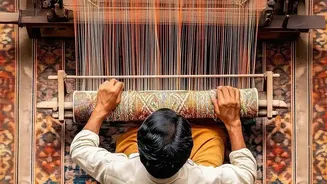
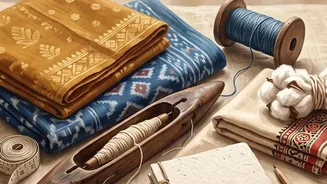
The word 'Chindi' in Hindi literally means 'torn cloth' or 'scrap'. This craft is perhaps the most direct and literal form of textile upcycling. It involves collecting leftover fabric strips—remnants from tailors, garment factories, or scraps from old household textiles—and weaving them into something entirely new. Primarily practiced in states like Rajasthan, Uttar Pradesh, and Maharashtra, Chindi work transforms what would be landfill waste into vibrant and functional items. Traditionally, women would create yarn from fabric scraps and then weave or braid them to make colourful dhurries (rugs), mats, coasters, and baskets. The process is straightforward but labour-intensive. Scraps are sorted, cut into uniform strips, and then hand-loomed or plaited together. Because the raw material is a random assortment of colours and textures, every Chindi product is unique, with a riot of colours that gives it a playful and eclectic charm.
A Common Thread of Sustainability
While Sujini uses embroidery to tell stories, Kantha layers cloth with its signature running stitch, and Chindi weaves scraps into a new fabric, all three share a profound, underlying principle. They are all born from a mindset of frugality, resourcefulness, and a deep-seated respect for materials. These crafts demonstrate a circular economy that existed long before the term was coined, where the end of one object’s life is simply the beginning of another's. They represent a creative and sustainable solution to waste, transforming the old and discarded into objects of both beauty and utility. More than just textiles, they are tangible expressions of a culture that has always known how to make the most of what it has.