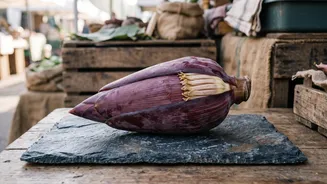



For those who cherish it, the banana flower is more than an ingredient; it's a taste of tradition. But this culinary gem, known as mocha or vazhaipoo, is slowly disappearing from our markets, caught between changing weather and farm economics.
A Prized Culinary Tradition
In the rich
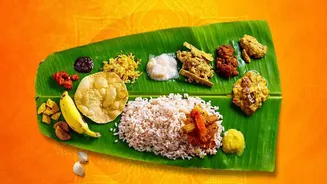
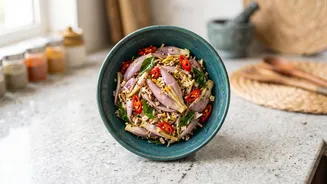
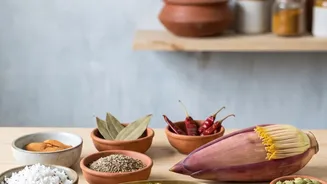
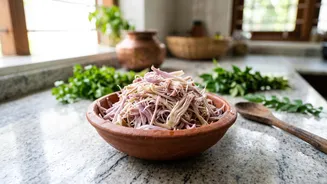
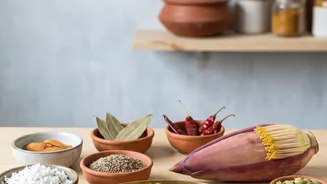
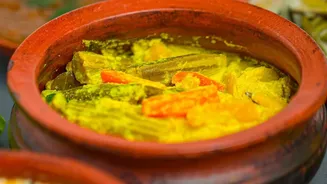
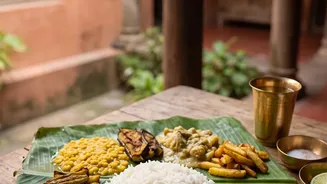
tapestry of Indian cuisine, especially in the south and east, nearly every part of the banana plant is used. From the fruit to the stem, nothing goes to waste. The large, purplish, tear-drop-shaped flower, known as banana blossom, holds a special place. It is the star of beloved dishes like 'mochar ghonto' in Bengal, a richly spiced, slow-cooked delicacy, and 'vazhaipoo poriyal' in the South, a savory stir-fry. These dishes are not just food; they are a labor of love, often involving a communal effort to clean and prepare the delicate florets inside the tough outer petals. The flower itself has a unique, slightly nutty flavor and a texture reminiscent of artichoke hearts, capable of absorbing spices beautifully.
The Farmer's Economic Choice
The core of the supply problem lies in a simple economic trade-off for farmers. Each banana plant produces only one flower. A farmer can choose to harvest this flower for a modest, one-time income. Or, they can leave it on the plant to mature into a full bunch of bananas, which fetches a significantly higher and more reliable price in the market. With the commercial cultivation of bananas geared towards year-round fruit production for domestic consumption and export, the economic incentive is heavily skewed towards the fruit. The banana flower has become an agricultural byproduct that is often discarded, despite its nutritional value. Unless there's a dedicated market or a sufficiently high price for the blossom, it makes more financial sense for farmers to focus on the more lucrative fruit.
The Unpredictable Monsoon Factor
Compounding the economic pressure is the increasing volatility of the monsoon. Banana plantations are highly vulnerable to weather-related shocks. Heavy rains and the high-velocity winds that often accompany the monsoon can cause widespread damage, uprooting plants and leading to significant crop losses. In states like Tamil Nadu and Kerala, where banana cultivation is a major commercial activity, this weather-induced risk makes farmers even more cautious. They are less likely to risk even the small potential income from the flower when the entire plantation could be jeopardized. Prioritizing the main fruit crop becomes a strategy for survival, further sidelining the harvest of the more delicate and less profitable blossom.
A Disappearing Delicacy
The result of these converging pressures is felt in kitchens and markets across the country. The banana flower, once a common sight, is now becoming a specialty item. Its preparation is notoriously time-consuming, and in cities, many vegetable sellers have stopped stocking it due to low demand and the tediousness of pre-chopping it for customers—a service that was once common. For home cooks and chefs who still seek it out, the search is often difficult and the price is rising. What was once a humble, accessible vegetable is now turning into a rare delicacy. This scarcity threatens not just specific recipes, but a part of India's culinary heritage that celebrates resourcefulness and the use of the entire plant.