






A New Sentinel in Geosynchronous Orbit
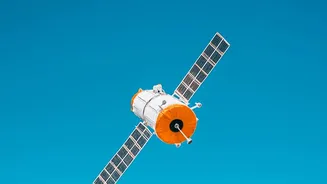
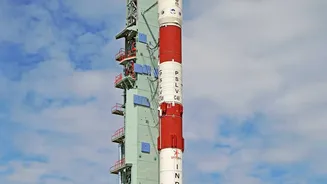
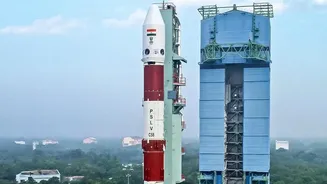
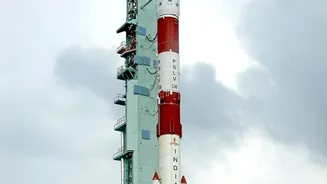
Early this morning, ISRO's powerful Geosynchronous Satellite Launch Vehicle (GSLV) lifted off from the Satish Dhawan Space Centre in Sriharikota, carrying the EOS-05 satellite. Unlike many other Earth-observation satellites that circle the planet in lower
orbits, EOS-05 is destined for a geosynchronous orbit, approximately 36,000 kilometres above the Earth. This high perch allows it to stay stationary over a large area, providing continuous watch over the Indian subcontinent. The mission is a major boost for ISRO, marking its first successful launch of 2026 and putting past launch failures behind it. Weighing around 2,367 kg, EOS-05 is one of the heaviest satellites of its kind launched by a GSLV, showcasing India's growing capability in launching complex, heavy payloads.
The Power of All-Weather Vision
The key technology aboard EOS-05 is believed to be a Synthetic Aperture Radar (SAR). Think of it as a camera with its own powerful flash that can slice through clouds, fog, smoke, and darkness. While traditional optical satellites are effectively blinded by bad weather or at night, a SAR satellite actively sends out microwave pulses and reads the echoes that bounce back. This provides a clear picture of the ground regardless of the conditions. This all-weather, day-and-night capability is a game-changer, especially for a country like India that experiences heavy monsoon seasons. This technology allows for consistent monitoring when it's needed most, such as during cyclones or floods.
From Farm to Frontier
The applications for a satellite like EOS-05 are vast and touch upon critical sectors of the Indian economy and security. For agriculture, it can provide invaluable data on soil moisture, crop health, and flood or drought impact, helping farmers make informed decisions and safeguarding food security. In disaster management, its ability to see through clouds will allow authorities to map the extent of flooding, track cyclones, and assess damage from landslides or earthquakes in near real-time, enabling faster and more effective response. The data will also support urban planning, forestry, and monitoring of water resources. Furthermore, there are significant strategic implications. The satellite enhances India's ability to monitor its borders and maritime interests, providing crucial intelligence for national security.
A Boost for Self-Reliance in Space
The successful launch of EOS-05 is another feather in the cap for ISRO's push towards 'Aatmanirbhar Bharat' or a self-reliant India. By developing and launching such advanced satellites domestically, India reduces its dependence on foreign agencies for critical data. This mission demonstrates ISRO's mastery over the complex GSLV rocket and its cryogenic upper stage, a technology that is crucial for placing heavy satellites into high orbits. This homegrown expertise is not just a matter of national pride; it's a strategic asset that gives India autonomy in how it uses space technology to drive development, manage resources, and secure its interests.