







A Look Inside ESA's Digital Toolkit
At the heart of Europe's planetary defense are the tools developed by ESA's Near-Earth Object Coordination Centre (NEOCC). The flagship offering is the NEO Toolkit, a free and publicly accessible suite of web-based applications designed for everyone from
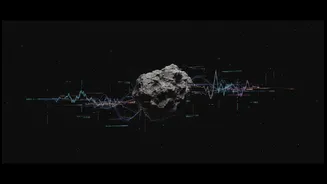
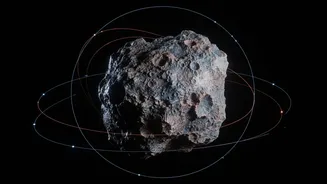
professional astronomers to curious citizens. This isn't a single program, but a collection of specialised instruments. The Orbit Visualisation Tool creates 3D models of asteroid paths, while the Flyby Visualisation Tool simulates close approaches to Earth. For those looking to spot these objects, the Observation Planning Tool helps determine when and where an asteroid will be visible, and the Sky Chart Display Tool maps its path across the night sky. A more recent addition, the Synodic Orbit Visualisation Tool, offers an intuitive way to understand an object's observability from our moving planet. Together, these components provide a comprehensive and transparent view of the near-Earth environment.
From Uncertainty to Confidence
One of the biggest challenges in planetary defense is uncertainty. Early observations of a newly discovered asteroid often yield a wide range of possible trajectories. This is where ESA's tools prove their worth. By allowing for more precise calculations and incorporating data from observatories around the globe, they help systematically narrow down an asteroid's potential path. A prime example is the asteroid Apophis, which briefly caused concern in 2004 with what appeared to be a small chance of impacting Earth. Subsequent observations, refined with powerful analytical tools, completely ruled out any impact risk, turning a potential threat into a fascinating scientific opportunity. Systems like the ESA's Meerkat Asteroid Guard are specifically designed to perform rapid risk assessments on newly found objects, often when only a few data points exist. This ability to quickly and reliably confirm or dismiss a threat is crucial for building confidence, both within the scientific community and among the public.
Enhancing the View from Earth
Better data begins with better observations. ESA's tools are instrumental in improving the quality of asteroid tracking worldwide by supporting the global community of astronomers. The Observation Planning Tool, for example, allows an observer anywhere on Earth to find the optimal time to view a specific asteroid, providing pre-calculated trajectory data known as 'ephemerides'. This empowers not only large observatories but also the vast network of amateur astronomers, whose contributions are vital for tracking near-Earth objects. The tools also help assess whether an object can even be seen by a particular telescope under specific conditions. By making it easier to plan and execute high-quality observations, ESA ensures that the data flowing into global databases is more accurate and reliable. This creates a virtuous cycle: better observations lead to more precise orbits, which in turn leads to higher confidence in our understanding of any potential risk.
Transparency Breeds Public Trust
In an age of misinformation, clear and reliable communication about potential asteroid threats is paramount. The ESA explicitly acknowledges that a primary goal is to provide verified information to scientists, journalists, and the public to avoid unjustified alarms. The NEO Toolkit is a powerful instrument of this policy. By making complex orbital data visual, interactive, and freely available, ESA demystifies the process of asteroid tracking. Anyone can use the Orbit Visualisation tool to see for themselves why an object is or is not a threat. This transparency is fundamental to building public trust. When headlines get ahead of the science, these tools serve as a crucial source of truth, allowing people to access the same underlying data that experts are using. This approach transforms planetary defense from a closed-door activity into a public endeavor, reassuring people that there is a coordinated, global effort to keep our planet safe.