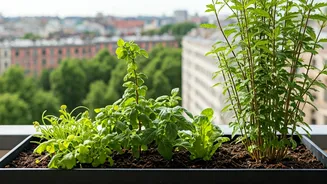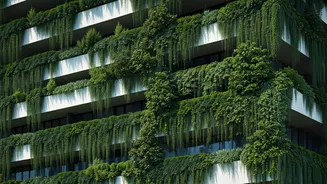




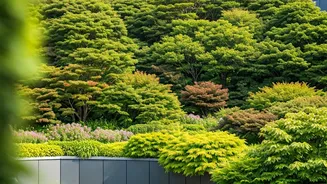



The Ultimate Flood Managers
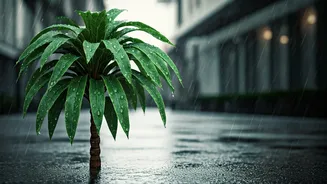
One of the biggest challenges in Indian cities during a downpour is flash flooding. With concrete and asphalt covering vast areas, rainwater has nowhere to go, quickly overwhelming our drainage systems. This is where trees perform their first act of magic.
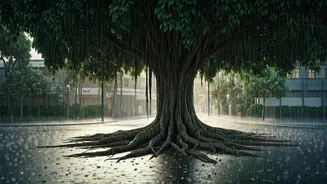
A mature tree's canopy acts like a giant umbrella, intercepting a significant amount of rainfall before it even hits the ground. Some of this water evaporates directly back into the atmosphere. The water that does reach the ground is slowed, reducing the immediate rush that causes flash floods. Below the surface, their work continues. The extensive root systems of trees act like a sponge, soaking up vast quantities of water and creating channels that allow more water to percolate deep into the soil. This not only reduces surface runoff but also helps recharge precious groundwater reserves. One study noted that soil with trees could absorb rain more than twice as fast as soil converted to lawn.
Nature’s Air Conditioners
Monsoon season often brings a sticky, uncomfortable humidity along with the rain. While we reach for the air conditioner, trees are quietly cooling entire neighbourhoods. They do this through a process called evapotranspiration, where they release water vapour from their leaves. This process has a natural cooling effect on the surrounding air, much like how sweating cools our skin. Strategically planted trees can lower ambient air temperatures by several degrees, making outdoor spaces more bearable and even reducing the energy needed to cool nearby buildings. In dense urban areas, which often suffer from the 'urban heat island' effect, the cooling power of a healthy tree canopy provides a critical respite from the oppressive heat and humidity that can linger even after a rain shower.
Unseen Air Purifiers
Rain might feel like it’s washing the air clean, but urban pollution is a stubborn problem. Pollutants like particulate matter (PM2.5 and PM10), nitrogen dioxide, and sulphur dioxide often remain suspended in the air. Street trees act as natural filters, capturing these harmful particles on their leaves and bark. Studies have shown that green spaces can significantly reduce concentrations of particulate matter. The leaves and stems of trees absorb gaseous pollutants, effectively removing them from the air we breathe. A robust urban forest, therefore, works as a city-wide air purification system, improving public health by reducing our exposure to harmful toxins that contribute to respiratory and cardiovascular diseases.
Guardians of the Ground
Heavy monsoon rains can wreak havoc on exposed soil, leading to erosion that clogs drains and destabilises roadsides and slopes. The intricate root systems of trees are masters at holding soil together. By binding the soil, they prevent it from being washed away during intense downpours. The layer of fallen leaves and organic matter that accumulates under trees also plays a role, cushioning the impact of raindrops and further slowing down surface runoff. This function is crucial not just in cities but also in surrounding rural and semi-urban areas, where soil erosion can degrade agricultural land and damage infrastructure. Trees are, in essence, the silent guardians that keep the ground beneath our feet firm and stable.
More Than Just Green Scenery
Beyond their direct environmental benefits, street trees are vital for urban biodiversity and human well-being. They provide essential habitats for birds, insects, and other small animals, creating a richer, more resilient urban ecosystem. For residents, the presence of greenery has been linked to improved mental health and social cohesion. During the often-grey and overcast days of the monsoon, the vibrant green of a tree-lined street provides a much-needed connection to nature. They transform sterile concrete landscapes into living, breathing spaces that are more pleasant and restorative for everyone. Their value extends far beyond simple aesthetics; they are a core component of a livable, healthy city.