







The Unforgettable Chandratal Lake Camp
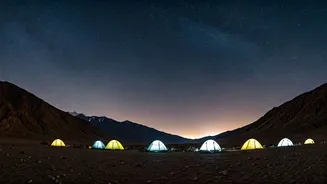
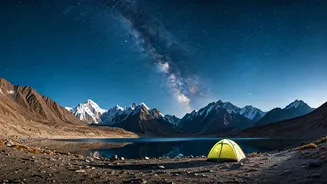
Perched at an altitude of about 4,300 metres (14,100 feet), the camps near Chandratal, the 'Lake of the Moon', are legendary. While camping is no longer permitted on the lake's direct banks to preserve its fragile ecosystem, designated campsites are located
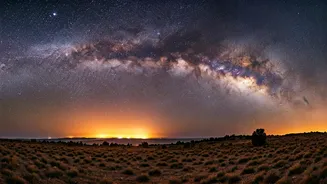
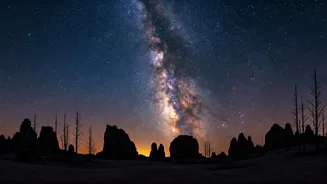
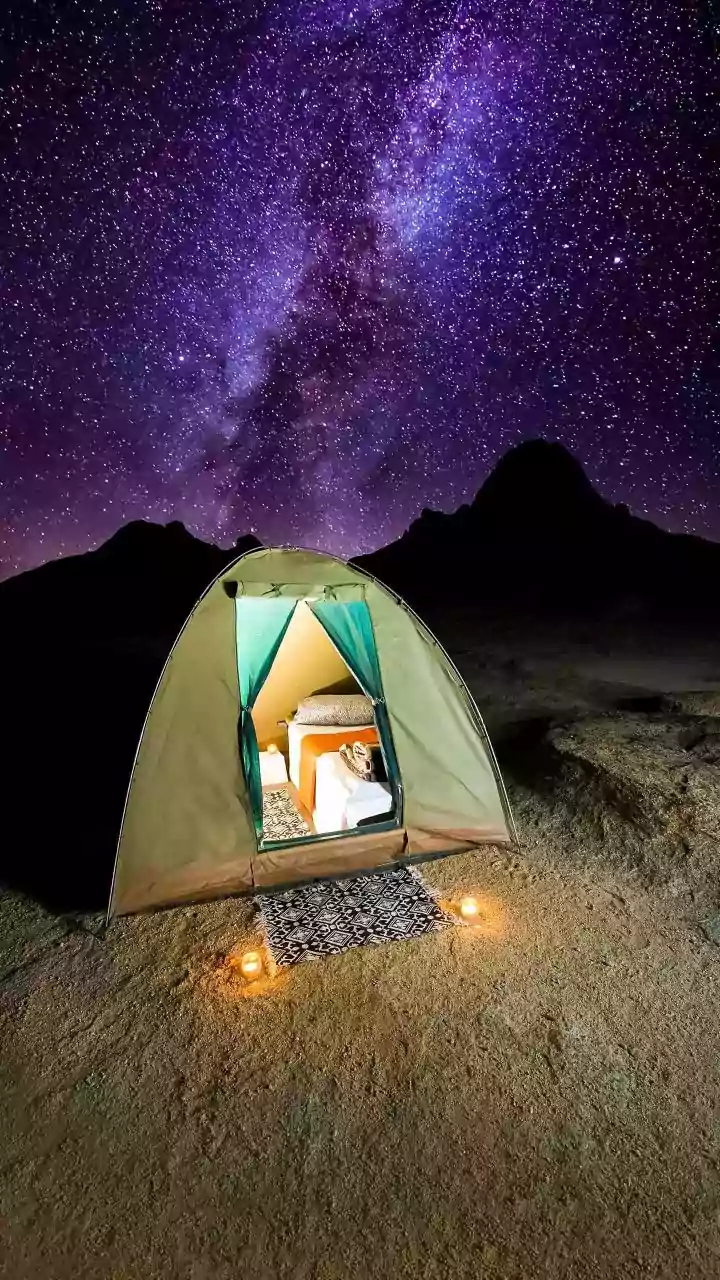
a few kilometres away. The experience remains unparalleled. After a short trek, you are greeted by the sight of the crescent-shaped lake, its waters shifting from turquoise to emerald green with the changing light. The main event, however, happens after sunset. With zero light pollution, the Milky Way sprawls across the sky in breathtaking clarity. The silence here is profound, broken only by the whistling wind. It’s a place that feels otherworldly, making the cold and thin air a small price to pay for a night under a canopy of stars.
Kaza: Basecamp for High-Altitude Adventure
Kaza, the sub-divisional headquarters of Spiti, serves as the perfect base for exploring the region. Numerous campsites are scattered on its outskirts, offering a blend of relative comfort and raw nature. Camping near Kaza means you have access to amenities like cafes, markets, and mechanics, which can be a relief on a long road trip. More importantly, it’s a strategic point from which to visit some of Spiti’s most iconic landmarks. The famous Key Monastery, a cliffside gompa that looks like something out of a fantasy epic, is a short drive away. So are the villages of Kibber, Langza (with its giant Buddha statue overlooking the valley), and Hikkim, home to the world’s highest post office. A campsite here lets you acclimatise while planning daily excursions into the heart of Spiti.
Dhankar: Camping with a Monastery View
Imagine waking up, stepping out of your tent, and seeing a 1,000-year-old monastery clinging precariously to a rocky cliff. That’s the experience of camping near Dhankar. Situated between Tabo and Kaza, Dhankar was once the capital of the Spiti Valley Kingdom. The campsite offers jaw-dropping views of the confluence of the Spiti and Pin rivers. A short but steep hike takes you to Dhankar Lake, a serene body of water nestled high in the mountains. Camping here is less about organised facilities and more about finding a spot that connects you to the history and spirituality of the region. It’s a quieter, more contemplative experience, perfect for those looking to escape the more crowded tourist spots and soak in the ancient aura of the valley.
Pin Valley: A Splash of Unexpected Green
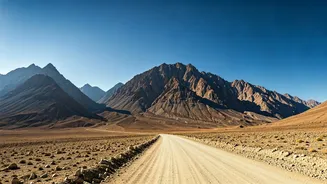
While most of Spiti is a cold, high-altitude desert, Pin Valley National Park offers a surprising contrast. This is the valley’s green heart, a biosphere reserve known for its unique flora and fauna, including the elusive snow leopard and the Siberian ibex. Camping in or near the valley, especially around the village of Mudh, feels like entering a different world. The Pin River carves through the landscape, and during the summer months, patches of the valley floor are covered in green pastures. It’s a haven for trekkers, with popular routes like the Pin-Parvati Pass and Pin-Bhaba Pass starting from here. Camping in Pin Valley is for the serious adventurer who wants to combine the high-altitude experience with trekking and wildlife spotting.
Essential Tips for High-Altitude Camping
Spiti’s beauty comes with challenges. The key is preparation. Acclimatisation is non-negotiable; spend at least one night in a lower-altitude town like Nako or Tabo before heading to Chandratal or Kaza. Pack layers: thermal wear, a fleece jacket, and a windproof/waterproof outer shell are essential, even in summer, as temperatures plummet at night. Carry a medical kit with basics for headache, fever, and AMS (Acute Mountain Sickness). Diamox can be a lifesaver, but consult your doctor before the trip. Stay hydrated by drinking plenty of water, and avoid alcohol. Finally, remember that mobile connectivity is sparse to non-existent outside of Kaza. Inform your family of your itinerary and embrace the digital detox. It’s all part of the Spiti experience.