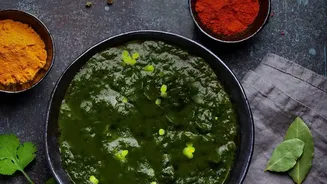




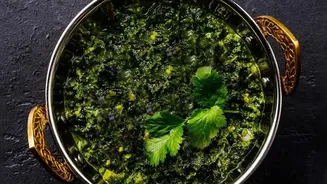

First, What Exactly Is Saag?
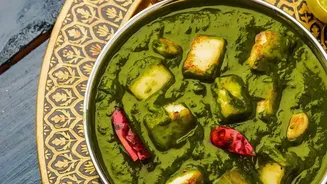
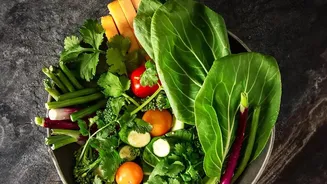
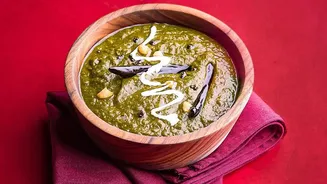
Before diving into cooking methods, it’s important to clarify what 'saag' means. The word simply refers to leafy greens. While many restaurants outside of India use 'saag' as a synonym for 'palak' (spinach), traditional saag is often a blend of various
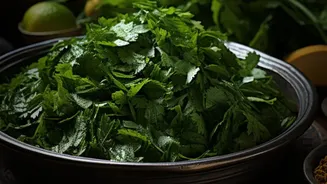
greens. The most famous version, Sarson ka Saag from Punjab, uses mustard greens (sarson) as its base, which have a distinct peppery bite. To balance this flavour, other greens like spinach, bathua (chenopodium), fenugreek (methi), and even radish leaves are added. This mix creates a complex flavour profile and a powerhouse of nutrients.
The Traditional Slow-Cook Method
Traditionally, saag is cooked slowly over a low flame for an extended period. This method is all about developing deep, melded flavours. The long cooking time breaks down the tough cell walls of greens like mustard, softening their bitter compounds and creating a creamy, uniform texture. Nutritionally, this method is a mixed bag. Prolonged exposure to heat can degrade some heat-sensitive, water-soluble nutrients like vitamin C and certain B vitamins. However, the slow cooking process can also make some other nutrients, like minerals, more available for the body to absorb. Cooking also reduces oxalates, compounds found in greens that can interfere with calcium absorption.
The Pressure Cooker Shortcut
In modern Indian kitchens, the pressure cooker is a trusted workhorse. Cooking saag in a pressure cooker or an Instant Pot is significantly faster. This high-heat, high-pressure environment cooks the greens quickly, which can be better for preserving certain nutrients. Since the food is cooked under steam with minimal water, there's less opportunity for water-soluble vitamins to leach out. Studies show that pressure cooking often retains more heat-sensitive vitamins compared to boiling. The trade-off can sometimes be in the texture and flavour. While still delicious, some argue that a pressure-cooked saag may not achieve the same deeply integrated flavour and velvety consistency as a slow-simmered one, as the spices don't have as much time to mellow and merge.
The Mistake of Boiling and Draining
A common step in many recipes is to boil the greens and discard the water to reduce bitterness before further cooking. While this can tame the sharp taste of mustard greens, it comes at a significant nutritional cost. Water_soluble vitamins, particularly vitamin C and B vitamins like folate, leach out of the vegetables and into the cooking water. When you pour that water down the drain, you are also pouring away a substantial amount of nutrients. Some studies show that boiling can remove over half of the vitamin C content in greens. If you must boil, using as little water as possible and retaining the cooking liquid to be used in the final dish is a much better approach to preserve these valuable nutrients.
The Finishing Touch: Fat Is Your Friend
No saag is complete without a generous dollop of ghee or white butter at the end. This isn't just for flavour; it serves a crucial nutritional purpose. Many vitamins found in leafy greens, such as vitamins A, D, E, and K, are fat_soluble. This means your body needs fat to absorb them effectively. Adding ghee or butter not only makes the saag taste rich and balanced but also helps you unlock its full nutritional potential by aiding the absorption of these essential vitamins. Fat also helps to coat the tongue, softening any residual bitterness from the greens and making the dish taste smoother.