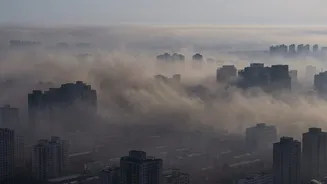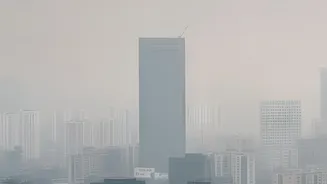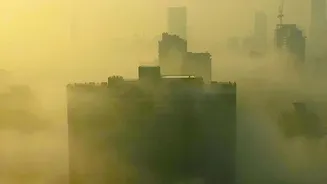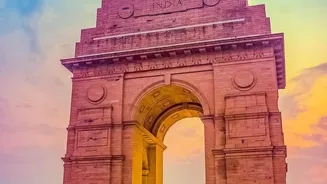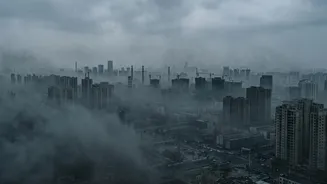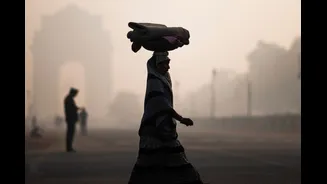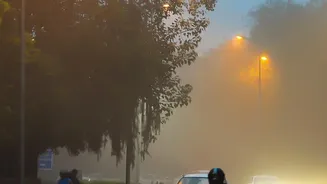




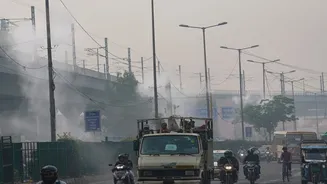

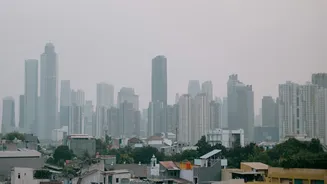
As smog once again blankets Delhi in a familiar grey haze, the obvious costs to public health are clear. But beyond the respiratory distress lies a more insidious impact: a city-wide slowdown in the engine of its economy and daily life.
The Smog-Induced Brain Fog
It's not just your
imagination; the air is making it harder to think. A growing body of research confirms the link between exposure to fine particulate matter (PM2.5) and diminished cognitive function. These tiny pollutants can penetrate the bloodstream and are believed to cause neuroinflammation, affecting memory, concentration, and decision-making abilities. Studies show that on days with high pollution, workers' productivity can decrease by as much as 8-10%. This 'brain fog' translates into slower work, more errors, and a general decline in on-the-job performance, a phenomenon known as presenteeism, where employees are at work but not fully functional. This hidden cost impacts everyone from IT professionals facing complex problems to students struggling to focus in the classroom.
The Staggering Economic Cost
The impact on individual productivity scales up to a massive economic burden for the city and the country. One 2021 study estimated that lost output from premature deaths and illnesses due to air pollution cost India 1.36% of its GDP in a single year, with Delhi recording the highest per-capita economic loss. More recent analyses suggest the total economic cost, including healthcare and productivity losses, could be as high as 9.5% of GDP annually. These figures are driven by several factors: increased absenteeism as workers fall sick, higher healthcare expenditure on pollution-related ailments, and reduced consumer activity. Retailers and restaurants report significant drops in footfall during severe pollution spells, as people choose to stay indoors, further stifling economic activity.
Disrupting Daily Life and Work
The response to hazardous air quality often involves emergency measures that, while necessary for health, cause widespread disruption. As of early November 2026, Delhi's air quality has consistently been in the 'Very Poor' category, with AQI readings frequently exceeding 300. This has prompted authorities to enforce Stage III of the Graded Response Action Plan (GRAP), which includes halting non-essential construction and demolition activities. Such bans have a cascading effect, impacting not just real estate developers but also countless daily-wage labourers and suppliers of materials like cement and steel. Transport restrictions disrupt supply chains, delaying goods and increasing costs. For families, the impact is felt through school closures or shifts to hybrid learning for younger children, forcing parents to juggle work and childcare unexpectedly.
An Unequal Burden
While everyone in Delhi breathes the same toxic air, the ability to mitigate its effects is not evenly distributed. Affluent households can invest in expensive air purifiers for their homes and cars, or even temporarily leave the city during the worst periods. For the vast majority, however, these are not viable options. Daily wage earners, construction workers, and street vendors have no choice but to work outdoors, bearing the full brunt of the pollution. Their health suffers most, and their productivity is most directly impacted, with a sick day often meaning a complete loss of income. This creates a vicious cycle where those who are most economically vulnerable are also the most exposed to the health and productivity drains of air pollution, deepening existing inequalities.