






A New Policy, A New Frontier
The transformation of India's space sector began with a pivotal policy shift. The establishment of the Indian National Space Promotion and Authorisation Centre (IN-SPACe) in 2020 and the rollout of the Indian Space Policy in 2023 were game-changers. These
reforms were designed to institutionalize private sector participation, creating a predictable regulatory framework and a single-window agency to guide and authorize private space activities. The policy effectively redefined the roles: ISRO would focus on advanced research, development, and strategic missions like human spaceflight, while private companies, or Non-Government Entities (NGEs), would be empowered to lead commercial space exploration. This has unleashed a wave of entrepreneurial energy, with the number of Indian space startups growing from just one in 2014 to over 400 by early 2026.
The Rocket Builders: Reaching for Orbit
At the forefront of this new wave are the launch vehicle providers. Hyderabad-based Skyroot Aerospace, founded by former ISRO scientists, made history on July 18, 2026, by successfully launching Vikram-1, India's first privately developed orbital rocket. This 'Mission Aagaman' placed multiple payloads into orbit and made India only the third country, after the US and China, with a private orbital launch capability. Skyroot’s innovation lies in its agile development, utilizing an all-carbon composite structure for its vehicles. Not far behind is Chennai-based Agnikul Cosmos, which has pioneered the world's first single-piece 3D-printed rocket engine. After a successful suborbital test flight in May 2024, the company is advancing its technology, recently test-firing a cluster of four of its semi-cryogenic engines simultaneously. Agnikul is also aiming for reusability, recently announcing Mission-02, which will attempt to recover a rocket booster after launch.
Eyes in the Sky: The Satellite Revolution
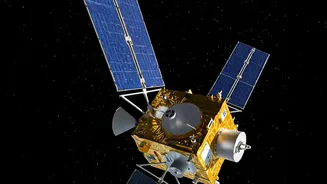
Innovation isn't limited to launchpads. Bengaluru-based Pixxel is building a constellation of some of the world's most advanced hyperspectral imaging satellites. Unlike standard cameras, these satellites capture data across hundreds of light spectrum bands, providing incredibly detailed insights into everything from soil health and water stress for agriculture to tracking environmental pollution and methane leaks. Pixxel is deploying its 'Firefly' constellation and developing its next-generation 'Honeybee' satellites, planned for a 2026 launch, which will expand its imaging capabilities. In a major milestone for public-private partnerships, a consortium led by Pixxel signed an agreement with IN-SPACe in early 2026 to build India's first privately-led national Earth Observation constellation.
Building the Full Stack
A robust space economy requires more than just rockets and satellites; it needs a full ecosystem of services. This is where companies like Dhruva Space come in. Founded in 2012, the Hyderabad-based startup provides end-to-end solutions, from satellite design and manufacturing to launch integration and ground station services. Their 'Launching Expeditions for Aspiring Payloads' (LEAP) program offers customers an 'orbit-as-a-service' model, handling the complexities of a space mission so clients can focus on their payload technology. Dhruva has successfully validated its satellite platforms and is enabling missions for universities and international clients, showcasing the depth and breadth of India's growing space capabilities.
The Challenges Ahead
Despite the historic successes, the path for India's private space industry is not without its challenges. The journey from a successful test launch to a reliable, commercially viable service is long and capital-intensive. Startups must prove they can consistently and frequently deliver payloads to orbit to win the trust of global customers. Securing sustained funding, developing robust supply chains, and navigating the complex technical hurdles of scaling up production are significant tests. However, the progress is undeniable. The government's policy support has created a fertile ground for innovation, and the early successes of companies like Skyroot and Agnikul are building confidence among investors and the international community.