
More Than Just a Walk With Poles
Originating in Finland as a summer training method for cross-country skiers, Nordic walking is an enhanced walking technique that uses specially designed poles to engage the upper body. Unlike regular walking which primarily works muscles below the waist,
Nordic walking incorporates the arms, shoulders, chest, and back, transforming your walk into a more holistic exercise. The key is the specific technique: using the poles to propel yourself forward. This engages more of your body with greater intensity, turning a simple activity into a coordinated, full-body effort. It's this active engagement that separates it from simply using trekking poles for stability on a hike.
The Upper-Body Advantage
The headline feature of Nordic walking is its remarkable impact on the upper body, an area almost entirely neglected during a conventional walk. With every stride and pole plant, you actively push backwards, engaging a whole host of muscles. This includes your latissimus dorsi (lats) and trapezius in your back, your pectoral muscles in your chest, and your deltoids, triceps, and forearms. Studies have shown that Nordic walking provides significant benefits in upper-body muscular strength compared to regular walking. This constant engagement not only builds functional strength but also improves posture by encouraging you to walk upright and keep your shoulders relaxed and open. Over time, this can lead to toned arms and a stronger core, all while enjoying the simple rhythm of walking.
A True Full-Body Workout
By activating muscles in both your upper and lower body, Nordic walking engages up to 90% of your body's muscles, compared to about 50% with regular walking. This increased muscle engagement means your body works harder, resulting in a higher heart rate and burning significantly more calories—up to 46% more, according to some studies—without necessarily feeling like a more intense effort. Beyond calorie burn, the benefits are extensive. It’s a low-impact activity, making it gentler on joints than running, and the poles provide extra stability, which improves balance. Research has linked it to reductions in 'bad' LDL cholesterol, anxiety, and chronic pain, while increasing cardiovascular fitness and overall endurance.
Getting Started: The Right Gear
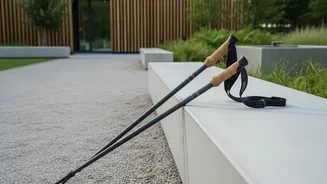
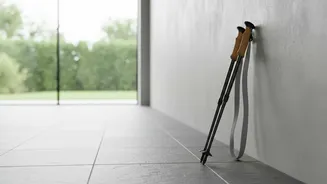
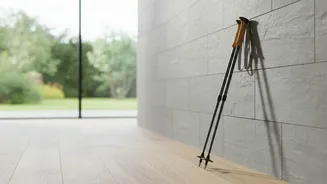
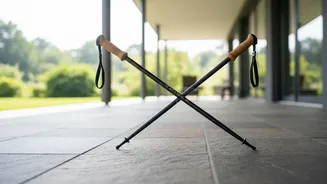
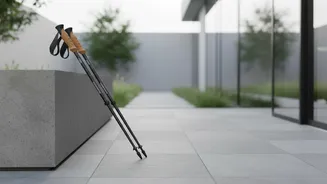
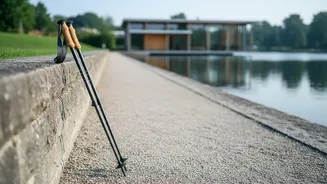
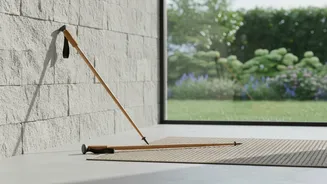
While it might seem like any pair of poles will do, dedicated Nordic walking poles are essential for the correct technique. Unlike trekking poles used for stability, Nordic poles are designed for forward propulsion and feature a specific glove-like strap system that allows you to push through your palm and release the grip on the backswing. When choosing poles, look for adjustable models, which allow you to find the perfect height and can be shared with others. As a rule of thumb, when you hold the poles with the tips on the ground, your elbow should be at a 90-degree angle. Materials range from durable, budget-friendly aluminium to lighter, shock-absorbing carbon fibre. Expect to invest in a quality pair, as they are a crucial part of the exercise.
Your First Steps: Basic Technique
The technique is based on your natural walking motion. The key is coordinating your opposite arm and leg—as your right foot steps forward, your left arm swings forward to plant its pole, and vice-versa. Stand tall with your shoulders relaxed. Start by simply walking and dragging the poles behind you to get a feel for the natural arm swing. Next, begin planting the poles. The pole should strike the ground at an angle, roughly in line with the heel of your opposite foot. Push down and back through the strap, propelling yourself forward. As your arm swings back past your hip, open your hand to release the grip, letting the strap do the work. The movement should feel fluid and rhythmic, not forced. Focus on a good heel-to-toe roll with your feet to complete the motion.