


The Power of Puppy Enrichment
Before you start building, it helps to understand why this works. A ‘puppy track’ isn’t about racing; it’s about sensory enrichment. Puppies learn about the world through their paws, nose, and mouth. Exposing them to different, safe surfaces and structures
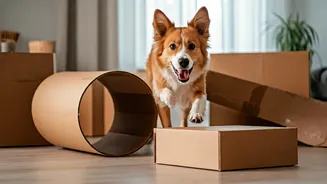
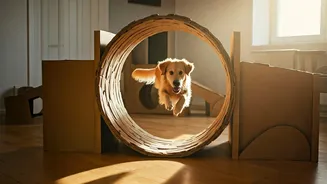
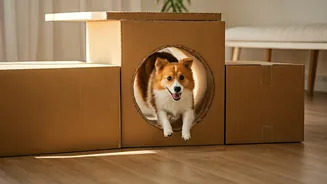
in a controlled way helps them develop crucial skills. This simple setup helps with proprioception—your puppy’s awareness of their body in space. Navigating a low cardboard tunnel or stepping on a bumpy mat teaches them to be more coordinated and confident. This kind of mental stimulation is often more tiring for a young dog than a simple walk, leading to a calmer, better-behaved companion. It’s a workout for their brain, not just their body, and it helps prevent boredom-related behaviours like destructive chewing.
Gathering Your Simple Supplies
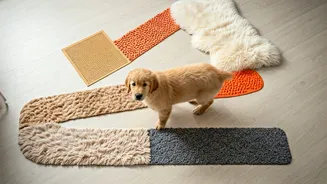
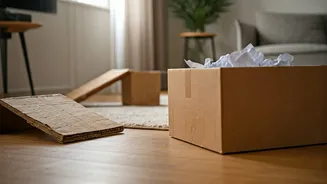
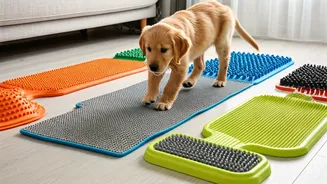
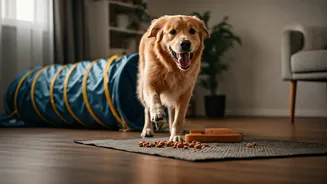
The beauty of a puppy track is its simplicity and affordability. You likely have most of what you need at home. Raid your recycling for sturdy cardboard boxes of various sizes—appliance boxes are fantastic, but a collection of smaller delivery boxes works too. Make sure to remove all staples, plastic tape, and shipping labels, as these can be choking hazards. Next, collect a variety of texturized mats. Think non-slip bath mats, old yoga mats, nubby doormats (ensure they are clean and have no loose fibres), and even pieces of artificial grass. The goal is variety. You can also include other safe items like a child’s play tunnel, pillows to create small hills, or a blanket draped over two chairs to form a fort. Have plenty of high-value treats on hand to make the experience positive.
Designing Your Puppy’s Track
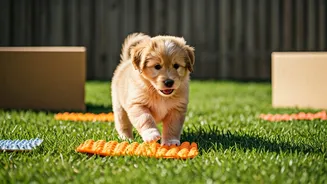
Now for the fun part. In a safe, puppy-proofed area like a living room or hallway, begin arranging your items. There’s no right or wrong way to do this, but here are a few ideas to get you started. Create a tunnel by opening both ends of a large box or lining up several smaller ones. Lay out your different mats in a line to create a sensory path where your puppy has to step from one texture to another. You can also create low obstacles by laying a box on its side for the puppy to step in and out of. Remember, this is not an agility course. All obstacles should be low to the ground to protect your puppy's developing joints. The goal is exploration and confidence-building, not speed or height. Arrange the track differently each time to keep it new and exciting.
Making It a Positive Experience
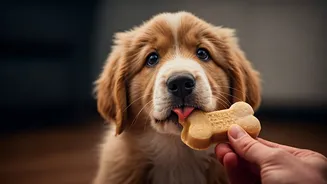
How you introduce your puppy to the track is key. Never force them to do anything. Let them explore at their own pace. Start by dropping a few tasty treats at the entrance of a tunnel or on a new mat. Use an excited, happy tone of voice to encourage them. When they show interest or bravely step on a new surface, praise them lavishly and give them a treat. Keep the first few sessions very short—just a minute or two is plenty. You want to end on a high note while they are still engaged and having fun. If your puppy seems hesitant about a particular object, don’t push it. Simply remove it and try again another day. This entire activity should be about building trust and having a positive shared experience.
Crucial Safety Rules to Follow
Your puppy's safety is the number one priority. This activity must be supervised at all times—never leave your puppy alone with the track. Puppies love to chew, and while a little nibble on a cardboard box is generally harmless, you don’t want them ingesting large amounts of it. If your puppy starts trying to eat the materials, redirect their attention with a treat or a toy and end the session. Ensure all boxes are stable and won’t fall on your puppy. Check your mats and other materials for any loose parts, strings, or fibres that could be swallowed. This is a fantastic bonding and training tool, but only when done with careful supervision and common sense.