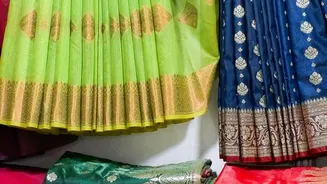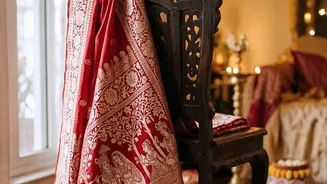

In India, a sari is more than just a garment; it's a repository of memories, from weddings to festivals. But what happens when these treasured fabrics become too old to wear? They are reborn through stunning, sustainable craft traditions.
From Heirloom to Household Treasure
Long before 'upcycling'
and 'sustainable fashion' became global trends, Indian households mastered the art of giving textiles a second life. A sari, passed down from a grandmother to her daughter, carries immense sentimental value. Instead of being discarded, these worn-out cotton and silk fabrics have for centuries been transformed into functional items of comfort and beauty, ensuring that the memories woven into them continue to be a part of the home. This practice was not just born of necessity but of a deep-rooted cultural respect for materials and artistry.
The Running Stitch of Bengal: Kantha
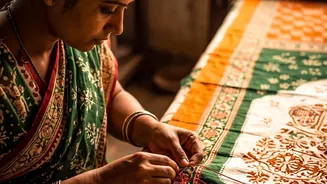
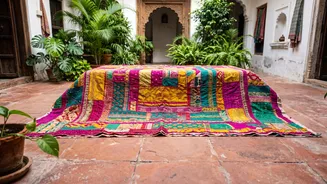
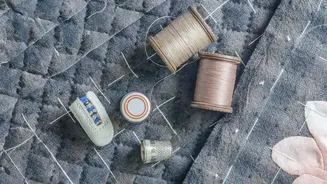
One of the most well-known methods of upcycling saris comes from the Bengal region. The craft, known as Kantha, which means 'rags', involves layering several old saris—typically five to seven—on top of each other. These layers are then meticulously hand-stitched together using a simple, yet elegant, running stitch. This characteristic stitch creates a unique, slightly wrinkled texture. Traditionally, women would embroider motifs of birds, flowers, and scenes from daily life, turning a simple blanket into a narrative canvas. The threads for the embroidery were often drawn from the borders of the old saris themselves. The result is a lightweight, reversible, and entirely unique quilt, perfect for the Indian climate.
Maharashtra’s Quilt of Comfort: Godhadi
In Maharashtra and parts of North Karnataka, a similar tradition thrives under the name Godhadi or Kaudi. A Godhadi is a hand-stitched quilt that symbolises both thrift and deep affection. Grandmothers often craft them for new babies, using their own softened saris mixed with their daughter's, so the quilt 'already smells like home'. The process is a community affair, with women often gathering in the afternoons during the summer to stitch together, sharing stories and songs as they work. Layers of old saris and other cloth pieces are joined with long, running stitches, creating a warm, breathable quilt that becomes a cherished family heirloom. Each one is a labour of love, sometimes taking weeks or months to complete.
Beyond the Quilt: Woven Chindi Rugs
The spirit of repurposing extends beyond quilts. Across India, especially in regions like Gujarat and Haryana, fabric scraps are transformed into durable and colourful rugs. Known as 'Chindi' rugs, which translates to 'rags' or 'leftovers', these textiles are made from strips of discarded cloth, including saris. Artisans weave, braid, or loop these fabric strips on a handloom to create vibrant, textured floor coverings. No two Chindi rugs are exactly alike, as their patterns and colours are dictated by the scraps available. This craft not only prevents tonnes of textile waste from ending up in landfills but also produces beautiful, functional items for the home.
A Sustainable Legacy in a Modern World
These age-old crafts are finding new relevance in today's world. As consumers and designers alike become more environmentally conscious, there is a growing appreciation for the sustainable wisdom embedded in traditions like Kantha and Godhadi. What was once a quiet household practice is now inspiring social enterprises and fashion labels that work with artisans to bring these upcycled products to a global market. These quilts and rugs are more than just home decor; they are a testament to resourcefulness, a celebration of artistry, and a tangible connection to the stories and memories of the past, stitched beautifully into the present.