





The Spark of a Scare
For passengers and crew, it begins like any other flight. But in the cockpit or an air traffic control (ATC) tower, a single event can change everything. This could be a pilot accidentally entering the transponder code '7500', the universal signal for
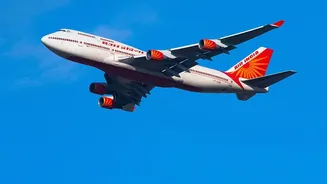
unlawful interference or hijacking. Recently, an Air India flight from Frankfurt to Delhi experienced this exact scenario, when ATC briefly received a hijack alert. Such incidents, whether triggered by human error, a technical glitch, or even a misunderstanding during training, instantly activate a massive security response. In other cases, an anonymous tip, like a bomb threat, can force the same level of emergency. Regardless of the cause, the initial moments are defined by one principle: treat every threat as real until proven otherwise.
Protocols in Motion
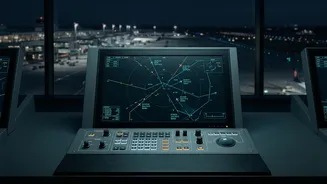
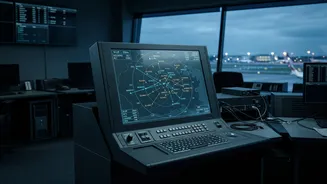
Once an alert like 'squawk 7500' is transmitted, a chain reaction of established security protocols begins. Air traffic controllers immediately notify security agencies and may divert the aircraft to a designated airport away from its intended destination. The aircraft is often directed to an 'isolation bay', a remote part of the airfield where it can be handled without disrupting other airport operations. In many cases, military fighter jets are scrambled to intercept and escort the passenger plane, providing visual confirmation and a rapid response capability. This was the case in a recent incident over Europe, where Croatian and German jets were dispatched to escort a plane that had sent a false alert. On the ground, police and security forces mobilize, preparing for a potential hostage situation or other hostile act even as they work to verify the threat.
Establishing the Error
While the external security response is dramatic and swift, another critical process is happening simultaneously: communication. Air traffic controllers work urgently to re-establish clear and direct contact with the flight crew to verify the nature of the emergency. In many false alarms, the pilots quickly realise their mistake—be it a typo on the transponder or a miscommunication—and inform ATC. However, officials on the ground do not simply take their word for it. As one airport manager noted after a similar incident, authorities can never 'play around with safety and security' and often proceed with protocols until they are completely certain the threat has passed. This can involve detailed questioning of the crew and, in some cases, waiting until the plane has landed safely before the all-clear is given. Pilots have sometimes disputed pressing the button, flagging potential technical issues, which then require engineers to examine the aircraft.
The Aftermath and the Cost of Caution
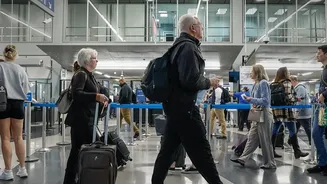
When the dust settles and an alert is confirmed as a false alarm, the disruption is significant. Passengers are often deplaned and may need to go through security checks again. Flights are delayed or cancelled, and the financial cost of diverting an aircraft and mobilizing emergency services is substantial. Yet, within the aviation industry, this is viewed as a necessary cost. The alternative—hesitating or failing to act on a real threat—is unthinkable. These incidents serve as real-world stress tests of a global security system designed to be highly sensitive for a reason. Investigations follow to determine the exact cause, whether it was a faulty button or a need for revised pilot training, to minimise future occurrences. But the fundamental logic remains: in the air, you can't afford to be wrong, and taking every warning seriously is the only way to ensure the safety of everyone on board.