






Buying gold is a significant investment, but how can you be sure of its purity? The Hallmark Unique Identification (HUID) number offers a powerful tool for verification, yet its true potential is only unlocked when you match the digital record to the physical
item.
Understanding the HUID System
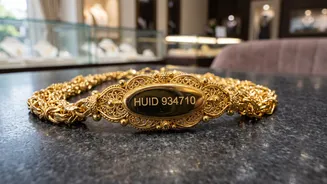
Since April 2023, it has been mandatory for all new hallmarked gold jewellery sold in India to feature a six-character alphanumeric Hallmark Unique Identification (HUID) code. This isn't just another stamp; it's a unique digital fingerprint for every single piece of jewellery. The modern hallmark now consists of three essential marks: the Bureau of Indian Standards (BIS) triangular logo, the purity grade (e.g., 22K916), and the HUID code. This system was introduced to bring unprecedented transparency and traceability to the gold market. Each HUID links a specific item to a central database containing information about the jeweller, the Assaying and Hallmarking Centre (AHC) that tested it, and the purity of the gold. This means that for the first time, consumers have a direct way to verify the claims made by a seller right from their own smartphone.
Why Simple Verification Isn't Enough
Many consumers are now aware that they can check the HUID on the official 'BIS CARE' app. However, simply finding a valid record isn't the final step. The true test is to ensure that the data displayed in the app perfectly matches the jewellery you are holding and the details on your bill. Scams can occur where a genuine HUID from one item is copied onto a different, often lower-purity, piece of jewellery. In this scenario, entering the HUID will bring up a valid record, but it won't correspond to the item being sold. This is why the 'matching' part of the process is so critical. It's the difference between a basic check and a thorough verification that truly protects you from fraud.
How to Match the Data: A Step-by-Step Guide
Verifying your gold jewellery takes only a few minutes at the counter before you pay. First, ask the jeweller to show you the hallmark under a magnifying glass, which they should have available. Locate the six-character HUID. Download the official 'BIS CARE' app from the Google Play Store or Apple App Store and use the 'Verify HUID' feature. Carefully enter the code. The app will display a set of details. Now, play the matching game. Check that the 'Article Type' in the app matches the item you're buying—for example, does it say 'Ring' if you are buying a ring? Confirm that the purity listed (e.g., 22K916) is the same as what's stamped on the item and written on your bill. The app also shows which jeweller and hallmarking centre registered the item, adding another layer of traceability.
Spotting the Red Flags
A discrepancy between the app's data and the physical jewellery is a major red flag. Be cautious if: The HUID is not found in the database. The article type is different (e.g., the app says 'bangle' but you have a 'chain'). The purity level doesn't match what you were told or what's on the bill. The jeweller's name in the record is different from the shop you are in, and the seller cannot explain the relationship. In some newer records, the app may also show a photograph and the weight of the item. If this information is available, check that the photo and weight match the piece in your hand. Any mismatch is a valid reason to halt the purchase and demand clarification.
What to Do if Things Don't Add Up
If you find a discrepancy, do not proceed with the purchase. You have the right to question the seller and ask for an explanation. If you are not satisfied with the answer, you can use the BIS CARE app itself to file a complaint. The BIS takes such complaints seriously and can take action against the jeweller, which may include compensating the consumer. You also have the right to get your hallmarked jewellery tested at any BIS-recognised Assaying and Hallmarking Centre for a nominal fee. If the purity is found to be lower than marked, you can file a complaint with BIS for recourse. This makes the jeweller accountable and ensures the system works to protect buyers.