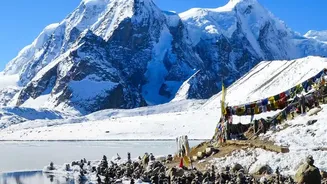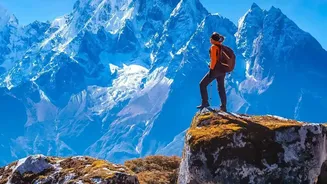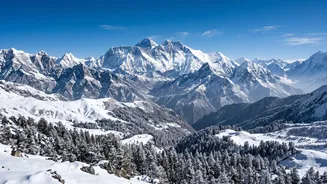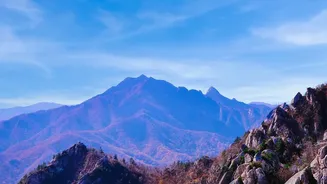





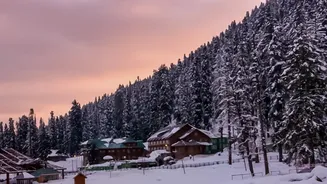
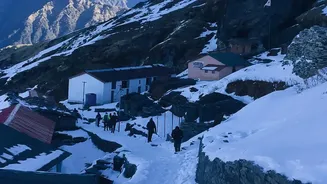
As the monsoon rains retreat, they leave behind a breathtaking parting gift across India's northern horizons. The air, once thick with haze and moisture, turns crisp and clear, unveiling the Himalayan peaks in all their magnificent glory.
The Atmosphere's Autumn Cleaning
The magic of
post-monsoon mountain views is a simple story of atmospheric science. Throughout the summer and monsoon, the air is thick with humidity and aerosols—tiny particles of dust, pollutants, and other suspended matter. These particles scatter sunlight, creating a haze that obscures distant objects. The monsoon acts as a natural cleaning service. Sustained rainfall, in a process known as wet deposition, effectively washes these particles out of the atmosphere, pulling them down to the ground. When the rains finally cease around September, the atmosphere is left scrubbed clean. This, combined with the lower humidity of the autumn months, results in exceptionally clear air that allows light to travel further without being scattered, giving us those sharp, long-distance views.
A Tale of Two Seasons
The contrast between the seasons is stark. During the monsoon, from June to September, heavy cloud cover often hides the mountains completely for weeks at a time. Even on days without rain, the high humidity creates a persistent mist that blurs the landscape. Many travellers visiting popular hill stations during these months return disappointed, having never seen the famous peaks they came for. Come October, however, the transformation is dramatic. The same viewpoints that offered only a wall of grey now present a stunning panorama of snow-capped giants against a deep blue sky. This window of clarity is why autumn is considered the peak season for mountain photography and trekking.
Prime Locations for Peak Views
To witness this incredible seasonal display, you need to be in the right place at the right time. Several spots across the Indian Himalayas are renowned for their spectacular autumn vistas. In Uttarakhand, Kausani is famously called the 'Switzerland of India' for its stunning 300-km wide panorama of peaks like Trishul, Nanda Devi, and Panchachuli. The clear, post-monsoon skies make this view exceptionally sharp. Similarly, treks starting from this region, such as the Har Ki Dun or Brahmatal treks, offer breathtaking views of the Garhwal Himalayas in autumn. Further east, Darjeeling in West Bengal provides one of the world's most iconic mountain sights: the sunrise over the Kanchenjunga range. Visibility of Kanchenjunga, the third-highest peak on Earth, is at its absolute best in October and November, often reaching over 80-90% on clear mornings. Viewpoints like Tiger Hill become pilgrimage sites for photographers and nature lovers hoping to see the peaks change from gold to brilliant white as the sun rises.
When to Plan Your Trip
Timing is everything. The prime window for these crystal-clear views is relatively short, running from mid-October through November. By September, the monsoon is retreating, but the air might still be hazy and some trails wet. October is the sweet spot, offering the perfect balance of crisp air, pleasant temperatures, and maximum visibility. November continues to offer excellent views, though it gets progressively colder, especially at higher altitudes. It's also worth noting that the clearest views are typically in the early morning. As the day warms up, moisture rises from the valleys, often creating clouds that can obscure the peaks by the afternoon. So, for the best chance of witnessing the Himalayas in their full, sharp-edged splendour, an early start during these autumn months is your best bet.