




Why Bodyweight Training Works
Bodyweight workouts are fantastic for beginners because they are built on functional movements that we use in everyday life, like pushing, pulling, and squatting. This improves your real-world strength, balance, and flexibility. Using your own body as resistance
is a simple, effective way to put muscles under tension, which is necessary for them to grow stronger and more toned. The best part? It's completely free and can be done in a small space, making it one of the most accessible forms of exercise available.
Always Warm-Up First
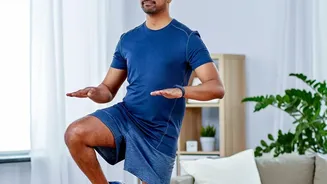
Before you jump into any workout, a proper warm-up is crucial. The goal is to gently raise your heart rate and prepare your muscles and joints for movement, which helps prevent injury. Spend five minutes doing some light activity. This could be marching in place, doing arm circles, leg swings, or even a brisk walk. A dynamic warm-up ensures your body is ready to work safely and efficiently.
The Foundation: Bodyweight Squats
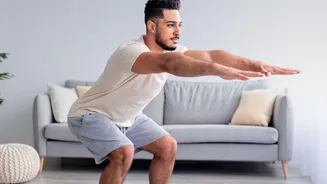
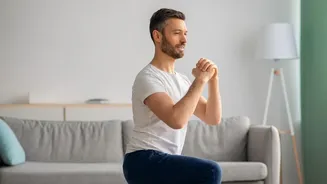
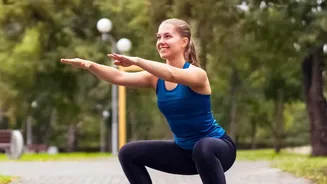
The squat is a fundamental exercise that targets your quadriceps, hamstrings, and glutes—the largest muscles in your body. To do one correctly, stand with your feet shoulder-width apart. Keeping your chest up and back straight, hinge at your hips as if you're sitting back into a chair. Lower yourself until your thighs are parallel to the floor, ensuring your knees track in line with your feet but not past your toes. Push through your heels to return to the starting position.
Upper Body Strength: Push-Ups
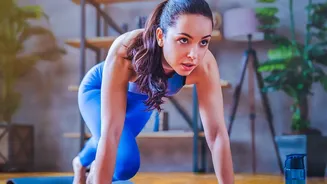
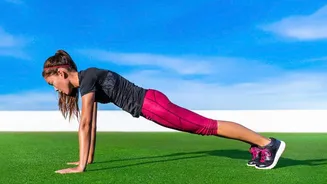
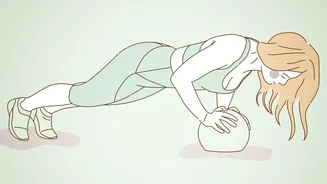
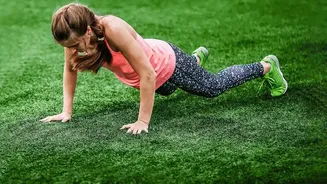
Push-ups are a classic for a reason: they build strength in your chest, shoulders, and triceps, while also engaging your core. Start in a high plank position with your hands slightly wider than your shoulders. Your body should form a straight line from your head to your heels. Lower your body until your chest is close to the floor, keeping your elbows from flaring out too wide. Then, press back up to the start. If this is too challenging, you can modify it by placing your knees on the floor or doing them against a wall.
Lower Body and Balance: Lunges
Lunges are excellent for targeting each leg individually, which helps improve balance and coordination while working your quads and glutes. Start by standing tall. Take a step forward with one foot and lower your hips until both knees are bent at a 90-degree angle. Your front knee should be directly above your ankle, and your back knee should hover just above the ground. Push off your front foot to return to standing, and then repeat on the other side.
Core Stability: The Plank
A strong core is the foundation of all movement, and the plank is one of the best exercises to build it. To perform a plank, get into a position similar to the top of a push-up, but rest your weight on your forearms instead of your hands. Your body should form a rigid, straight line from your head to your heels. Engage your abdominal muscles and glutes to prevent your hips from sagging. Hold this position for as long as you can maintain good form.
Posterior Chain Power: Glute Bridges
The glute bridge targets your glutes and hamstrings, which are often under-activated from sitting. Lie on your back with your knees bent, feet flat on the floor, and arms by your sides. Squeeze your glutes and lift your hips off the floor until your body forms a straight line from your shoulders to your knees. Hold for a moment at the top before slowly lowering back down. This exercise is great for lower back support and improving posture.
Putting It All Together: Your Routine
For a simple and effective full-body workout, perform each of these exercises in a circuit. Aim for 10-15 repetitions of each exercise (or hold the plank for 30-60 seconds). Once you've completed all the exercises, that's one circuit. Rest for 60-90 seconds and then repeat the circuit two or three more times. Try to do this routine two to three times a week on non-consecutive days to give your muscles time to recover and grow.