



A Puzzling Postcard from Another World
Orbiters like the European Space Agency's Mars Express have captured breathtaking images of the Red Planet's surface for years. But recent snapshots of regions like the Kaiser Crater revealed something extraordinary. Spread across the ancient crater floor
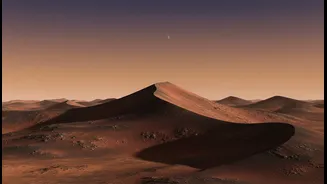
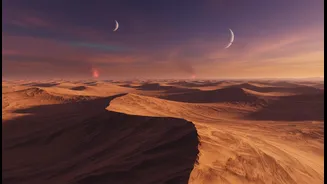
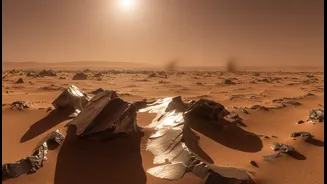
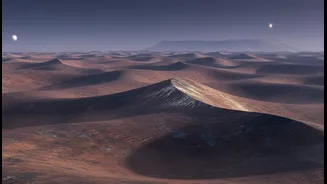
are immense fields of dark, wavy dunes that look almost as if they were sculpted from metal. These formations, some towering over 100 meters high, catch the light in a way that creates a shiny, almost metallic appearance, an otherworldly landscape that immediately begs the question: What are we looking at?
Not Metal, But Something Just as Interesting
The first, most obvious question for scientists was whether these dunes contained actual metals. The answer, it turns out, is no—at least not in the way we might think. The metallic sheen is not due to veins of iron or nickel. Instead, the effect is a combination of mineral composition and physical phenomena. The dunes are primarily composed of dark, volcanic sands. This material is rich in rock-forming minerals like pyroxene and olivine, which contain magnesium and iron and are characterized by their dark appearance. Similar to how wet sand on an Earth beach appears darker and more reflective, the specific mineralogy and the way the grains are shaped and settled creates the unique visual effect.
The Science of Martian Sand
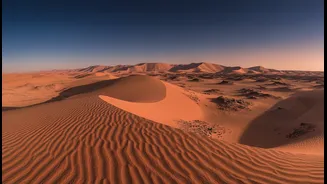
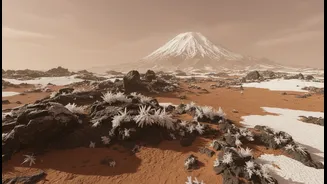
The composition of these dunes tells a story about Mars's violent volcanic past. The dark material is thought to be basaltic sand and ash, a common byproduct of volcanic activity. This material, churned up over millions of years, is then sculpted by Mars's thin but persistent winds. The dunes themselves come in various forms, most commonly crescent-shaped 'barchan' dunes, which are also found in Earth's deserts. The shape and orientation of these dunes allow scientists to map the complex wind patterns that whip across the Martian surface, influenced by the topography of craters and canyons. In some areas, the strange metallic look is enhanced by a thin layer of bright frost that deposits on the slopes of the dunes, creating a stark, shimmering contrast.
A Dynamic and Shifting Landscape
Far from being a static, frozen world, Mars is geologically active in subtle but significant ways. High-resolution images from NASA's Mars Reconnaissance Orbiter, particularly of the Nili Patera dune field, show that these dunes are on the move. By comparing images taken months or years apart, scientists have documented the migration of entire dune fronts by several meters. They have also witnessed new avalanches on the steep faces of the dunes. This movement, driven by winds that must be significantly stronger than on Earth to move sand in the thin Martian atmosphere, demonstrates that erosion and sediment transport are ongoing processes shaping the planet today.
Frozen in Time: A Window to the Past
While some dunes are actively shifting, others provide a snapshot of a Mars from a billion years ago. In places like the Melas Chasma canyon, researchers have found ancient dune fields that have been turned to rock. These 'palaeo-dunes' were likely buried by a catastrophic event, such as a volcanic eruption, and then hardened by contact with volatile compounds like groundwater. Over deep time, the Martian wind has slowly eroded the overlying material, re-exposing these fossilized dunes. Their remarkable preservation, far better than similar features on Earth, shows that the wind patterns and atmospheric pressure on Mars may not have changed dramatically over a billion years, offering an invaluable window into the planet's long-term climate history.