

A Family Resemblance
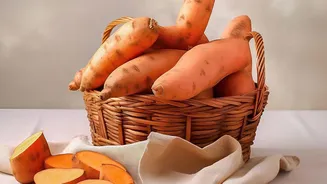
At a glance, you could be forgiven for thinking they’re closely related. Both offer a sweet, earthy flavour and a vibrant orange flesh packed with nutrients. But botanically, they aren't even in the same family. The sweet potato is a storage root from
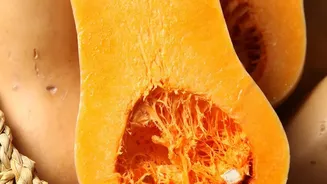
the morning glory family, making it a true root vegetable. Butternut squash is technically a fruit, a member of the winter squash family that grows on a vine. This fundamental difference is the source of all their other distinctions, from how they taste to how they behave in the oven.
The Nutritional Divide
Here’s where the two diverge significantly. If you’re looking for a lighter option, butternut squash is the clear winner. A one-cup serving of cooked butternut squash contains about 82 calories and 22 grams of carbohydrates. The same amount of sweet potato has more than double the calories at around 180, with roughly 41 grams of carbs. The squash is also lower in sugar. However, the sweet potato fights back with more protein, significantly more potassium, and a higher concentration of Vitamin A. While both are fantastic sources of this crucial antioxidant, sweet potato provides a staggering 192% of your daily value per cup, compared to the squash’s still-impressive 127%. Their fibre content is nearly identical.
Flavour and Final Texture
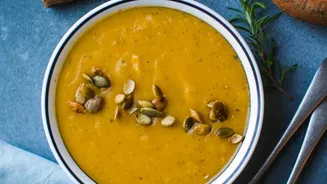
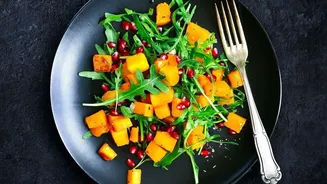
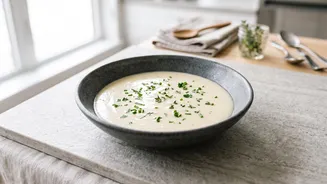
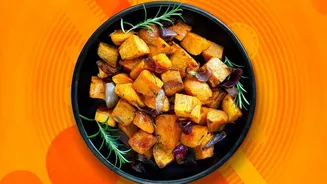
The headline of this debate is how they taste and feel after cooking. Sweet potato is noticeably sweeter and starchier. When roasted, its dense flesh becomes creamy, with edges that caramelize beautifully. It can hold its shape well, which makes it ideal for wedges and fries. Butternut squash has a milder, nuttier, and more savoury flavour. It also contains more water, which means it becomes softer and silkier when cooked. This quality makes it perfect for blending into smooth, velvety soups and purées, where a sweet potato might yield a thicker, starchier result. When roasted, butternut squash cubes get tender and sweet but are more likely to become soft than crispy.
In the Kitchen: Best Uses
Choosing one over the other really comes down to the dish you have in mind. Because of its sturdy, starchy texture, the sweet potato is the undisputed champion of fries, roasted wedges, and gratins where you want slices to hold their shape. Its pronounced sweetness also makes it a natural fit for pies and casseroles. Butternut squash shines in different applications. Its silky texture is ideal for creamy soups, risottos, and pasta sauces. Its milder sweetness makes it a versatile player in savoury dishes like curries and stews, where it soaks up flavour without overpowering the other ingredients. While they can sometimes be used interchangeably in mashes or purées, swapping them will noticeably change the dish's final texture and sweetness.
The Prep Factor
There's one final, practical consideration: preparation. Many home cooks would agree that the sweet potato is easier to handle. Its thin skin can be removed with a standard vegetable peeler, and its flesh is relatively easy to slice. Butternut squash, with its tough, pale skin and awkward bell shape, can be notoriously difficult and even dangerous to cut. A sharp knife and a stable cutting board are essential. For those short on time or patience, buying pre-cut butternut squash is a popular and convenient shortcut that eliminates the most challenging part of the process.