



More than just a staple, Basmati rice is a culinary experience. Prized for its fragrant aroma and slender, non-sticky grains, it holds a special place in Indian cuisine. But what gives this unique rice its signature qualities? Let's explore.
A Protected Heritage
Basmati is
not just any long-grain rice; it's a specific variety with a protected status. True Basmati is cultivated in the Himalayan foothills across the Indian subcontinent, including states like Punjab, Haryana, and Uttarakhand. This unique geography, with its specific soil and climate, is crucial for developing the rice's characteristic traits. In 2016, India was granted a Geographical Indication (GI) tag for Basmati, which certifies that only rice grown in these designated regions can carry the prestigious name. This tag acts as a legal shield, protecting its heritage and ensuring consumers get the authentic product.
The Science of a Signature Scent
The captivating, popcorn-like aroma of Basmati rice is not magic, but chemistry. It comes from a volatile compound named 2-acetyl-1-pyrroline, often shortened to 2AP. Basmati naturally produces this compound at much higher levels than other rice varieties. This is a genetic trait, but its intensity is also influenced by the environment where it's grown and how it's handled after harvest. In fact, the aroma of Basmati contains over 100 volatile compounds that create its complex and celebrated fragrance. The scent is so powerful that it can even trigger the first phase of digestion before you take a single bite, a phenomenon known as the cephalic phase.
Why The Grains Grow Longer
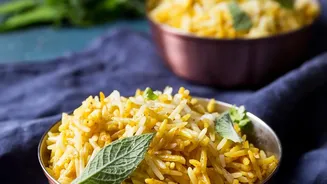
One of Basmati's most prized qualities is its ability to elongate significantly during cooking, often to twice its original length, without getting wider or sticky. This incredible transformation is due to its unique genetic makeup and starch composition. When cooked, the starches absorb water and swell, a process called gelatinization. In Basmati, this expansion happens primarily lengthwise. The process is further enhanced by aging. High-quality Basmati is typically aged for at least a year, which reduces the grain's moisture content. This drying and curing process allows the grain to absorb water more evenly during cooking, resulting in a fluffier texture and even more dramatic elongation.
Choosing the Best Basmati
Walking down the rice aisle can be confusing, but a few tips can help you select a quality bag of Basmati. Look for aged rice, often labeled as such, as it provides better texture and aroma. Premium Basmati rice is typically aged for one to two years. Examine the grains themselves; they should be long, slender, and uniform in size with minimal broken pieces. There are different varieties, like the extra-long 1121 or the highly aromatic Traditional Basmati, each suited for different dishes. While 1121 is prized for biryani, traditional varieties are excellent for daily meals. You can also choose between white Basmati, which is milled, and brown Basmati, which retains its bran layer and offers more fiber.
Cooking Perfect, Fluffy Rice
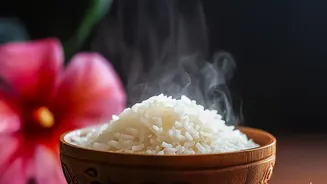
To achieve that perfect restaurant-quality result, technique matters. Many cooks debate whether to rinse or soak. Rinsing the rice in cold water until it runs clear helps remove excess surface starch that can cause stickiness. Some methods call for soaking the rinsed rice for about 30 minutes, which helps ensure even cooking. A common water-to-rice ratio is 1.5 cups of water for every 1 cup of rice, though this can vary slightly. Bring the rice and water to a simmer uncovered, then cover tightly, reduce the heat to low, and cook for 12-15 minutes without lifting the lid. Once the water is absorbed, remove the pot from the heat and let it rest, covered, for at least 5-10 minutes. This final step allows the steam to finish the job, creating perfectly separate and fluffy grains.