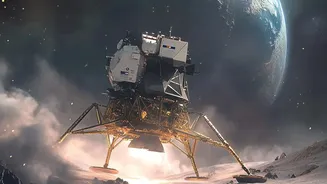





An Invitation to Build on the Moon
NASA has officially invited India's space agency, ISRO, to participate in its ambitious Moon Base program. The invitation was formally extended during the ninth meeting of the U.S.-India Civil Space Joint Working Group (CSJWG) in Bengaluru, India, in early
August 2026. This move signals a significant deepening of the space partnership between the two nations, elevating India from a partner in principle to a potential co-builder of humanity's first settlement on another celestial body. The collaboration is part of the broader Artemis framework, a U.S.-led initiative to return humans to the Moon and establish a sustainable, long-term presence there.
What Is the Artemis Moon Base?
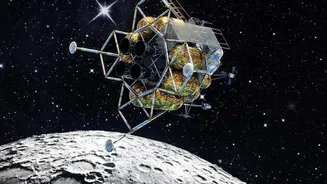
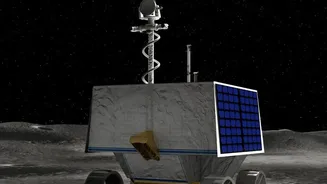
Forget the short, flag-planting visits of the Apollo era. The Artemis program aims to create a permanent foothold on the lunar surface, specifically near the Moon’s south pole. This region is highly strategic because it contains permanently shadowed craters believed to hold vast quantities of water ice. This ice can be mined and processed to provide breathable air, drinking water, and even rocket propellant, which are crucial for sustaining long-term missions and venturing deeper into space, including to Mars. NASA envisions a sprawling, multi-phase construction project that will unfold over the next decade and beyond. Plans include habitats, power grids, scientific research facilities, and rovers, eventually supporting a semi-permanent crew presence.
Why ISRO Is a Prized Partner
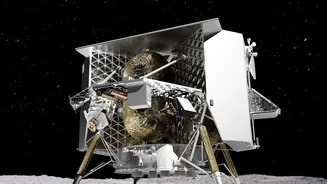
NASA's invitation is a clear acknowledgment of ISRO’s rising stature as a major space power. India recently became the first and only nation to successfully soft-land a spacecraft near the lunar south pole with its Chandrayaan-3 mission in 2023. This achievement demonstrated not only technical prowess but also a knack for cost-effective engineering—a highly attractive quality for a program as expensive as building a Moon base. ISRO brings proven expertise in lunar landers, rovers, and orbital science to the table. This collaboration builds on previous successful joint projects, such as the NISAR Earth-observation satellite, which have fostered trust and interoperability between the two agencies. By joining forces, NASA gains a capable partner, and ISRO gets invaluable experience for its own ambitious goals, which include landing an Indian astronaut on the Moon by 2040.
So, What Happens Now?
While India signed the non-binding Artemis Accords in 2023, this invitation requires the next step: a formal, project-specific bilateral agreement. This agreement will iron out the details of India’s contribution. While nothing is finalized, ISRO could contribute in several key areas. Potential contributions include providing robotic systems, scientific instruments for lunar analysis, or leveraging its expertise in landing technology. The two nations have also agreed to advance discussions on sharing open scientific data, a core principle of the Artemis Accords. As ISRO proceeds with its own lunar missions, like the upcoming Chandrayaan-4 sample return, the knowledge gained will be invaluable. In the near term, expect a series of high-level discussions between NASA and ISRO to define the scope, timeline, and technical specifics of India's role in constructing the lunar base.
The Geopolitical Big Picture
This partnership is about more than just science and exploration; it's a strategic alignment. The U.S. is building a broad coalition of nations through the Artemis Accords, which now has over 70 signatories. This coalition is widely seen as a democratic counterweight to the parallel lunar ambitions of China and Russia, who are not part of the accords and are pursuing their own joint moon base plans. By bringing a major, independent space power like India into the fold, the U.S. strengthens its alliance for shaping the rules of space exploration and resource utilization on the Moon. The collaboration reinforces a shared vision for a peaceful, transparent, and cooperative future in space, positioning the U.S. and India as central players in the next chapter of human history.