

Eyes on the Sky
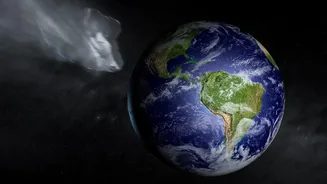
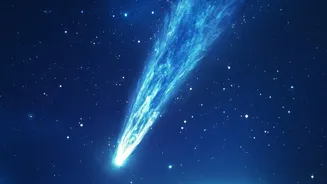
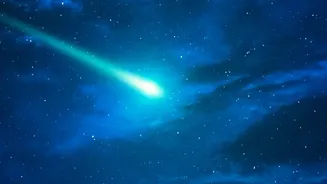
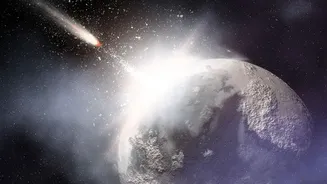
The investigation begins with the observation. When a meteoroid—a rock from space—hits Earth's atmosphere, it burns up and creates a bright fireball. While many sightings are reported by chance from the public, the real scientific backbone comes from dedicated
camera networks. Projects like the Global Meteor Network (GMN) and the Desert Fireball Network (DFN) operate hundreds of automated cameras across the globe. These cameras are pointed at the sky every night, acting as a constant surveillance system for incoming space debris. By capturing the same meteor from multiple locations, scientists gather the crucial first pieces of evidence needed for their investigation. The GMN, for example, has grown to over 1,000 cameras in dozens of countries, ensuring that fewer of these valuable events are missed.
Connecting the Dots
With video evidence from two or more cameras, the forensic work begins. Scientists use a method called triangulation to pinpoint the meteor's path through the atmosphere. By combining the data from different viewpoints, they can precisely calculate the meteor's trajectory, speed, and deceleration. This isn't just about where it was, but where it came from. The trajectory data allows them to work backwards, reconstructing the meteoroid's original orbit around the Sun before it encountered Earth. This crucial step helps them determine its likely neighbourhood in the solar system—was it from the asteroid belt between Mars and Jupiter, or perhaps a comet's dusty trail? The accuracy of these calculations is vital, as the orbit is the first major clue to the object's parent body.
The Hunt on the Ground
Not all meteors burn up completely. Larger ones can survive their fiery descent and drop fragments, now called meteorites, on the ground. The trajectory data helps scientists predict a potential landing area, known as a strewn field. This area is often a long, elliptical shape, because as the meteoroid fragments in the air, wind and momentum scatter the pieces. Lighter fragments tend to fall shorter, while heavier ones travel farther along the flight path. Finding these rocks is a painstaking process. Meteorites are often small, dark, and can easily be mistaken for ordinary terrestrial rocks. Scientists and dedicated meteorite hunters search these predicted zones, hoping to recover a tangible piece of the cosmic visitor for analysis in the lab.
From Rock to Rosetta Stone
Once a meteorite is found, it becomes a time capsule. In the laboratory, scientists slice off small pieces for detailed study. They examine its composition, which falls into three main categories: stony, iron, or stony-iron. These categories provide initial clues about where in an asteroid the rock may have formed—the stony crust, the metallic core, or the boundary between them. Advanced analysis, using techniques like mass spectrometry, reveals the rock's chemical fingerprint. By studying the ratios of different isotopes (variants of elements like oxygen), scientists can often identify a unique signature. Different bodies in the solar system, like Mars, the Moon, and various asteroid families, have distinct isotopic ratios, allowing for a near-certain identification of origin.
Tracing the Cosmic Address
The final step combines all the evidence. The orbital path calculated from the fireball network points to a region in space. The chemical and isotopic analysis of the recovered meteorite provides a specific material signature. When these two lines of evidence match, scientists can make a definitive link. For example, if the calculated orbit traces back to the asteroid Vesta, and the meteorite's composition matches the known basaltic crust of Vesta, they can confidently say they are holding a piece of that specific asteroid. Similarly, some meteorites contain trapped gases whose composition exactly matches the atmosphere of Mars as measured by NASA's Viking landers, confirming their Martian origin. Through this meticulous process, a fleeting streak of light is transformed into a physical sample of another world, providing invaluable insights into the birth and evolution of our solar system over 4.5 billion years ago.