







The Golden Rule: Two Hours Max
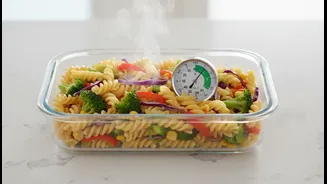
The most critical rule of thumb, supported by food safety experts worldwide, is that perishable foods should not be left at room temperature for more than two hours. After cooking, your food enters a window of vulnerability. If the ambient temperature is high,
such as above 32°C (90°F) which is common during Indian summers, this window shrinks to just one hour. This applies to a wide range of foods, including cooked meat, poultry, seafood, rice, dals, cooked vegetables, and dairy-based dishes. It’s important to remember that you can't always tell if food is unsafe by its look, smell, or taste. When in doubt, the safest option is always to throw it out.
Understanding the 'Temperature Danger Zone'
The reason for the two-hour rule is something called the 'temperature danger zone'. According to the Food Safety and Standards Authority of India (FSSAI), this zone is between 5°C and 60°C (41°F to 140°F). Within this range, harmful bacteria can multiply with surprising speed, sometimes doubling in number every 20 minutes. Leaving your freshly cooked biryani or dal makhani on the counter to cool for several hours places it squarely in this danger zone, creating a perfect breeding ground for microbes that can cause foodborne illnesses. Keeping food either hot (above 60°C) or cold (below 5°C) is the most effective way to slow down or stop this bacterial growth.
Debunking the 'No Hot Food in the Fridge' Myth
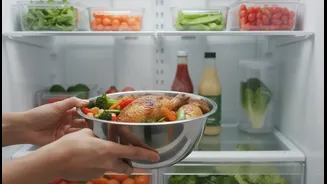
Many of us grew up hearing that you should never put hot food directly into the refrigerator. This advice originated when refrigerators were less powerful and a large, hot pot could potentially raise the internal temperature of the entire appliance, putting other foods at risk. Modern refrigerators are far more efficient and can handle the load. While it's still not ideal to place a huge, steaming pot of stew directly from the stove into the fridge, the greater risk comes from leaving the food out on the counter for too long. The goal is to get the food through the danger zone and down to a safe temperature as quickly as possible. Small amounts of hot food can be placed directly in the fridge.
How to Cool Food Quickly and Safely
So, what is the best practice? Cool your food rapidly before storing it. The aim is to reduce the temperature from 60°C to 21°C within two hours, and then down to 5°C or below in the next four hours. Here are some effective methods to speed up the cooling process: Divide and conquer: Transfer large quantities of food, like a big pot of soup or a curry, into several smaller, shallow containers. This increases the surface area and allows the heat to escape much faster. Metal containers, in particular, transfer heat more quickly than plastic. Give it a bath: For liquids like soups or dals, you can use an ice water bath. Place the smaller pot of hot food into a larger bowl or sink filled with ice and water. Stir the food occasionally to help it cool evenly. Let it breathe: If the food is still steaming, leave the lid of the storage container slightly ajar when you first place it in the fridge. This allows heat and steam to escape instead of being trapped, which can create condensation and affect other foods. Once cool, seal it tightly.
The Risk Isn't Worth It
Failing to cool and store food properly can lead to food poisoning, with symptoms ranging from an upset stomach to more severe illness. It's a common misconception that simply reheating food that has been left out too long will make it safe. While reheating can kill bacteria, it won't eliminate the heat-resistant toxins that some bacteria produce while they were multiplying at room temperature. These toxins can make you sick even after the food has been heated to a high temperature. Therefore, prevention is the only reliable strategy.