





The Hotel Fraud Warning Explained
A recent advisory from the Future Crime Research Foundation (FCRF) cautioned travellers against sharing standard photocopies of their Aadhaar cards during hotel check-ins. The organisation warned that this common practice can expose sensitive personal
data to criminals. Experts point out that hotels are often not legally permitted to collect and store full Aadhaar information. Once a copy of your full Aadhaar is handed over, it can be misused for identity theft, to create fake documents, apply for loans in your name, or to obtain new SIM cards for fraudulent activities. The warning serves as a reminder that while identity verification is mandatory, sharing your 12-digit unique number unnecessarily creates significant personal risk.
What Exactly Is a Masked Aadhaar?
A masked Aadhaar is a secure, official version of your e-Aadhaar where the first eight digits of your 12-digit Aadhaar number are hidden, typically replaced with 'XXXX-XXXX'. Only the last four digits of the number remain visible. This document, issued by the Unique Identification Authority of India (UIDAI), still contains all other essential information required for identity verification: your name, address, photograph, and the scannable QR code. The core idea is to provide just enough information for proof of identity without exposing the full unique number, thereby minimising the risk of fraud and misuse.
Why It's the Safer Choice for Verification
The primary benefit of a masked Aadhaar is privacy protection. By concealing most of your unique number, it prevents unauthorised entities from logging and storing your sensitive data. For many day-to-day transactions, like checking into a hotel, verifying your age, or providing proof of identity for a job application, the last four digits and your demographic details are sufficient. The UIDAI itself has confirmed that masked Aadhaar is a legally valid document and should be accepted as proof of identity without giving preference to other formats. Using it drastically reduces the chances of your Aadhaar number falling into the wrong hands and being used for financial or identity fraud.
How to Download Your Masked Aadhaar
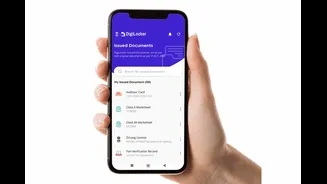
Getting a copy of your masked Aadhaar is a straightforward process that you can do online. You can use the official myAadhaar portal, the mAadhaar mobile app, or DigiLocker. Using the website: 1. Visit the official myAadhaar portal (myaadhaar.uidai.gov.in). 2. Log in using your Aadhaar number and the one-time password (OTP) sent to your registered mobile number. 3. Navigate to the 'Download Aadhaar' service. 4. Before downloading, you will see a checkbox with the option: 'Do you want a masked Aadhaar?'. 5. Select this checkbox and then click 'Download'. The downloaded file will be a password-protected PDF. The password is a combination of the first four letters of your name (in capital letters) and your year of birth in YYYY format.
Where Can You Use It?
Masked Aadhaar is a valid form of ID for most situations where you need to prove who you are but don't need to undergo biometric authentication. It is perfectly acceptable for hotel check-ins, travel verification, and even some KYC processes where the full number is not mandated. According to UIDAI guidelines, unlicensed private entities like hotels and cinema halls are not permitted to collect or keep copies of Aadhaar cards, making the masked version the ideal document to share. However, for services that require full e-KYC, such as opening a bank account or applying for government subsidies, you will likely still need to provide your complete Aadhaar number.