





From Hobby to Hypothesis
At its core, citizen science is a powerful collaboration between the public and professional scientists. It’s the simple but revolutionary idea that anyone, anywhere, can collect and share data that contributes to scientific research. You don’t need a PhD
or a fancy lab coat—just a smartphone, a keen eye, and a willingness to participate. This movement transforms everyday activities like birdwatching, stargazing, or even playing games online into valuable data points. By mobilising thousands of volunteers, researchers can gather information on a scale that would be impossible for a small team to achieve alone. This 'power of the crowd' is helping scientists tackle some of the world's most pressing challenges, from climate change and biodiversity loss to public health.
India's Eyes on the Sky
One of the most successful examples of citizen science in India is eBird. What started as a simple checklist for birdwatchers has become a global ornithological database with a massive footprint in the subcontinent. Every time a birdwatcher in Kerala logs a sighting of a migratory duck or a birder in the Himalayas records a rare vulture, that data point is added to a vast map. Scientists at institutions like the National Centre for Biological Sciences (NCBS) use this data to track bird populations, understand migration patterns, and assess the health of ecosystems. The annual Great Backyard Bird Count, powered by eBird, sees thousands of Indians contributing over a single weekend, creating a real-time snapshot of the country's avian diversity. This isn't just a hobby; it's a nationwide, continuous census powered by citizens.
More Than Just Birdwatching
While biodiversity tracking is popular, the scope of citizen science is incredibly broad. Platforms like Zooniverse host projects where you can help researchers identify galaxies from telescope images, transcribe historical ship logs to study climate history, or spot animals in camera trap photos from wildlife sanctuaries across the globe. In India, the India Biodiversity Portal encourages citizens to document local flora and fauna, creating a crowdsourced encyclopedia of the nation's natural wealth. Other projects involve monitoring air and water quality with simple testing kits, tracking the spread of invasive species, or reporting mosquito breeding sites through mobile apps to help public health officials combat diseases like dengue and malaria. If you have an interest, there is almost certainly a citizen science project for it.
The Real-World Impact
The 'impact' in citizen science is not just theoretical. Data collected by volunteers has led to the publication of thousands of peer-reviewed scientific papers. It has directly influenced conservation policies, helping to identify and protect critical habitats for endangered species. For example, data from iNaturalist, another popular app, has been used to map the spread of invasive plants, allowing local authorities to take targeted action. On a smaller scale, it empowers local communities to advocate for their environment with concrete data. When a neighbourhood can present a year's worth of data on illegal garbage dumping or declining water quality in a local lake, it carries far more weight than anecdotal complaints. It democratises data and gives a voice to those most affected by environmental issues.
How to Become a Citizen Scientist
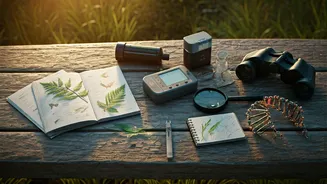
Getting started is easier than you think. The first step is to identify your interests. Do you love animals, plants, the night sky, or history? Next, find a project. Websites like Zooniverse, SciStarter, or the India Biodiversity Portal are excellent starting points that list hundreds of active projects. Many of the most popular platforms, like iNaturalist and eBird, have user-friendly mobile apps. Simply download the app, create an account, and follow the tutorials. They are designed for beginners. The key is to start small. Begin by documenting the life in your own backyard or local park. You'll be surprised at what you discover, and with each observation, you're not just satisfying your own curiosity—you're contributing to a global community of discovery.