

The Red Planet’s Gritty Secret
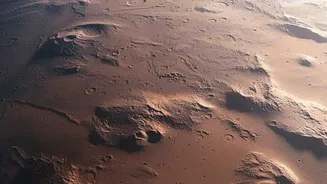
Martian dust is unlike anything found on Earth. It is incredibly fine, with particles as small as 3 micrometres across, allowing it to hang in the thin atmosphere and travel globally. This dust is not soft and benign; it is sharp, abrasive, and electrostatically
charged, causing it to cling stubbornly to any surface it touches, from solar panels to spacesuits. Furthermore, chemical analysis from rovers and landers has revealed that the soil contains compounds like silica and perchlorates. This combination of physical and chemical properties makes Martian dust a complex engineering challenge and a potential health hazard.
A History of Clogged Gears
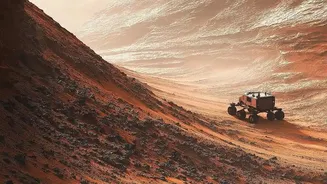
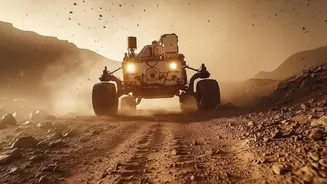
Robotic pioneers on Mars have provided decades of firsthand data on the perils of dust. Missions have repeatedly shown how dust accumulation can be a mission-ender. The Spirit and Opportunity rovers, for example, relied on solar power, and their energy levels fluctuated wildly as dust coated and was then occasionally cleared from their panels by wind. Eventually, dust build-up on solar panels contributed to the end of the InSight lander's mission in 2022. Beyond power generation, the abrasive dust can infiltrate mechanical joints, jam moving parts, and scratch camera lenses and scientific instruments, degrading their performance over time. These experiences serve as a critical warning for designing more complex, long-duration missions.
The Cling and the Cloud
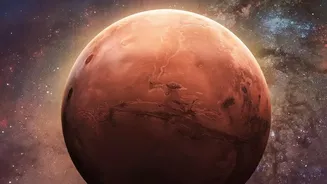
The challenge of Martian dust is twofold. The first is its tendency to cling. Thanks to electrostatic forces, the dust sticks to everything, a problem Apollo astronauts also faced on the Moon. This makes it difficult to keep vital equipment like seals, visors, and habitats clean and functional. The second, larger-scale problem is circulation. Mars is subject to planet-encircling dust storms that can last for weeks. These massive storms not only coat everything in a fresh layer of dust but also drastically reduce the sunlight reaching the surface, which is a critical issue for any mission relying on solar power. Recent studies also show these storms can hurl water vapor high into the atmosphere, contributing to the planet's long-term water loss.
Engineering Our Way to Safety
To counter this persistent threat, engineers are developing innovative dust-mitigation technologies. One of the most promising is the Electrodynamic Dust Shield (EDS). This system uses a transparent electrode grid embedded in surfaces like solar panels, visors, and fabrics. When activated, it generates an electric field that repels or sweeps away charged dust particles. Other strategies include advanced filtration systems for habitats and machinery, new designs for seals and mechanisms to prevent infiltration, and operational plans that account for dust-heavy seasons and storms. Even a simple vacuum cleaner is being considered for habitats, though its power requirements present their own engineering trade-offs.
Beyond Robots: The Risk to Astronauts
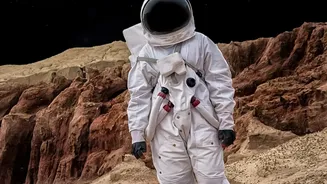
For future human missions, Martian dust poses a direct health risk. Experience from the Apollo missions showed that dust inevitably gets inside habitats and spacecraft. The fine, sharp particles of Martian dust are small enough to bypass the body's natural respiratory defenses and become lodged deep in the lungs. The presence of silica raises the risk of silicosis, an incurable lung disease, while chemicals like perchlorates could interfere with thyroid function. In recognition of these dangers, NASA is working to establish permissible exposure limits for astronauts, treating the dust as a serious occupational hazard that must be managed for the health and success of any crew on the Red Planet.