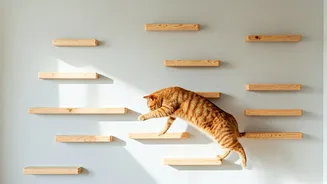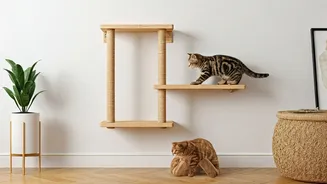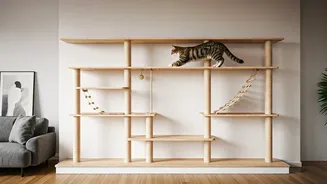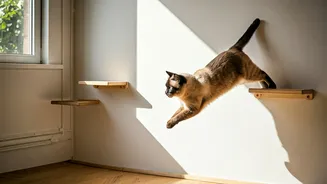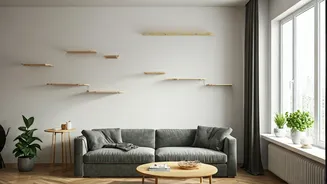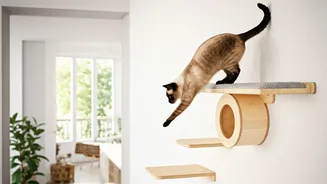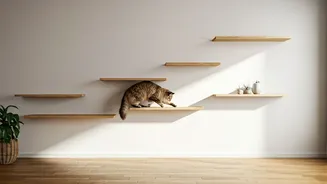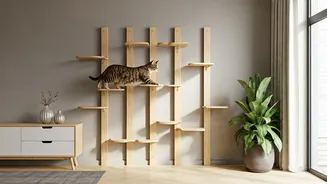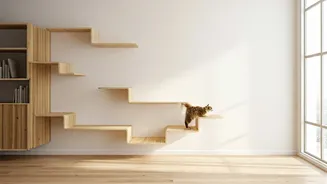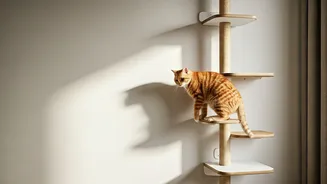




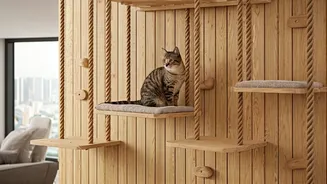
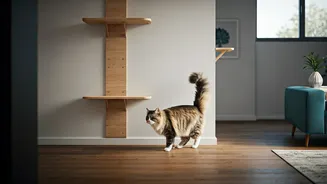
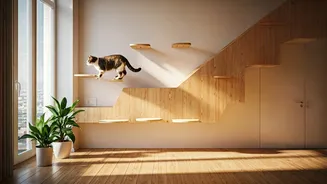


Start with a Feline-Focused Plan
Before you drill a single hole, take time to observe your cat. Are they a bold acrobat or a cautious climber? Do they prefer soft surfaces or rough textures for scratching? Understanding their personality will help you design a space they’ll actually
use. Also, map out your wall. Identify where the studs are using a stud finder—this is non-negotiable for ensuring the shelves can support your cat's weight, especially during energetic leaps. Consider the flow of traffic in the room. You want to give your cat a highway, not create an obstacle course for the humans in the house. A good plan starts on paper, sketching out a path that includes multiple entry and exit points so your cat never feels trapped.
Choose Cat-Safe Materials
The foundation of any great cat wall is sturdy, safe materials. For shelves, solid wood like pine is a great choice. Avoid particleboard or MDF unless you are certain it is high-quality and rated for significant weight, as it can sag or break over time. For the surface, think traction. Wrapping shelves in sisal rope, durable carpet remnants (use staples or non-toxic glue to secure), or cork provides excellent grip and doubles as a scratching surface. If you’re painting or staining wood, ensure the products are zero-VOC and certified non-toxic once cured. Your cat will be rubbing against, sleeping on, and possibly chewing these surfaces, so safety is paramount.
Design for Vertical Enrichment
Cats instinctively seek high vantage points. It’s part of their predator-prey DNA, allowing them to survey their territory and feel secure. A successful cat wall isn't just a series of random steps; it’s a purposeful journey. Vary the heights of the shelves and create a clear path upwards to a final, high-up perch. This “destination” shelf should be large enough for a comfortable nap and ideally located near a window or in a spot with a good view of the room's activities. The spacing between shelves should be manageable for your cat’s athletic ability—typically no more than a foot or two vertically and horizontally, allowing for easy hops rather than risky leaps.
Incorporate Shelves, Perches, and Beds
The basic building blocks of your cat wall are shelves and perches. You can buy pre-made floating shelves or cut your own from a hardware store. To make them more inviting, consider adding shelves with raised edges to create a sense of security, or install a wall-mounted cat bed or hammock. These cozy spots transform a simple perch into a coveted resting place. Integrate different shapes and sizes to keep it visually interesting for you and stimulating for your cat. A mix of small stepping-stone shelves and larger lounging platforms provides both a fun pathway and a comfortable destination.
Connect the Path with Bridges and Ramps
To elevate your design from a simple set of stairs to a true jungle gym, incorporate connecting elements. A simple fabric or rope bridge slung between two sturdy shelves can add a thrilling, wobbly challenge for a confident cat. For older or less agile felines, a long, carpeted ramp provides an easier way to ascend or descend. These connectors encourage horizontal movement and make the wall a more complex and engaging environment. They break up the monotony of simple up-and-down climbing and encourage your cat to spend more time exploring the entire structure.
Add Interactive Scratching and Play Zones
A great cat wall isn't just for climbing and sleeping; it's for playing. Integrate vertical scratching surfaces by mounting sisal-wrapped posts or scratch pads directly onto the wall along the path. This encourages appropriate scratching behaviour and saves your furniture. You can also hang durable toys from the undersides of shelves for your cat to bat at. Some modular systems even include built-in feeder puzzles or treat dispensers to turn the wall into a foraging adventure. These interactive elements ensure the space remains a source of mental and physical stimulation, preventing boredom.
Prioritise Secure Installation
This is the most critical step. Every single component must be anchored securely into wall studs. If a stud isn’t available in the perfect spot, use heavy-duty drywall anchors specifically rated for significant weight (e.g., toggle bolts or screw-in anchors). Follow the manufacturer's instructions to the letter. After installation, test every shelf and perch yourself by applying firm, downward pressure. It should feel completely solid, with no wobble or give. Remember, a cat landing from a jump exerts far more force than its static weight. A secure installation ensures your cat's playground is a safe haven, not a hazard.