



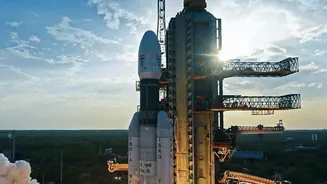
The Ultimate Insurance Policy
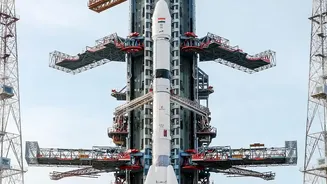
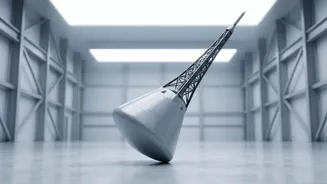
In the high-stakes world of space travel, success isn't just about a perfect launch; it’s about having a flawless escape plan. For India's ambitious Gaganyaan mission, that plan is the Crew Escape System (CES). Think of it as the most sophisticated ejection
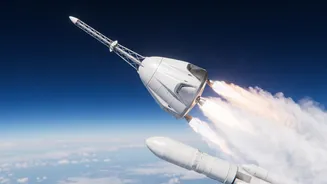
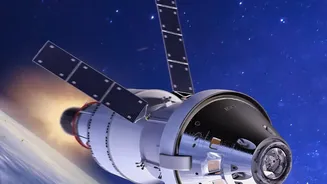
seat ever built. Instead of ejecting a pilot from a fighter jet, this system is designed to pull the entire crew capsule, with the astronauts inside, away from the main rocket in a fraction of a second if something goes wrong. Whether on the launchpad or hurtling through the atmosphere, the CES is the astronauts' single most important lifeline, an assurance that they can be whisked to safety even if the rocket experiences a catastrophic failure. This system is a cornerstone of the mission's safety framework, representing a massive technological leap for India.
Simulating a Mid-Air Emergency
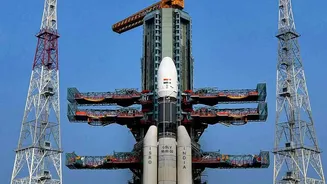
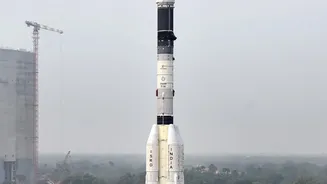
There are different kinds of potential launch failures, and ISRO must prepare for them all. A 'pad abort' simulates a problem on the ground before liftoff, a test ISRO successfully completed in 2018. The more complex challenge is the 'in-flight abort,' which prepares for an emergency after the rocket is already speeding towards space. The recent series of tests focused on this high-altitude scenario. During these trials, a test vehicle launches a crew module to a specific altitude. Then, an intentional abort is triggered. Powerful, quick-firing solid motors in the escape system ignite, pulling the crew module away from the rocket at incredible speed. The system must not only provide raw power but also maintain control and orientation as the module separates, ensuring the astronauts are not subjected to dangerous forces.
A Flawless Performance Under Pressure
In a series of meticulously planned tests, ISRO has been validating every component of the escape and recovery sequence. One critical trial, the TV-D1 mission, demonstrated a successful in-flight abort where the escape system pulled the capsule away before it reached its peak altitude of 17 km. Following the separation, a complex sequence of parachutes must deploy perfectly to slow the module's descent. This includes smaller drogue parachutes followed by three massive main parachutes that ensure a gentle splashdown in the ocean. Recent tests in 2026 have included Integrated Air Drop Tests and ground trials of new motors like SOLVE, designed specifically to validate this crucial parachute system, ensuring the capsule and its precious cargo can be safely recovered by the Indian Navy.
What This Milestone Means for Gaganyaan
Every successful test is a major step towards making the Gaganyaan mission a reality. With these abort systems now proven, ISRO can proceed with greater confidence to the next phases. The plan involves a series of uncrewed flights before the first crewed mission. The first of these uncrewed launches, G1, is expected to happen by early 2027. This flight will carry a humanoid robot named Vyommitra to test life-support systems and simulate astronaut functions. The successful validation of the Crew Escape System is arguably the most critical safety hurdle, and clearing it moves the final goal of sending three Indian astronauts on a three-day mission into a 400-km orbit firmly within sight.
The Road Ahead to Orbit
The journey to space is a marathon, not a sprint. With thousands of tests already completed, ISRO is in the final leg of preparations. While the crewed flight is targeted for 2027, the immediate focus is on the uncrewed test flights that will validate the entire mission profile from launch to re-entry and recovery. Astronaut training is ongoing, with the designated 'vyomanauts' deeply involved in mission protocols, drawing from experiences like Group Captain Shubhanshu Shukla's flight to the International Space Station. These safety milestones are not just technical achievements; they are a powerful statement about India’s methodical and responsible approach to joining the elite club of nations capable of human spaceflight.