
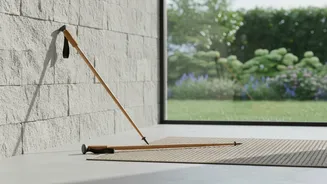


More Than Just a Walk in the Park
At first glance, Nordic walking looks like hiking, but it's a unique fitness discipline all its own. Originally developed in Finland as a summer training method for cross-country skiers, it involves walking with a pair of specially designed poles. Unlike
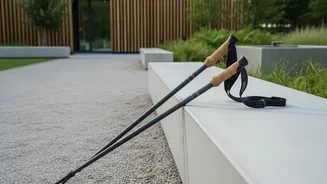
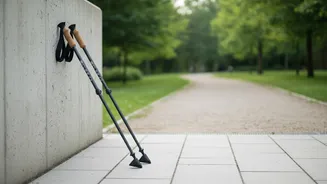
trekking poles used for stability on rough terrain, Nordic poles are used to propel you forward with every step. The technique mimics the rhythmic, opposite-arm-and-leg motion of cross-country skiing. As you step forward with one foot, you plant the opposite pole behind you and push off. This simple addition transforms a lower-body exercise into a comprehensive, full-body workout.
A Full-Body Workout in Disguise
The benefits of picking up the poles are significant. While regular walking primarily engages muscles below the waist, Nordic walking activates between 80% and 90% of your body's muscles, including your arms, shoulders, chest, and core. This increased muscle engagement leads to a much higher calorie burn—studies show it can be anywhere from 18% to 67% more effective than regular walking at the same pace. But the magic lies in its low-impact nature. The poles help distribute your weight, reducing stress on your knees and hips, making it an excellent choice for people with joint pain or those looking for a gentler alternative to running. Research has also linked it to improved cardiovascular fitness, better balance, increased flexibility, and even a boost in mood.
The Comeback Kid of Fitness
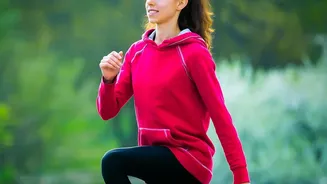
So why is this decades-old activity suddenly trending again? The revival seems to be a direct response to the prevalent 'go hard or go home' fitness culture. Many are discovering that extreme workouts can lead to injury, exhaustion, and burnout. Nordic walking offers a refreshing, sustainable alternative. Its appeal is broad, attracting everyone from seniors seeking a safe way to stay active to younger generations looking for a low-impact but challenging workout. The activity's accessibility is a major factor; it can be done in a local park or neighbourhood, requires minimal gear, and is suitable for nearly all fitness levels. This combination of effectiveness and accessibility is positioning it as the smart, sensible fitness choice for today.
The Wisdom of a Slower Path
Beyond the physical benefits, Nordic walking's resurgence highlights a crucial fitness philosophy: consistency trumps intensity. The most effective workout isn't the one that leaves you breathless and sore for days, but the one you can do regularly and enjoyably over the long term. Many people report that despite burning more calories and using more muscles, Nordic walking doesn't feel significantly harder than a brisk walk. This is because the effort is distributed across the entire body, so no single muscle group is overly taxed. It embodies the principle of gradual progress, allowing you to build strength and endurance without the punishing impact of high-intensity exercises. This approach fosters a healthier relationship with fitness, turning it from a chore to be endured into a pleasant and rewarding part of daily life.
Your First Steps with Poles in India
Getting started is straightforward. The only essential equipment is a pair of Nordic walking poles, which are distinct from hiking or trekking poles and available at many sporting goods stores and online retailers. When starting, focus on the basic rhythm: as your left leg steps forward, your right arm swings forward to plant its pole, and vice-versa. Keep your shoulders relaxed and the poles angled diagonally backward. Look for local parks, walking tracks, or quiet residential streets to practice. Many find it helpful to watch a few introductory videos online to get the form right. The most important thing is to begin at a comfortable pace and focus on creating a smooth, flowing motion. The benefits will follow with consistent practice.