



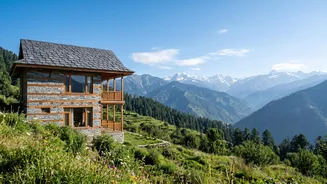
Why Jibhi in Early Autumn?
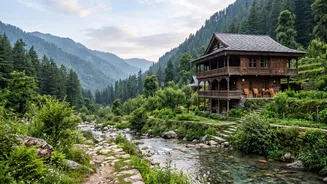
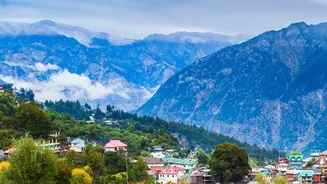
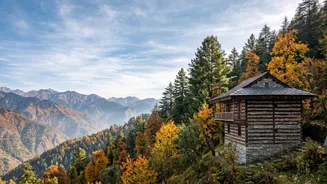
Early autumn, from late September to November, is arguably the best time for a workation in Jibhi. The monsoon rains have passed, leaving the valley lush and green with crisp, clean air. The weather is pleasantly cool, perfect for both focusing on work and stepping
out for afternoon hikes. This period is also a shoulder season, meaning fewer tourists and potentially lower prices for accommodation compared to the peak summer or winter months. You get the stunning post-monsoon landscapes, clear skies, and a peaceful environment that is ideal for deep work and relaxation.
Getting There on a Shoestring
The most economical way to reach Jibhi from cities like Delhi or Chandigarh is by an overnight bus. Numerous private Volvo and government-run HRTC buses ply the route to Manali. Your destination for the bus journey is Aut, a small town just before the Pandoh tunnel. A ticket for an overnight bus to Aut can cost anywhere from ₹900 to ₹1,500. From Aut, you can take a local bus or a shared taxi to Jibhi, which is about 30 kilometres away. The shared taxi will cost a few hundred rupees, making it a very pocket-friendly transfer. The entire journey from Delhi takes about 12 to 14 hours.
Finding a Work-Friendly Homestay
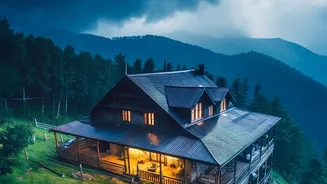
Jibhi is dotted with charming homestays and guesthouses that are far more affordable than hotels. For a workation, your primary concerns are reliable internet and power backup. Before booking, you must explicitly ask the host if they have a fibre broadband connection (like JioFiber or BSNL) rather than just a mobile hotspot. Also, confirm if they have a power inverter, as electricity cuts can be common in the mountains. Many homestays offer rooms for as little as ₹1,000-₹2,000 per night, with discounts often available for longer stays of a week or more. Eating meals at your homestay is also a great way to save money and enjoy authentic local food.
Managing Your Connectivity and Workspace
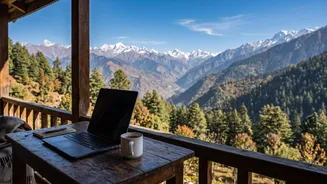
While connectivity has improved drastically, it's wise to be prepared. Both Airtel and Jio offer decent 5G and 4G service in the main Jibhi area, which is usually sufficient for video calls and daily tasks. However, it's a good idea to carry a portable mobile hotspot or dongle as a backup. Don't expect city-level speeds everywhere, especially if you venture away from the main village. Your workspace will likely be a simple desk on a balcony overlooking the valley—a setup that beats any corner office. The unhurried pace of life in Jibhi, known locally as 'ailyak', encourages a more mindful and focused approach to work.
Exploring Jibhi Without Breaking the Bank
One of the best parts about Jibhi is that its main attractions are natural and mostly free. You can take short hikes to the beautiful Jibhi Waterfall, which has a nominal entry fee. Explore the serene forest trails, relax by the Tirthan River, or visit the unique rock pools locally known as 'Mini Thailand'. For a longer excursion, you can plan a day trip to Jalori Pass, from where you can trek to Serolsar Lake or Raghupur Fort. Using local buses for these trips is the most budget-friendly option. Most of the valley is best explored on foot, allowing you to soak in the peaceful atmosphere without spending a rupee.