





A Divine Thanksgiving Meal
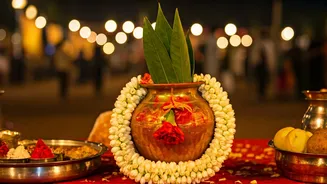
At its heart, Bonalu is a thanksgiving festival dedicated to the Mother Goddess, Mahakali. The name itself comes from 'Bhojanam', the Telugu word for a meal. The core ritual involves women preparing 'Bonam'—a special offering of rice cooked with milk,
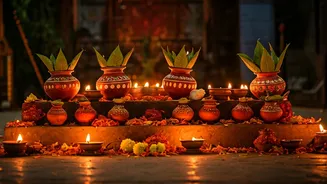
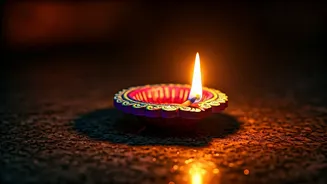
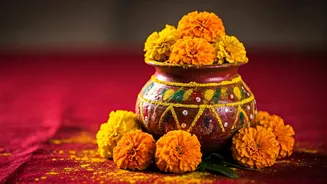
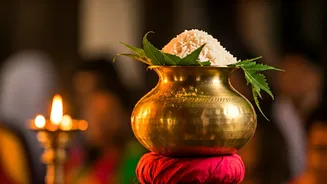
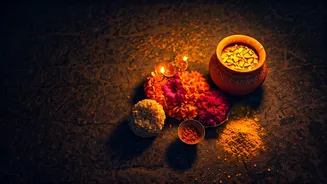
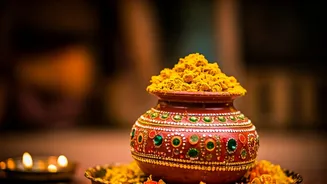
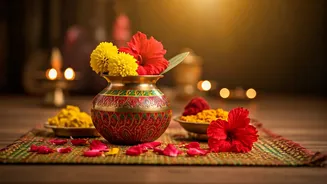
jaggery, and curd. This is placed in a new brass or earthen pot, which is then decorated with turmeric, vermilion, and neem leaves, and crowned with a flickering lamp. Carrying these pots on their heads, women proceed in processions to various temples as an offering of gratitude to the Goddess for protecting them from disease and fulfilling their vows. The tradition dates back to 1813, when a devastating plague hit the twin cities. After locals prayed to Mahakali for relief and the plague subsided, the festival was born as an annual promise kept.
The Fierce Protector and The Oracle
Two figures make Bonalu an unforgettable spectacle. The first is the Pothuraju, considered the brother and protector of the Goddess. Embodied by a robust man, bare-chested and smeared in turmeric, the Pothuraju leads the processions. Dancing wildly to the beat of drums (dappu) and lashing a whip, his role is to clear the path and ward off evil spirits, creating a perimeter of frenetic energy around the women carrying the sacred Bonam. The other unique ritual is the 'Rangam', or the oracle. Taking place the morning after a major procession, a woman from a specific family stands on an unbaked earthen pot, enters a trance, and channels the Goddess. In this state, she delivers prophecies for the year ahead, answering questions about everything from the monsoon to community well-being, as thousands gather to listen.
A Festival in Four Acts
Bonalu is not a single-day event but a month-long affair celebrated during the Hindu month of Ashada, which typically falls in July and August. The celebrations unfold sequentially across Hyderabad, making it a rolling festival. It traditionally begins at the Jagadambika temple at the historic Golconda Fort. The focus then shifts over the subsequent Sundays to other major temples, most notably the Ujjaini Mahakali Temple in Secunderabad and the Akkanna Madanna Mahankali temple in the Old City of Hyderabad. Each procession has its own unique character, but all share the same core elements of devotion, music, and community participation. The festival culminates with the immersion of a 'Ghatam'—a decorated copper pot representing the goddess—into a river, marking the end of her symbolic visit.
Why It's on the Travel Radar
Declared the official state festival of Telangana in 2014, Bonalu has been given a platform to shine. This official recognition, combined with the power of social media, has amplified its visibility far beyond the state's borders. For modern travellers seeking authentic, deeply rooted cultural experiences, Bonalu offers an unfiltered glimpse into a living tradition. Unlike polished, tourist-centric events, Bonalu remains raw, powerful, and driven by pure community faith. The visual drama—from the turmeric-smeared Pothuraju to the trance-like dances of women (known as 'shigam') and the vibrant 'thottelu' paper structures—is profoundly photogenic and compelling. It provides a sensory overload in the best way possible, filled with the sounds of drums, the scent of incense, and a palpable, city-wide devotional energy.