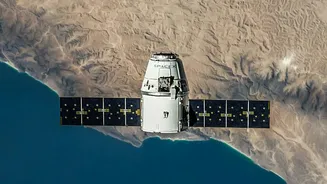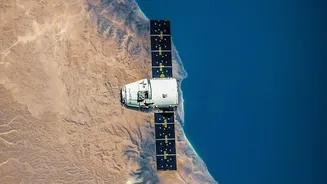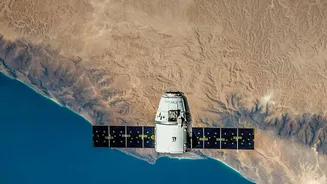





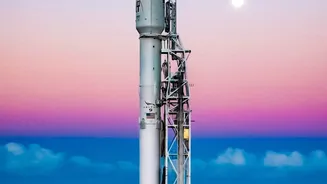

SpaceX is famous for reusable rockets and global satellite internet. Now, its chief has floated an even more audacious idea: moving the immense, power-hungry data centers that run artificial intelligence from Earth into the vacuum of space.
A New Cosmic Business Plan
In a recent
discussion at the Baron Investment Conference, CEO Elon Musk outlined a vision where SpaceX focuses on building the hardware for AI in orbit rather than developing its own competing AI models. The idea is not to create another AI service, but to provide the 'picks and shovels' for the AI gold rush by launching and operating vast constellations of computing satellites. This strategy positions SpaceX as a foundational infrastructure provider, a role it already plays in the launch industry. The company has already filed with the U.S. Federal Communications Commission (FCC) for a 'SpaceX Orbital Data Center system' that could involve up to one million satellites. Initial test launches of these 'Starmind' computers, co-designed with NVIDIA, could begin as early as the third quarter of 2027.
Why Put Data Centers in Space?
The primary driver for this otherworldly ambition is energy. AI is notoriously power-hungry, and terrestrial data centers face growing constraints from strained electrical grids, land use, and water for cooling. In space, solar power is nearly constant and more potent without atmospheric interference. Musk noted you get about 30% more solar power in space and don't need heavy batteries to last through the night. Cooling, another massive operational cost on Earth, could also be simpler. Musk suggests that aluminum radiators facing deep space—which is just a few degrees above absolute zero—could efficiently dissipate heat without the need for water. This approach aims to bypass Earth's physical and political bottlenecks, which have become so significant that Musk quipped the 'pitchfork level for data centers is pretty high' on the ground.
The Hurdles are Astronomical
Despite the compelling advantages, the challenges are immense. Launch costs, even with SpaceX's reusable rockets, remain a primary obstacle. The sheer mass of thousands of data center satellites would require an unprecedented launch cadence. While the vacuum of space is cold, dissipating heat from concentrated electronics without air for convection requires specialized and potentially heavy radiator systems. Maintenance is another major issue; repairing or replacing hardware in orbit is vastly more complex and expensive than on Earth, likely requiring robotic servicing or a 'replace rather than repair' model that increases costs and orbital debris. Furthermore, satellites must be hardened against radiation and the constant threat of micrometeoroid impacts, which can cause data corruption or system failure.
A Strategic Play for Starship
This orbital AI plan is deeply intertwined with SpaceX's long-term vision for Starship, its next_generation heavy_lift rocket. Starship is designed to dramatically lower the cost of launching mass to orbit, but to be economically viable, it needs customers that require its massive payload capacity. A constellation of orbital data centers would be a perfect anchor tenant for Starship, creating a consistent and high_volume internal customer. This vertical integration—where SpaceX builds the launch system (Starship), the satellite network (Starlink for data transmission), and the orbital infrastructure (Starmind AI satellites)—is a classic page from the company's playbook. It's less about serving today's AI market and more about building the economic engine for a future multi_planetary economy.