







1. Ginger (Adrak)
A staple in Indian kitchens, ginger is a powerhouse during the monsoon. Its warming properties are excellent for kindling the digestive fire, or 'Agni', which is believed to weaken during this season. Ginger helps combat indigestion, bloating, and nausea.
It also possesses anti-inflammatory and antiviral qualities, making it a great addition to your daily tea or curries to help fend off common colds and sore throats that are prevalent during the rains.
2. Turmeric (Haldi)
Known for its potent antiseptic and anti-inflammatory properties, turmeric is an essential monsoon spice. The active compound, curcumin, is a natural immunity booster that helps protect the body from bacterial and viral infections. A warm glass of 'haldi doodh' (turmeric milk) before bed can soothe a sore throat, prevent infections, and promote better sleep on a cool, rainy night. Adding a pinch to your dals, vegetables, and soups is an easy way to reap its benefits daily.
3. Garlic (Lehsun)
Like ginger, garlic is a flavourful ingredient with strong medicinal properties. It is renowned for boosting the immune system thanks to compounds like allicin, which have antibacterial and antiviral effects. Incorporating garlic into your cooking, especially in soups and stir-fries, can help protect against the flu and other common monsoon ailments. Its warming nature also helps in managing cold and cough symptoms effectively.
4. Black Pepper (Kali Mirch)
This humble spice does more than just add heat to your food. Black pepper aids in digestion and helps improve the absorption of nutrients from other foods—most notably, it enhances the bioavailability of curcumin in turmeric. Its warming nature helps clear chest congestion and fight respiratory issues. Sprinkling freshly ground pepper on soups, salads (use cooked vegetables), or even your morning tea can provide both flavour and a health boost.
5. Lentils, especially Moong Dal
During monsoon, it's wise to opt for foods that are light and easy to digest. Moong dal fits this description perfectly. It is packed with protein and fibre but is gentler on the stomach compared to heavier lentils. A warm bowl of khichdi made from rice and moong dal is considered the quintessential monsoon comfort food—it's nourishing, balances the digestive system, and provides sustained energy without feeling heavy.
6. Gourds (Lauki, Turai)
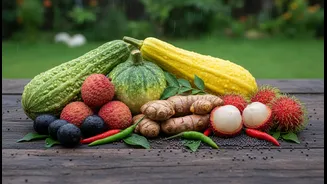
Vegetables like bottle gourd (lauki), ridge gourd (turai), and even bitter gourd (karela) are excellent choices for the rainy season. They are rich in fibre, have high water content, and are very easy to digest. These vegetables help keep the digestive system clean and prevent issues like constipation. Ayurveda particularly recommends them as they are considered light on the stomach. A simple sabzi or a warm soup made from these gourds is ideal.
7. Pomegranate (Anaar)
While it's advised to be cautious with raw fruits, pomegranate is a safe and beneficial choice for the monsoon. It is loaded with antioxidants and Vitamin C, which are crucial for building a strong immune system to fight off seasonal infections. Its anti-inflammatory properties are also beneficial. Enjoy the fresh arils on their own or add them to a bowl of poha for a nutritious and colourful meal.
8. Tulsi (Holy Basil)
Revered in India for its medicinal properties, Tulsi is a fantastic herb for the monsoon. It has natural antibacterial, antiviral, and antifungal properties, making it an excellent defence against infections. Chewing a few fresh leaves in the morning or brewing a warm cup of Tulsi tea can help clear respiratory passages, relieve stress, and boost overall immunity. It's a simple, age-old remedy for seasonal coughs and colds.
9. Gram Flour (Besan)
While deep-fried pakoras are a tempting monsoon snack, the main ingredient, besan, is actually quite healthy when used correctly. Made from chickpeas, gram flour is a great source of protein and fibre. Instead of frying, use besan to make light, steamed dhoklas or savoury chillas (pancakes) with chopped vegetables. These snacks are easy on the gut and provide the comfort of a traditional monsoon meal without the unhealthy fats.
10. Probiotics (Dahi/Yogurt)
Gut health is directly linked to immunity, and probiotics are key to maintaining a healthy gut microbiome. While Ayurveda sometimes cautions against excess curd at night, consuming fresh, low-fat yogurt or buttermilk (chaas) during the day is beneficial. It aids digestion and helps fight off bad bacteria. A bowl of dahi or a glass of chaas seasoned with roasted cumin powder can be a refreshing and healthy addition to your lunch.