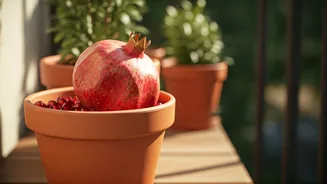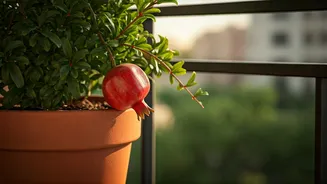




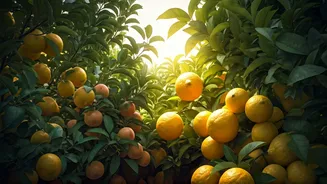


Why Pomegranates Are Perfect for Pots
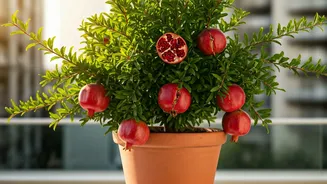
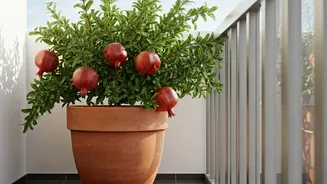
Pomegranates are a fantastic choice for container gardening, especially in India's warm climate. They are naturally drought-tolerant and love the sun, making them resilient additions to an urban garden. Many varieties have a compact growth habit, which
means they stay at a manageable size in a pot without aggressive pruning. Beyond the delicious, antioxidant-rich fruit, these plants are highly ornamental. They produce glossy green leaves and vibrant, orange-red flowers that add a splash of colour to any space long before the fruit appears. Furthermore, many pomegranate varieties are self-pollinating, meaning you only need one plant to get fruit, a significant advantage for gardeners with limited space.
Choosing the Right Variety and Pot
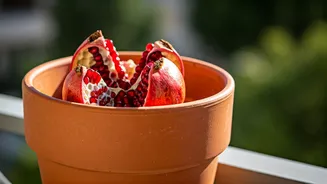
Success starts with the right selection. For pots, it's best to choose dwarf or compact varieties. Varieties popular in India like 'Bhagwa' and 'Ganesh' can be grown in large containers, while specific dwarf types like 'Nana' are excellent for smaller spaces, though their fruit is more ornamental. When selecting a plant from a nursery, opt for a grafted sapling rather than one grown from seed, as grafted plants tend to produce fruit much earlier. The container itself is crucial. Choose a large pot, at least 12 to 20 inches wide and deep, to give the roots ample room to grow. Materials like clay, terracotta, or modern composites all work well, but the most important feature is drainage holes at the bottom to prevent waterlogging and root rot.
The Ideal Soil and Planting Method
Pomegranates are not overly fussy but thrive in a well-draining, nutrient-rich soil. You can buy a quality potting mix or create your own. A good homemade mix for Indian conditions consists of about 40% garden soil, 30% compost or well-rotted cow dung manure, 20% sand for drainage, and 10% cocopeat to retain some moisture. Before filling the pot, you can place a few broken pieces of terracotta or small stones over the drainage holes to prevent them from clogging. When planting your sapling, fill the pot part-way, place the root ball in the centre, and then fill the rest of the pot with your soil mix until it's level with the base of the plant's trunk, pressing down gently to remove air pockets. Water it well after planting.
Sunlight and Watering Needs
Pomegranates are sun-worshippers and require at least 6 to 8 hours of direct sunlight each day to flourish and produce fruit. A south-facing balcony, terrace, or an open rooftop is an ideal location. Watering is a balancing act. The soil should be kept consistently moist but never waterlogged. A good rule of thumb is to water deeply whenever the top inch or two of soil feels dry to the touch. In the peak of summer, this might mean watering every couple of days, while in winter, you can reduce the frequency to once a week. Be mindful that container plants dry out much faster than those in the ground.
Fertilising for Abundant Fruit
Potted plants have limited access to nutrients, so regular feeding is essential for a healthy tree and a good harvest. For the first year, a nutrient-rich potting mix might be sufficient. Starting in the second year, you can begin a regular fertilising schedule. A balanced organic manure like vermicompost or cow dung compost can be applied every month or so. To encourage flowering and fruiting, use a fertiliser that is rich in phosphorus and potassium. Many gardeners recommend applying a balanced 10-10-10 fertilizer in early spring and again after the fruiting season to replenish the soil. Some experts also suggest slightly reducing water before the flowering period to induce stress, which can lead to more blooms.
Pruning and Pest Management
Pruning is important to maintain the plant's shape, improve air circulation, and direct energy toward fruit production. The best time to prune is in the late winter when the plant is dormant. Remove any dead, damaged, or crossing branches. You can also remove suckers growing from the base to maintain a tree-like shape. Pomegranates are relatively pest-resistant, but they can occasionally attract pests like aphids and mealybugs. A simple spray of neem oil mixed with water and a little liquid soap is an effective and organic way to manage these pests.