




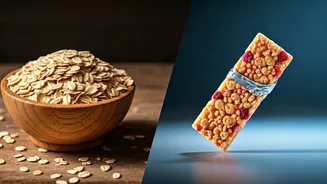


What Are Hyper-Palatable Foods?
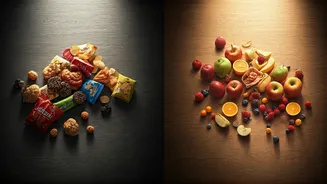
The term 'hyper-palatable' refers to foods, particularly ultra-processed ones, that are scientifically designed to be intensely rewarding. Food engineers create them by combining fat, sugar, sodium, and carbohydrates in ways that are rarely found in nature.
This potent combination activates the pleasure centres in our brain, making it difficult to stop eating and interfering with the body's natural signals for fullness. These foods are often high in calories but low in essential nutrients like fibre, contributing to overconsumption and potential weight gain.
Ignoring the Front, Reading the Back
The front of a package is prime marketing real estate. It's covered in enticing claims like “All Natural,” “Low-Fat,” “High in Fibre,” or even brand names with the word “Healthy.” However, the real story is on the back: the ingredient list and the nutrition facts panel. In India, the Food Safety and Standards Authority of India (FSSAI) mandates that ingredients be listed in descending order by weight. This is your most powerful tool. If you see a long list of items you don't recognise or wouldn't keep in your kitchen pantry, you are likely holding an ultra-processed product.
Sugar's Many Disguises
To avoid having 'sugar' as the first ingredient, manufacturers often use several different types of sweeteners. This pushes each one further down the list, making the product seem healthier than it is. Be on the lookout for dozens of aliases for sugar, including high-fructose corn syrup, dextrose, maltodextrin, invert sugar, cane juice crystals, and fruit juice concentrate. If you spot multiple sugary-sounding names, especially in the first few lines of the ingredients, it’s a red flag that the product is loaded with added sugars.
Fats, Fillers, and 'Mouthfeel' Agents
The satisfying texture and long shelf life of many snacks come from more than just simple fats. They are often achieved with industrial ingredients designed to improve 'mouthfeel' and prevent separation. Watch for modified oils like hydrogenated or interesterified oils, which are chemically altered. Also common are emulsifiers, stabilisers, and thickeners like soy lecithin, carrageenan, guar gum, and xanthan gum. While these are approved for use, their presence is a clear indicator that you are eating a highly engineered, ultra-processed food, not something minimally processed.
The Umami Illusion: Hidden MSG
That deeply savoury, can't-get-enough flavour in chips, instant noodles, and seasoned snacks often comes from more than just salt. Monosodium Glutamate (MSG) is a well-known flavour enhancer, but it rarely appears on labels under its own name. Food producers use ingredients that are naturally high in free glutamates, the compound that gives MSG its effect. Common disguises include 'yeast extract,' 'hydrolyzed vegetable protein' (HVP), 'textured protein,' 'autolyzed yeast,' and even the vague term 'natural flavours'. If you see these on a label, a flavour enhancer is almost certainly present.
The 'Healthy' Halo Effect
Snack makers are adept at using health-related buzzwords to create a 'halo effect' around their products. A packet of chips might be advertised as “baked, not fried” but still contain high levels of sodium and refined carbohydrates. A “low-fat” yogurt or salad dressing often compensates for the lack of fat with a heavy dose of sugar to make it palatable. In recent months, the FSSAI has cracked down on brands making misleading claims about being “natural,” “healthy,” or containing specific health benefits without sufficient proof, reminding consumers to remain skeptical of front-of-pack marketing.