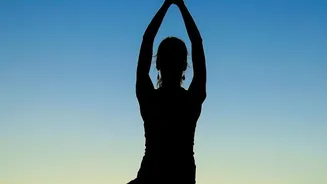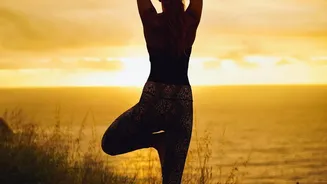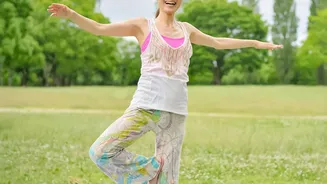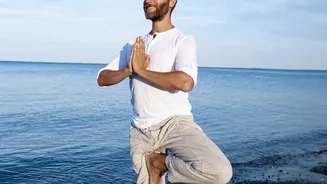


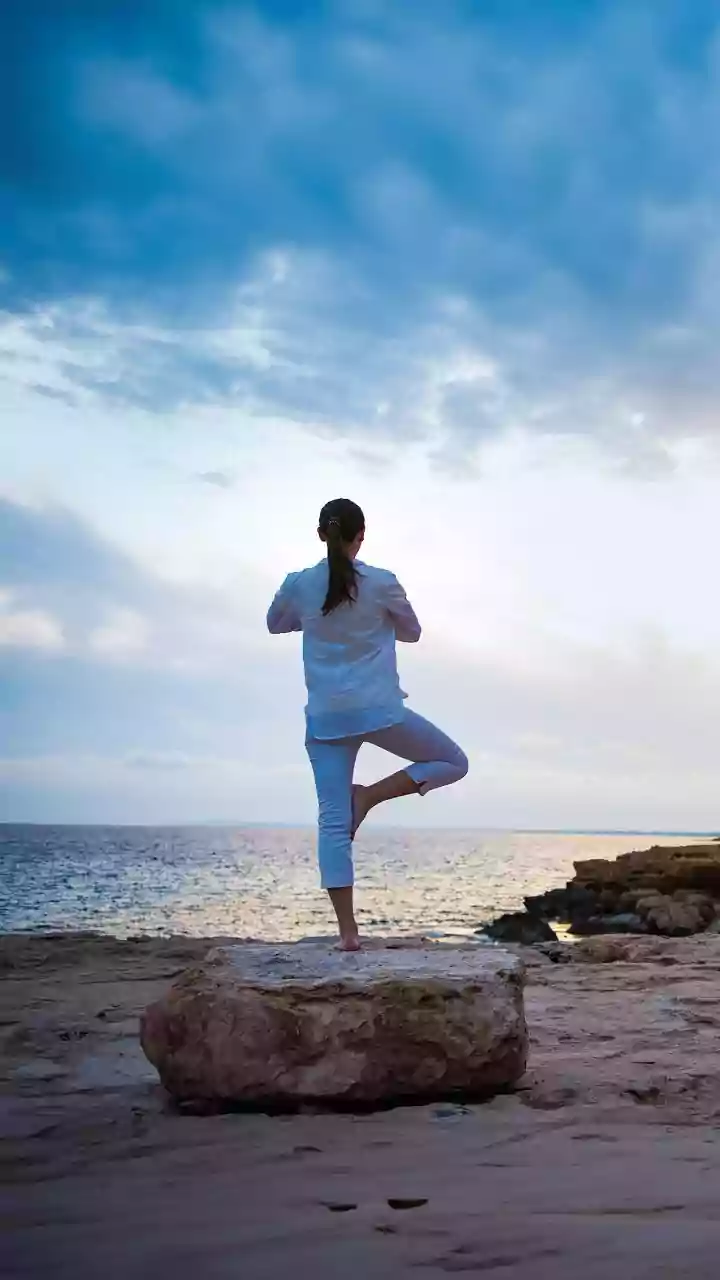

The Foundation: Tree Pose (Vrksasana)
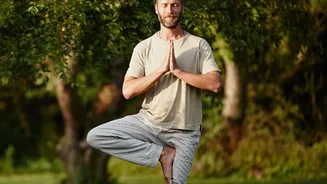
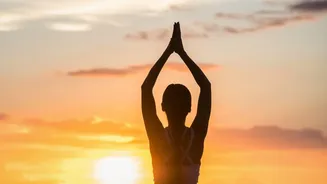
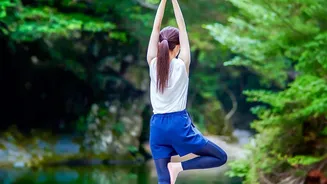
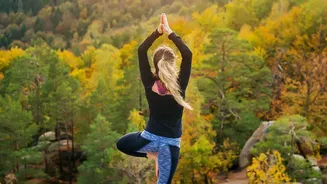
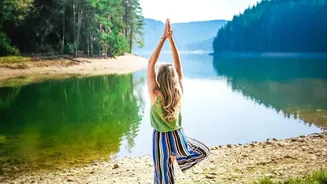
Before we explore variations, let's ground ourselves in the basics of a strong Tree Pose. This foundational standing balance pose is a practice in stability, strength, and stillness. Begin in Mountain Pose (Tadasana), feet together. Shift your weight
onto one foot, rooting down firmly. Place the sole of your other foot on the inner ankle, calf, or thigh of the standing leg—always avoiding the knee joint. Press the foot and leg into each other to create an active, stable connection. Lengthen your tailbone toward the floor, engage your core, and bring your hands to your heart or extend them overhead. Fix your gaze (drishti) on a non-moving point in front of you to maintain focus. The goal is to feel both rooted through your standing leg and lifted through your spine.
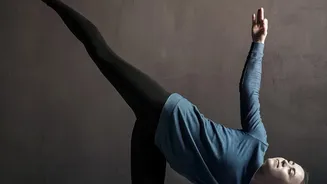
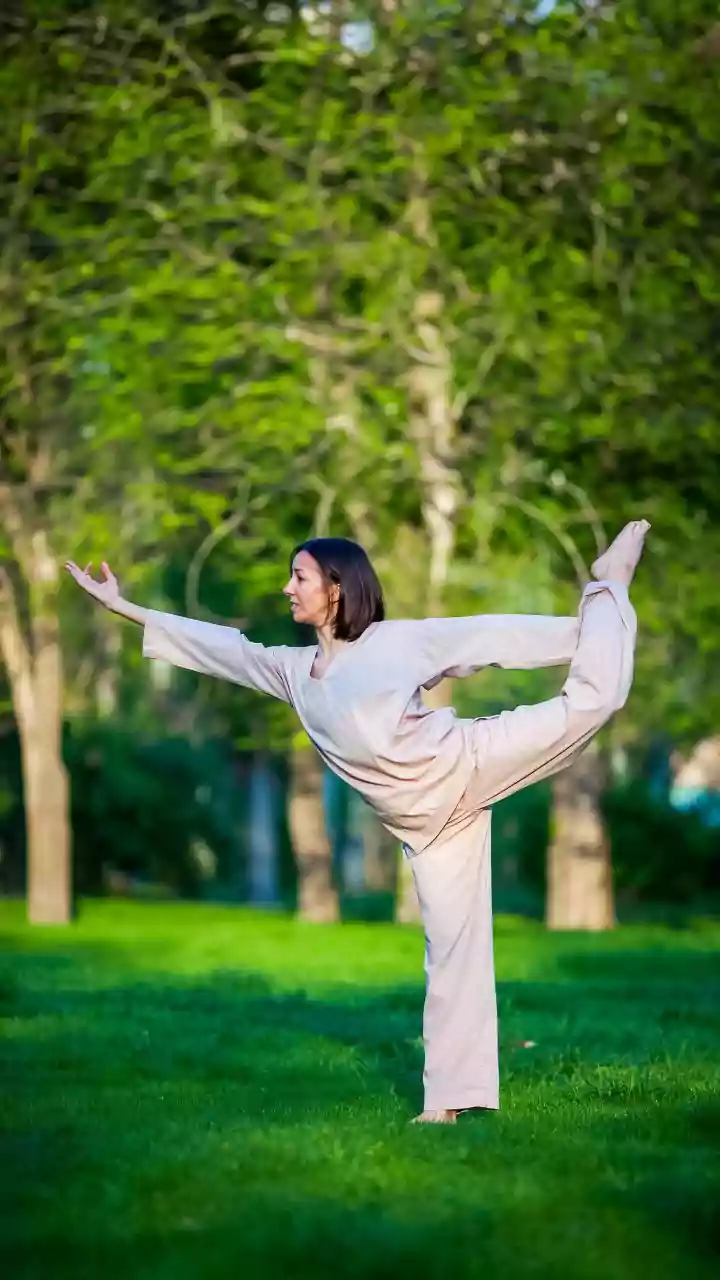
The Inspiration: Half-Moon Pose (Ardha Chandrasana)
Half-Moon Pose is a study in expansion and balance. It teaches us to open up while remaining stable on one leg. The key actions we'll borrow from Ardha Chandrasana are the stacking of the hips and the opening of the chest. In Half-Moon, one hip rolls open to stack directly over the standing hip. This external rotation is crucial. The chest also spirals open toward the ceiling, and the arms extend to create a long line of energy. The pose demands a strong core and an engaged standing leg to prevent collapsing. Understanding this feeling of spaciousness and hip-opening is the first step to infusing it into your Tree Pose.
Variation 1: The Opening Hip in Upright Tree
This first variation serves as a direct bridge between the two poses. Begin in a stable Tree Pose, with your lifted foot on your inner calf or thigh. Keep your hands at your heart center for stability. Traditionally in Tree Pose, the hips aim to stay relatively square to the front. Now, begin to actively press your bent knee back, initiating a deeper external rotation in the hip socket, similar to the action in Half-Moon. You are not trying to turn your whole torso, but rather encouraging the top hip to roll open while keeping the standing leg's alignment solid. This small movement challenges your stabilizing muscles in a new way and introduces the core principle of Half-Moon's open-hip shape.
Variation 2: Swaying Tree with a Side Bend
Once you feel the hip opening, you can add a lateral stretch inspired by the long lines of Half-Moon. From your Tree Pose, inhale and reach both arms overhead. As you exhale, gently begin to arc your torso to the side, away from your bent knee. For example, if your right foot is lifted, you will bend to your left. Let your top arm reach up and over, creating a long, curved line from your standing foot through your fingertips, much like the shape of a crescent moon. This 'Swaying Tree' or 'Bending Tree' variation challenges your core to work harder to maintain your center of gravity while stretching the side body.
Variation 3: The Floating Half-Moon Tree
This is the most direct hybrid of the two poses. Start in a strong Tree Pose, ideally with your foot on the inner thigh. Place your hands on your hips. Engage your core and begin to hinge forward from your hips, keeping your spine long. Lower your torso until it is parallel to the floor, similar to the position in Warrior III. From here, extend the arm on the same side as your standing leg down toward the floor (or a block). The other arm can extend up to the ceiling. You are now in a shape that mirrors Half-Moon, but with the 'lifted' leg still in the Tree position against your standing thigh. This advanced variation deeply challenges your balance, hamstring flexibility, and core strength.
Essential Tips for Stability and Safety
As you explore these creative variations, safety and stability are paramount. Always move slowly and with your breath. Use a wall for support, especially when first attempting the Floating Half-Moon Tree; it can help you find the alignment without the fear of falling. Using a yoga block under your hand is highly recommended to bring the floor closer and prevent collapsing into your standing leg's hip. Keep a micro-bend in your standing knee to avoid locking the joint. Most importantly, engage your core muscles by drawing your navel toward your spine. This provides crucial support for your lower back and is the anchor for your balance. If you feel any sharp pain, gently back out of the pose.