


Why Jogging Tightens Your Hips
Understanding the 'why' behind the tightness is the first step to finding relief. Your hip flexors are a group of muscles at the front of your hip, responsible for lifting your knee towards your chest. Every time you run, you're performing this action
repeatedly. This constant shortening of the muscle, without a counterbalancing lengthening motion, can lead to it becoming chronically tight and overworked. It's an overuse issue common in activities with repetitive hip flexion, like running and cycling. Furthermore, many of us spend large parts of the day sitting, which keeps these muscles in a shortened position already. Weak glute or core muscles can also contribute, forcing the hip flexors to pick up the slack and work harder than they should to stabilize your pelvis. Over time, this constant state of being 'switched on' is what you feel as persistent tightness.
The Right Time to Stretch
When you stretch is just as important as how you stretch. Experts now distinguish between two main types: dynamic and static. Dynamic stretching involves active movements that take your muscles through a full range of motion, like leg swings or walking lunges. This type of stretching is ideal for a pre-run warm-up as it increases blood flow and prepares muscles for activity. Static stretching, on the other hand, involves holding a stretch in a fixed position for a period, typically 20-45 seconds. This is the kind of stretching that helps lengthen muscles and improve flexibility. For tight hip flexors, static stretching is best reserved for your cool-down, after your run is complete, when your muscles are warm and more pliable.
Kneeling Hip Flexor Stretch
This is a classic and highly effective stretch for targeting the hip flexors. Start by kneeling on a soft surface like a yoga mat. Bring one leg forward, placing your foot flat on the floor so your knee is bent at a 90-degree angle directly over your ankle. Your other knee remains on the floor, directly under your hip. With your hands on your hips and your torso upright, gently tuck your pelvis by squeezing your glutes. You may already feel a stretch. From there, slowly shift your weight forward into the front leg until you feel a comfortable stretch in the front of the hip of your back leg. Avoid arching your lower back. Hold for 30 seconds, breathing deeply, before switching to the other side.
Pigeon Pose
A favourite in the yoga world, Pigeon Pose is a deep hip opener that stretches the hip flexors as well as the glutes and external rotators. To start, get on your hands and knees. Bring your right knee forward and place it behind your right wrist. Angle your shin so your right foot is somewhere in front of your left hip. Extend your left leg straight back behind you. The key is to keep your hips square to the front. You can rest your hands on the floor in front of you or, if you're more flexible, lower your forearms and chest towards the ground. If your hip doesn't reach the floor, place a folded blanket or yoga block underneath it for support. This stretch can also help alleviate lower back tension. Hold for 30 seconds to a minute before carefully switching sides.
Standing Lunge Stretch
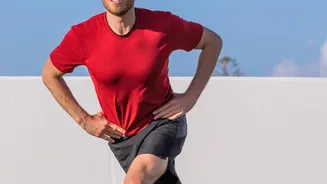
If you can't get down on the floor, a standing lunge is a great alternative. Take a step forward with your right foot into a lunge position. Bend your front knee, keeping it aligned with your ankle. Your back leg should be relatively straight. Gently press your back hip forward until you feel a stretch along the front of your thigh and hip. Keep your torso upright and avoid leaning forward excessively. You can place your hands on your front thigh for balance. Hold this position for 20–30 seconds, ensuring you feel a good stretch without pain, and then repeat on the other side.