



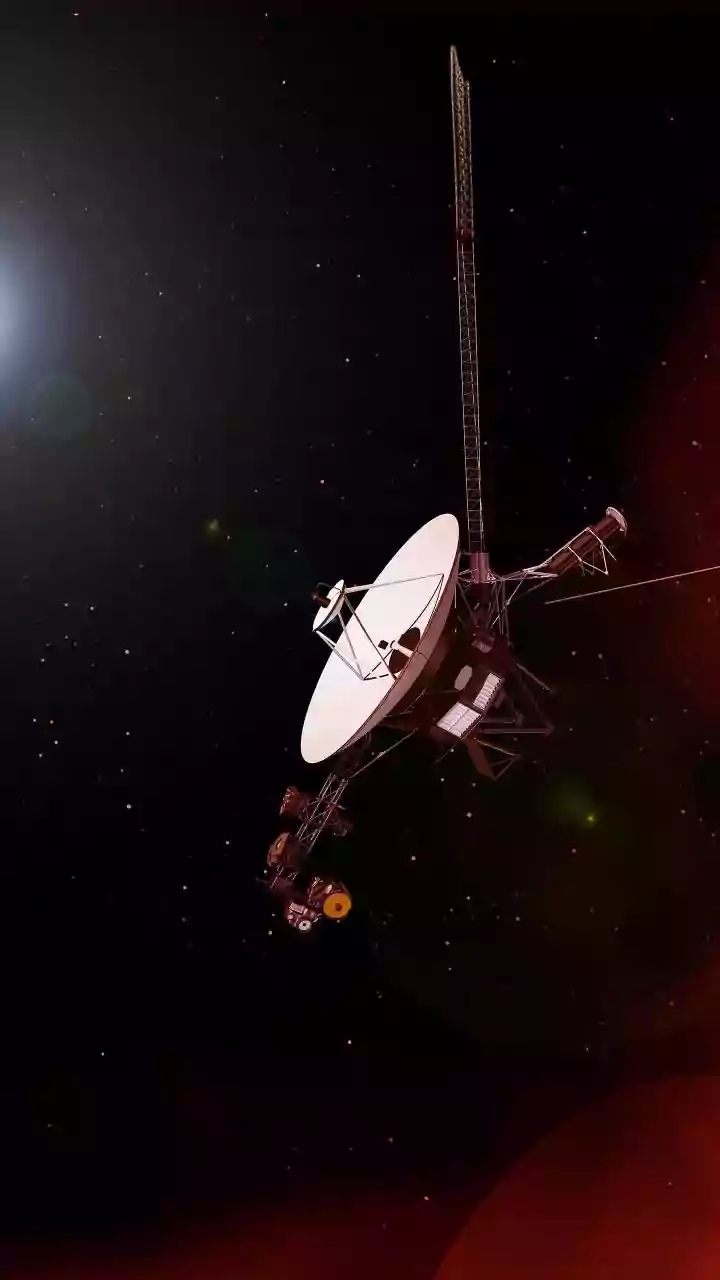





An Indispensable 'First Responder'
Since its launch in 2004, the Neil Gehrels Swift Observatory has been NASA’s go-to 'first responder' for the most violent explosions in the universe. Designed to study gamma-ray bursts (GRBs)—colossal releases of energy from distant galaxies—Swift has a unique
talent: speed. When its Burst Alert Telescope detects a flash of gamma rays, the entire spacecraft can autonomously pivot in minutes to aim its powerful X-ray and ultraviolet-optical telescopes at the source. This rapid response is crucial for capturing the fleeting afterglow of these cataclysmic events, providing data that has revolutionized our understanding of black holes, the death of massive stars, and the early universe. Over its two decades in orbit, Swift has detected thousands of GRBs and has evolved into a versatile, multi-purpose observatory, assisting in the study of everything from comets to supernovae. Its contributions have been so significant that it receives more community requests for observations than any other NASA facility except for the James Webb Space Telescope.
A Fall from Grace
But this celebrated career is now under threat, not from a technical failure, but from Earth's own atmosphere. In early 2025, scientists noticed Swift was losing altitude much faster than anticipated. An unusually active solar cycle had heated and expanded the upper atmosphere, increasing the drag on satellites in low-Earth orbit. Having been in space for over 20 years, Swift lacks the onboard propulsion to counteract this drag and boost its own orbit. Left unchecked, the observatory would have been dragged down to a fiery end in mid-2026. To slow the decay, mission operators had to place the telescope into a low-drag configuration, effectively pausing its scientific work and extending its lifespan just long enough for a rescue attempt.
An Audacious Rescue Plan
That rescue attempt is a first-of-its-kind commercial mission. NASA awarded a $30 million contract to Katalyst Space, a private company, to rapidly design and launch a robotic tug called LINK. The plan is for LINK to launch, rendezvous with Swift, grab onto it with robotic arms, and then use its own gentle ion thrusters to slowly push the observatory back into a higher, more stable orbit over several months. This has never been attempted before with a government satellite not designed for servicing. After several weather and technical delays in early July 2026, the mission is on standby, a testament to the high-stakes, high-reward nature of the endeavor. If successful, the mission could give Swift another decade of scientific discovery.
The Real Bottom Line
The $30 million price tag for the rescue might sound steep, but it's a bargain compared to the alternative. Replacing Swift's unique capabilities could take years and cost hundreds of millions of dollars. This highlights a growing dilemma for space agencies worldwide: what is the value of preserving older, still-productive missions? NASA operates a fleet of aging but legendary observatories, including the Hubble and Chandra space telescopes. These missions constantly face budgetary pressure, with funding often remaining flat while operational costs and inflation rise. Agencies must perpetually weigh the cost of maintaining these legacy platforms against the desire to fund the next generation of shiny, new telescopes. The decision to save Swift shows a shift in thinking, recognizing that sometimes the most cost-effective solution is to maintain the incredible assets we already have in orbit.
A Precedent for the Future
Ultimately, the Swift rescue mission is about more than just one telescope. It's a crucial test case for a more sustainable and flexible approach to space exploration. As more satellites and observatories are launched, the ability to service, refuel, and upgrade them in orbit will become essential. The success of the LINK mission could open the door for similar efforts to extend the lives of other valuable assets, like the Hubble Space Telescope, which also faces long-term orbital decay. It demonstrates a new model of partnership between government agencies and private industry to solve complex problems quickly and creatively. Saving Swift proves that we don't always have to accept the inevitable decay of our orbital infrastructure. With ingenuity, we can choose to preserve and extend the life of the tools that open our eyes to the cosmos.